
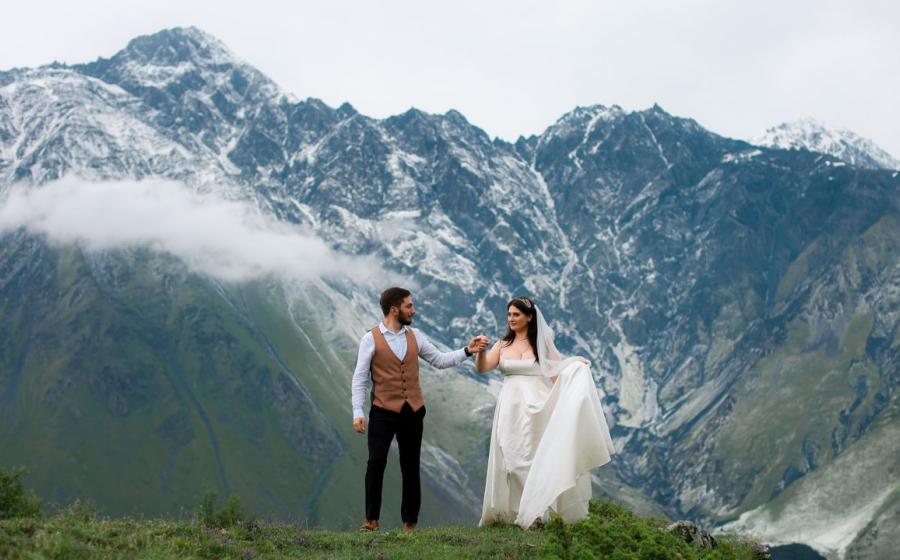

Quick Answer
A capable mountain filmmaker pairs craft with environmental fluency. Prioritizes documented work at altitude, current Parks Canada permits, redundant audio and battery systems, and a reel that shows consistent exposure across snowfields, shaded forest, and ridgeline light. Verifies cold-weather protocols, insured gear, and a written contingency plan for shifting alpine conditions before signing. A good elopement videographer earns the booking on preparation, not aesthetics alone.

Booking the wrong filmmaker for an alpine ceremony is a disaster you only notice months later, when the edits arrive, and the light looks flat, the audio crackles under wind, and the peaks feel oddly small on screen.
A capable elopement videographer like Film & Forest, working in a protected wilderness, operates under conditions that bear little resemblance to those in a controlled venue. Temperature swings, unpredictable cloud cover, regulated access, and narrow working windows all shape what is technically possible on the day.
That sequence, technical foundation before aesthetic flourish, separates a film that ages well from one that feels dated within a season.
What Sets Alpine Filmmakers Apart from Standard Wedding Coverage
A high country ceremony is a production environment, not a backdrop. The professional you hire manages irreplaceable moments while handling equipment in conditions that can shift from calm sunshine to driving snow within the hour. That experience does not transfer automatically from urban venue work, and the gap surfaces immediately in the final cut.
Reading a Reel With a Critical Eye
A polished showreel proves little on its own. Consistency across difficult lighting matters more than any single hero shot. Watch how the filmmaker handles dynamic range when bright snowfields meet deep evergreen shadow, and whether skin tones hold against blown-out skies at altitude. If every clip lives in flattering golden hour light on a clear day, the body of work is incomplete.
Useful signals when reviewing any reel:
• Motivated camera movement rather than constant gimbal drift
• Clean ambient sound captured outdoors, not buried under licensed music
• Consistent colour grading across forest, lakeshore, and ridgeline environments
• Real ceremonies in variable weather, not styled shoots only
Matching Style to the Ceremony Type
Aesthetic questions come after technical ones. Documentary-led elopement videography favors long takes, natural sound design, and minimal direction, which suits couples who want the day to unfold without choreography. A cinematic approach leans on staged motion, slower pacing, and heavier grading. Neither is superior, but the chosen style must match how the couple actually wants to remember the day.
In practice, this single request quietly eliminates a meaningful share of candidates whose short-form work outpaces their long-form discipline.
Production Standards That Define Banff Elopement Videography
Gear conversations often dominate hiring talks, yet the meaningful differences live in workflow, redundancy, and format choice. A professional who understands the local climate builds their kit around failure tolerance, not spec sheet bragging rights.
Camera, Audio, and Backup Architecture
Cold drains batteries at roughly half the rate of room-temperature operation, and condensation forms instantly when bodies move between heated vehicles and exposed ridgelines. A working pro plans for both.
Dual card recording, weather-sealed bodies, and insulated battery storage are baseline expectations, not premium add-ons. Audio deserves equal weight. Wireless lavalier systems with onboard backup recorders protect vow capture when wind gusts overwhelm shotgun microphones.

Comparing Core Format Choices
The capture format shapes everything from the edit timeline to the final delivery. Below is how the three common options compare for protected wilderness work, which is the core terrain for Banff elopement videography.
|
Format |
Strengths |
Trade-Offs |
Best Suited For |
|
4K 10-bit, 4:2:2 |
Strong grading latitude, future-proof resolution |
Larger files, longer edit times |
Most alpine ceremonies |
|
6K or 8K Raw |
Maximum post flexibility, reframe in edit |
Heavy storage, slower workflow, higher cost |
Hybrid stills and motion shoots |
|
4K 8-bit, 4:2:0 |
Smaller files, faster turnaround |
Limited grading range, struggles in mixed light |
Tight budgets, simple lighting |
The result is that 4K 10-bit hits the practical sweet spot, balancing image quality against the realities of field workflow and storage capacity.
Delivery Formats and Edit Timelines
Confirm deliverables in writing before booking. A professional package typically includes a feature edit between four and eight minutes, a shorter social cut, and full ceremony and vow recordings preserved in their entirety. Industry-typical turnaround runs eight to twelve weeks, with peak season often pushing that window further.
These production baselines protect the investment long before any creative discussion begins.
Vetting a Wedding Photographer and Videographer Team for the Future
The last layer of due diligence sits outside the portfolio entirely. Permits, contingency planning, and field protocols separate working professionals from weekend operators working without authorization. Sound paperwork is the quiet foundation of every successful booking.
Permits and Regulated Access
Commercial filming inside national park boundaries, including Banff National Park, requires a Parks Canada Film Permit, secured well in advance of the ceremony date. A legitimate wedding photographer and videographer team will name their permit status without hesitation and respect closure zones tied to wildlife activity. Working with an unpermitted operator risks fines, ejection from the site, and a ruined schedule.
Cold Weather and Contingency Protocols
Beyond the basics of gear specs, ask candidates how they handle the operational edge cases that define high country work. Their answers reveal field experience faster than any showreel.
1. Battery rotation and insulated storage when ambient temperatures fall below freezing
2. Lens fogging prevention during rapid elevation or temperature shifts
3. Backup location selection when primary sites become inaccessible
4. Footing and load management on snow, scree, or wet granite
5. Communication plans in areas without cellular coverage
A serious operator answers each point quickly, often referencing specific gear or established procedure. Vague responses signal inexperience with the actual conditions that a high-country ceremony presents.
Contracts and Liability Coverage
Professional contracts spell out deposit terms, cancellation policy, weather rescheduling clauses, and delivery guarantees in plain language. Confirm the team carries commercial liability insurance, typically two million dollars or more, and equipment coverage independent of personal homeowner policies. These documents protect both sides when conditions force last-minute adjustments.
On the other hand, an operator who resists written terms or cannot produce current certificates is signalling a risk you should not pursue.
Final Takeaways for a Sound Booking Decision
The right alpine filmmaker is built from technical preparation, regulatory compliance, and creative discipline working in concert. Portfolios show taste, but permits, redundancy, and contingency planning prove capability.
Treat the hiring process as you would any production decision, weighing workflow and risk alongside aesthetic fit. A well-chosen elopement videographer delivers a film that honours both the ceremony and the alpine setting for decades to come.