
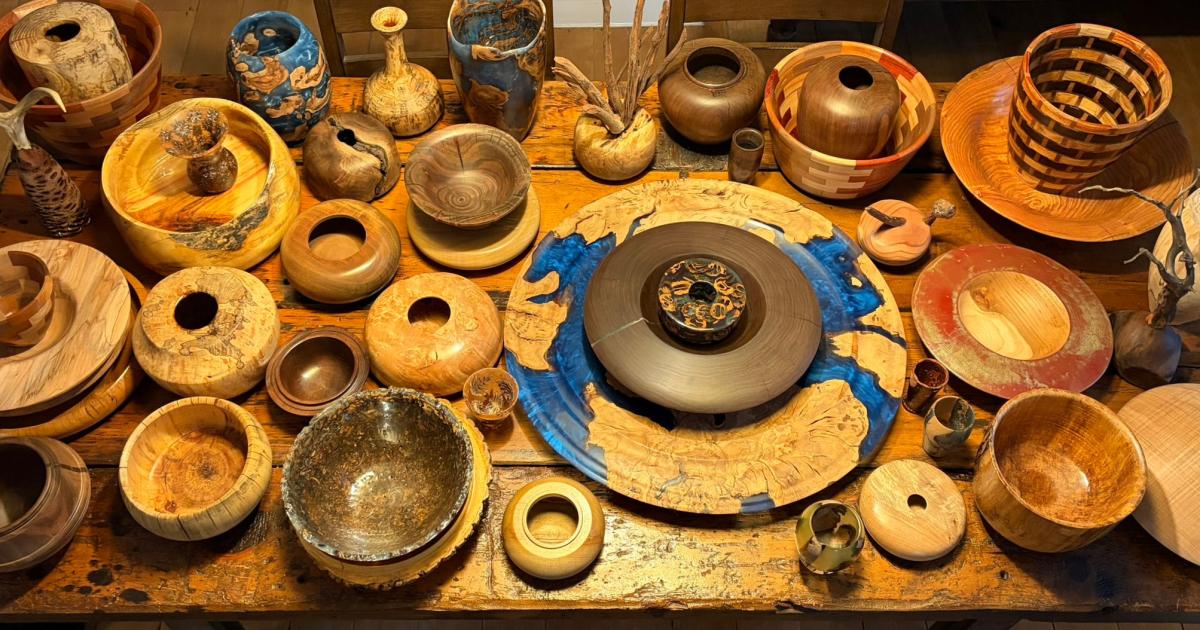

What if the crack in a piece of wood were the best thing about it?

maple burl with natural void
Meet Mark Taylor, who works as Treverk Woodturning in Three Rivers, Michigan. On a lathe, he turns one-of-a-kind vessels and sculptural forms from spalted, reclaimed, driftwood, and live-edge wood. The cracks, the voids, the bark the tree grew for itself: he leaves them exactly where they are, and then draws your eye straight to them.
He studied painting at the School of the Art Institute of Chicago and spent years making sculptural furniture before he found the lathe. This spring, WMUK's Story Beat ran a piece on him called "Art by Subtraction", which is about the best three words anyone could put to it.When I look at Mark's art, it's like wandering through a forest glade, sun dappling through the leaves, a stream burbling in the background. His forms belong there. I have a spot picked out.
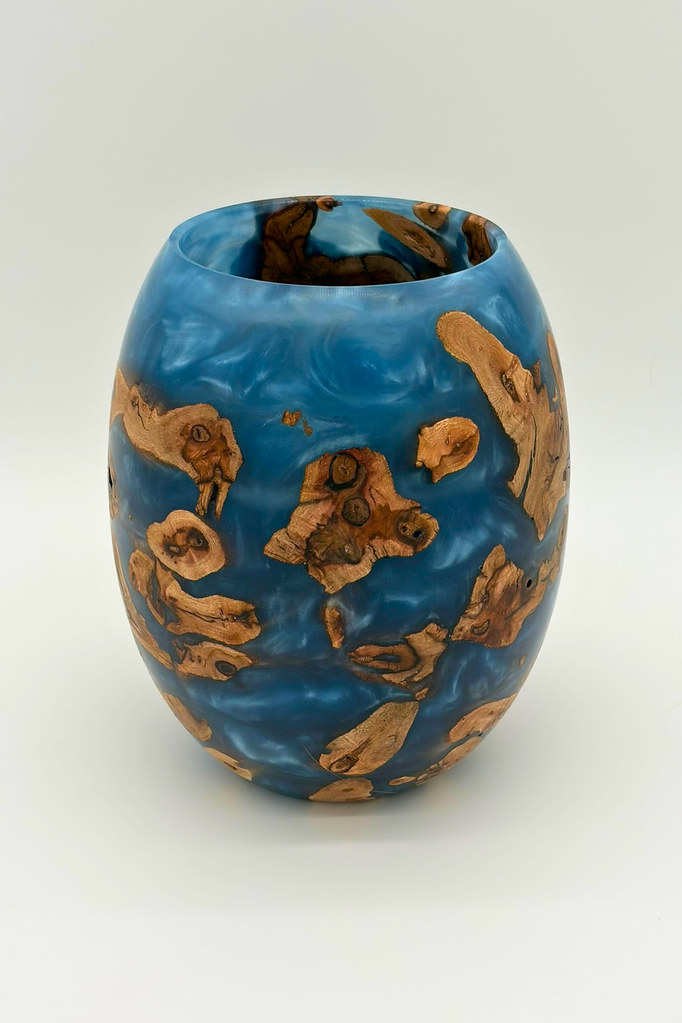
driftwood in blue resin
We were lucky enough to interview Mark about his art, his process, what he hopes people take away, and more. Here's what he had to say…

What first compelled you to become an artist, and when did you realize art would be a lifelong pursuit for you?
I was always the creative kid. In high school, I enrolled in a career technical program for art, and that's where I knew. One of my teachers there, Janet Johnson, is a talented and prolific artist who still lives and works in Elkhart. She saw something in me and pushed me to take it seriously. Nearly fifty years later she still inspires me, and she's a dear friend. This fall she officiated my wedding! From there I went on to the School of the Art Institute of Chicago to study painting. I learned that you can teach composition, color, and history, but not the part that matters most. Figure drawing came closest: form, line, restraint, seeing what is already there. I never stopped creating after that, even when the medium changed.

How would you describe your work to someone encountering it for the first time?
I create hand-turned vessels and sculptural forms in wood using a lathe. Exotic and domestic species, driftwood, live edges, and reclaimed wood most turners would toss aside. I keep the cracks, voids, and bark that the tree gave it, and I use resin to stabilize those imperfections and draw the eye to them. Every piece is one of a kind because every piece of wood is unique. I think of them less as things I design and more as forms I uncovered. You can see examples of my work at treverkwoodturning.com/gallery.

banksia nut in crimson resin

reclaimed pine vessel
What themes or ideas tend to surface repeatedly in your work, even when you're not consciously planning them?
Memory, mostly. A tree records everything: dry years, injury, disease, the place a limb broke away from a child swinging on it. A fissure is an old wound the tree grew around. Driftwood carries the shape of everywhere the water took it. I don't set out to make work about memory, but the wood keeps bringing it. I also keep coming back to tension: stillness and motion, permanence and change, refinement and rawness. And acceptance. Asymmetry, weathering, incompleteness. A tree doesn't strive for perfection, and I've stopped asking my work to. The aim isn't perfection. It's revelation.

spalted oak

pine cones in yellow resin
Can you walk us through your creative process, from the first spark of an idea to a finished piece?
It starts with the wood, not an idea. Some I buy, but much of it is reclaimed or comes from trees that have been cut down. Freshly cut wood has to dry for two to three years before it's ready to turn, so patience is built into the work from the start. When a piece is ready, I mount it on the lathe, and then I sit down. There's an antique wooden rocker in my shop that I call my thinking chair. I can sit there a long time, rocking and looking at the wood, sometimes longer than the turning takes. That's where I listen, both to the wood and to my own instincts, until I have a sense of what form is waiting inside. Then the turning is subtraction: cutting away what the piece doesn't need and nothing more. Any time I come to a piece with an idea of what it should look like, the wood has other ideas, so I often go back to the chair partway through. If a crack opens or a void appears, I decide whether to stabilize it, fill it with resin, or leave it alone. Then the finish. I have learned not to arrive with answers. The form is discovered, never decided.

pine cones in green resin

At the lathe
What materials or techniques are essential to your work, and why do they matter to you?
The lathe, sharp tools, and wood with a history. I especially love spalted wood. Spalting happens when fungi begin to colonize a fallen or cut tree. Before the wood rots, they leave behind dark, winding lines where competing colonies meet, along with bleached patches and streaks of color. Caught at the right moment, the wood is still sound, and those lines read almost like ink drawings. Driftwood matters to me for similar reasons: its texture and shape are records of time and water that no tool could make. Resin is essential too, but not to hide anything. It holds a fracture together and lets you see it. The scar is part of the piece.
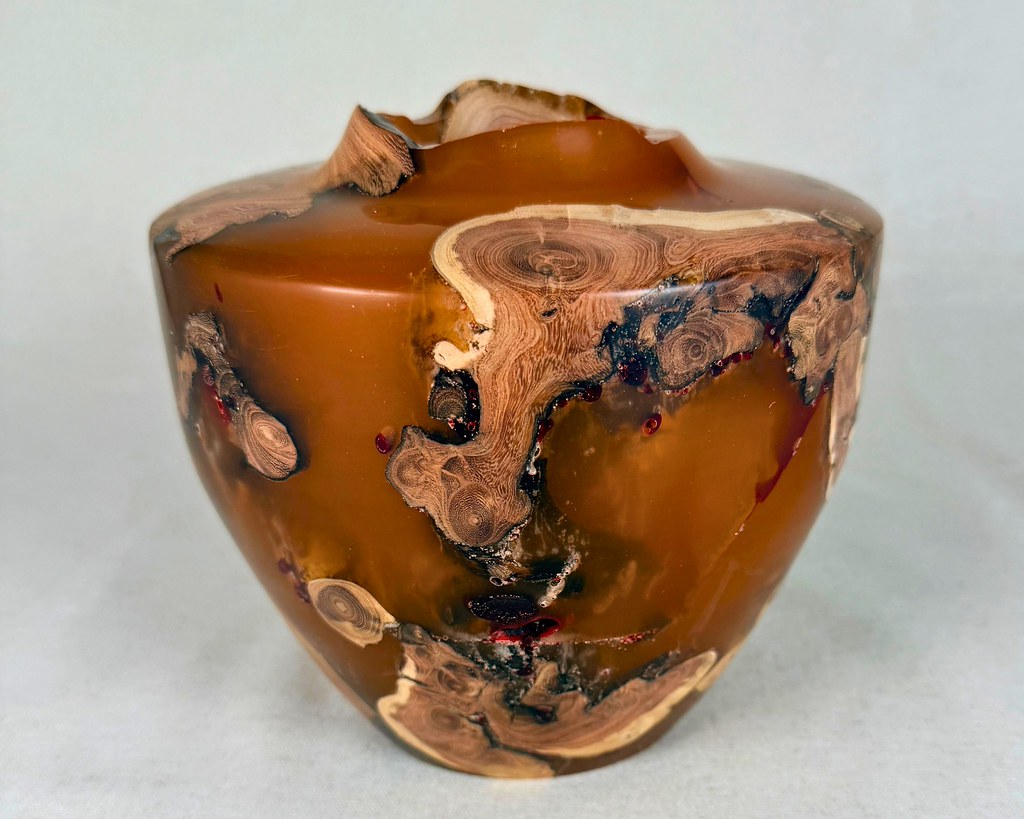
driftwood in amber resin
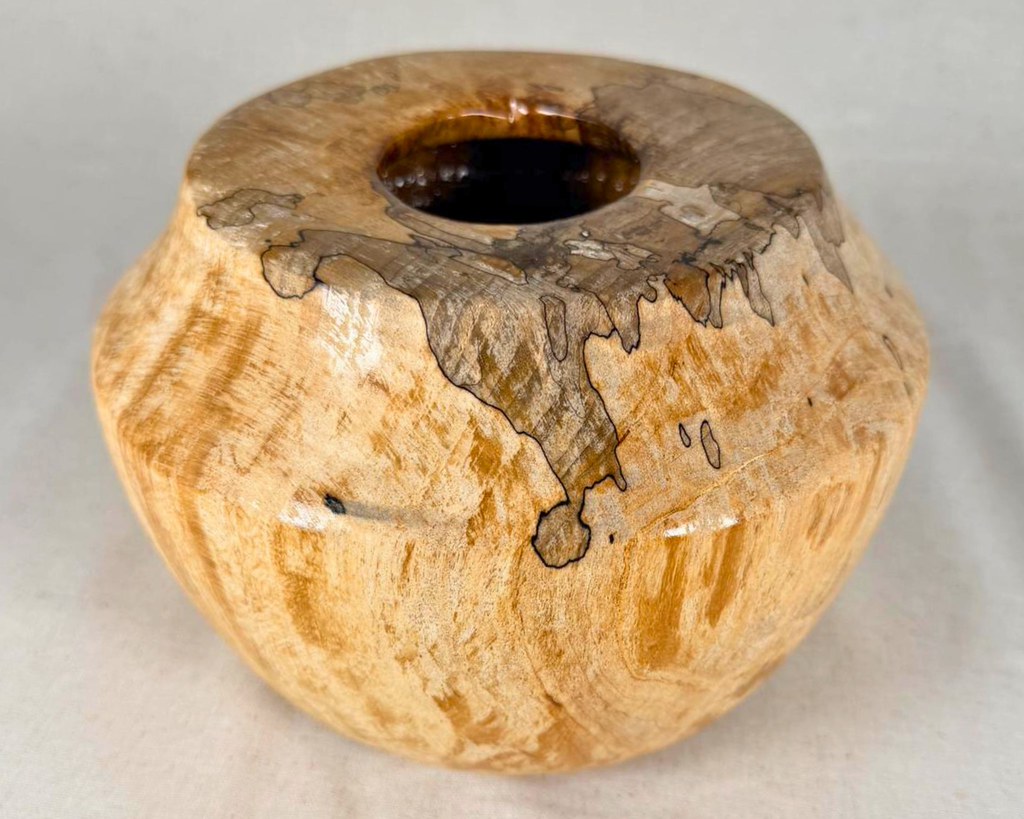
spalted maple irregular form
Is there a personal story, memory, or lived experience that strongly informs the work you're showing now?
Two moments. The first was buying a small lathe only to turn table legs for furniture. Something shifted. I saw that form doesn't have to be imposed on material, only released from it. I never made furniture again.
The second came while I was working for a private art school in Illinois, which took me to Japan a couple of times. I took the chance to study there, and calligraphy stayed with me most. One gesture. Nothing added. Nothing explained. It gave a name to what I was already doing: balance, structure, restraint. My upcoming solo exhibition is called Revelations of Subtraction, and both moments live in that title.
What do you hope viewers feel, question, or take with them after experiencing your art?
I hope they slow down. I hope they see a crack or a void and feel something other than "damaged." Many people don't know woodturning can be sculpture, and I like being the one who shows them. If someone leaves looking a little differently at the trees around them, or at their own scars, that's enough.

reclaimed maple vessel
How has your work evolved over time, and what do you think caused that evolution?
I started as a painter, but I found I didn't have anything to say on a canvas. I kept making things anyway, and that led me to fine furniture. Even then, I approached it as sculpture: form and negative space first, with a little function for good measure. Then I bought a small lathe to turn table legs, and that was the end of furniture. Turning didn't ask me to say anything. It asked me to listen. I have never turned to make something functional. From the first piece, the point was art. Vessels came first, then sculpture. The cause, honestly, is listening more and correcting less. After living in the Chicago area since college, I retired in 2026 and moved my studio to Three Rivers, Michigan, to create my art full time. The work has become more public and, I think, more honest.
What role do you believe artists play in today's culture or community?
To slow people down in a world that keeps speeding up. To point at what's easy to overlook. And to share what we know. I wouldn't be doing this without a teacher who took a high school kid seriously. Craft survives because people pass it hand to hand. That's why I enjoy teaching.

walnut vessel with natural fissure
What's next for you, either creatively, conceptually, or in terms of upcoming projects?
2026 was a year of firsts: my first juried art fair at the KIA Arts Fair in Kalamazoo and my first ArtPrize entry. Two of my pieces are in the 48th Elkhart Juried Regional at the Midwest Museum of American Art through December 31, and I'll be at the Royal Oak Market: Art Fair Edition on November 19 and 20. Next is my solo exhibition, Revelations of Subtraction, which runs December 4, 2026, through January 29, 2027, at the Flora Kirsch Beck Art Gallery at Glen Oaks Community College in Centreville, Michigan. The public reception and artist talk is January 12, with details at treverkwoodturning.com/events.
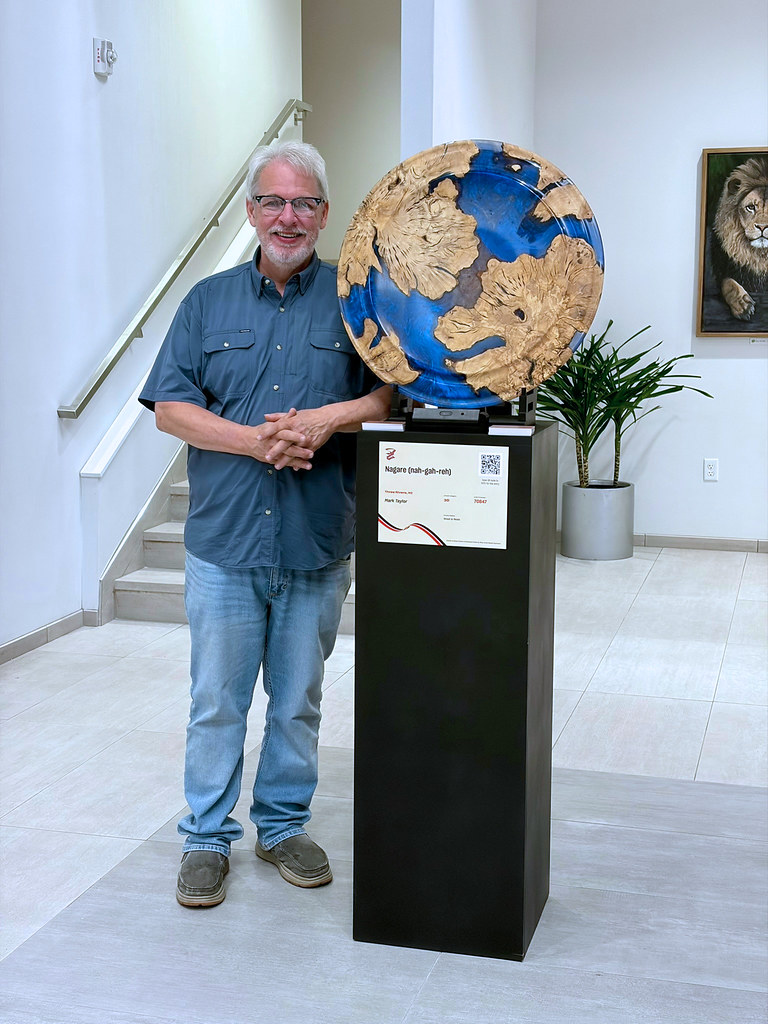
2026 ArtPrize entry
I'm also in the conceptualization phase for a unique series of sculptural pieces that I will be creating for ArtPrize 2027.
And in mid-2027, my wife Tammy and I will begin offering woodturning classes in my shop on our property in Three Rivers. Depending on what the community wants, that could include beginning and intermediate sessions, one-time classes and multi-week series, and special events like date nights and holiday turning. After years of people asking how I do this, I'm looking forward to putting the tools in their hands. To see more of my work, visit treverkwoodturning.com/gallery.
Find Mark online
- treverkwoodturning.com
- See and buy his work – click any piece for a Buy on Etsy link, and he ships
See his work in person
- Royal Oak Market: Art Fair Edition, November 19 and 20
- 48th Elkhart Juried Regional, Midwest Museum of American Art, through December 31
- Revelations of Subtraction, his solo exhibition, December 4, 2026 through January 29, 2027, at the Flora Kirsch Beck Art Gallery, Glen Oaks Community College, Centreville, Michigan. Public reception and artist talk January 12. Details here.
More Artist Spotlights from Wandering Educators
All photos courtesy and copyright Mark Taylor, published with permission.