

From centuries-old Southeast Asian textile traditions and contemporary Japanese bamboo sculpture to New Deal-era works and immersive installations, the Crow Museum of Asian Art’s fall exhibition season explores history, material culture, and storytelling across generations and geographies.

Canopy for shamanic and Buddhist rituals, early 20th century
Headlining the season are two major exhibitions opening at the Crow Museum’s Dallas Arts District and UT Dallas locations. Both drawn from significant private collections, Unseen Worlds: Southeast Asian Textiles from the Spancake Collection (Aug. 22, 2026–June 20, 2027) debuts at the UT Dallas campus location, featuring approximately 150 objects from Houston-based collectors Jenny and Steve Spancake. Unseen Worlds marks the first solo exhibition dedicated to the Spancake Collection.
Opening at the Dallas Arts District location, Twisted, Plaited, Sculpted: Collection of the Carl & Marilynn Thoma Foundation (Nov. 7, 2026–Oct. 31, 2027) showcases the intricate craftsmanship and artistic innovation of Japanese bamboo art through nearly two dozen works, including those by Living National Treasures Fujinuma Noboru and Fujitsuka Shosei. This is the museum’s first collaboration with the Dallas-based Thoma Foundation. Accompanying the exhibition is a large-scale woven-cane sculpture and video installation by Mumbai-based artist Shakuntala Kulkarni. Making her U.S. debut, the presentation complements the bamboo works through shared explorations of nature and transformation.
Other fall exhibition highlights include a floor-to-ceiling multimedia experience at the UT Dallas campus that examines the cultural and political history of salt through reimagined storytelling. Additionally, the campus museum will showcase the third collaboration between UT Dallas and the Dallas Museum of Art displaying many never-before-seen Texas works created during the New Deal era.
Below are the exhibitions opening at the Crow Museum’s Dallas Arts District location and its newest UT Dallas campus site at the Edith and Peter O’Donnell Jr. Athenaeum in Richardson. Both museums are free and open to the public.
DALLAS ARTS DISTRICT LOCATION:
Twisted, Plaited, Sculpted: Collection of the Carl & Marilynn Thoma Foundation
Nov. 7, 2026–Oct. 31, 2027
Crow Museum of Asian Art – Dallas Arts District
Highlighting one of the four major collecting areas of the Thoma Foundation, Twisted, Plaited, Sculpted illustrates the vast breadth and expressive possibilities of woven bamboo as an artistic medium. The exhibition features 22 works by 17 artists, including Living National Treasures Fujinuma Noboru and Fujitsuka Shosei. Derived from plants, bamboo art is continually reshaped and manipulated to push the boundaries of natural form. Ranging from human figures and abstract forms to dream-like basketry, the exhibition interrogates everyday plant materials more routinely seen in gardens, crop fields and local landscapes to reorient perceptions of how nature and art are intertwined.
A contemporary companion installation by Mumbai-based artist Shakuntala Kulkarni will also be on view along with video and three photographic works, extending the exhibition's exploration of plant-based materials from Japan to India. Known for her life-sized armor-like sculptures woven from cane, Kulkarni explores biological forms in relation to contemporary urban life. Her work has gained international attention, including a series of commissions for Dior's 2024 ready-to-wear collection.

Flying Dragon
UT DALLAS CAMPUS LOCATION:
Unseen Worlds: Southeast Asian Textiles from the Spancake Collection
Aug. 22, 2026–June 20, 2027
Crow Museum of Asian Art – UT Dallas campus
Drawn from the Houston-based collection of Steve and Jenny Spancake, this exhibition features approximately 150 Southeast Asian textiles, objects, jewelry and ephemera. Representing cultures across Cambodia, Indonesia, Lao PDR, Malaysia, Myanmar, Thailand and Vietnam, the works reflect the remarkable cultural diversity of the region. At the heart of the exhibition are textiles that reveal complex relationships among humans, plants, animals, spirits and other entities across space and time.
The naga, or divine sea serpent, serves as a visual and thematic thread throughout the exhibition, interweaving themes of Buddhism, shamanism, the celestial realm and animism while exploring transformation in the afterlife.
The Hedge of Halomancy
Aug. 29, 2026–Feb. 7, 2027
Crow Museum of Asian Art – UT Dallas campus
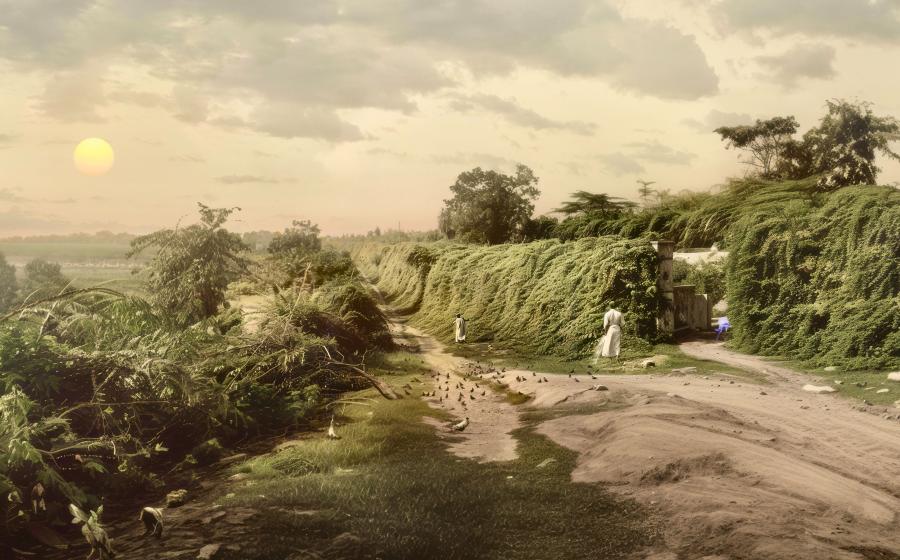
The Hedge of Halomancy is an immersive multimedia experience by artist duo Himali Singh Soin and David Soin Tappeser, known professionally as hylozoic/desires. The exhibition explores the history of the British Inland Customs Line through the reimagined narrative of a fictional halomancer, or salt reader, named Mayalee. With moving image, sound and sculptural elements inspired by salt, the installation examines colonial power, trade and the enduring cultural significance of one of history's most valuable commodities.

Hylozoic_Desires, The Hedge of Halomancy, 2025, film still 3.
New Deal Texas and the West
Sept. 12, 2026–July 18, 2027
Crow Museum of Asian Art – UT Dallas campus
Marking the third exhibition partnership between UT Dallas and the Dallas Museum of Art, New Deal Texas and the West is curated by UT Dallas professor of art history Dr. Erika Doss and features approximately 75 paintings, prints, sculptures and textiles created during the New Deal era (1933–1943). Drawn from the DMA’s permanent collection and additional loans, many of the works will be on public display for the first time.
The Crow Museum of Asian Art operates two locations in the Dallas Arts District (2010 Flora St., Dallas, TX 75201) and on the UT Dallas campus (800 W. Campbell Road, Richardson, TX 75080). Both museums are open Tuesdays-Sundays (11 a.m.-5 p.m.) and closed on Mondays. Admission is free.
ABOUT THE CROW MUSEUM OF ASIAN ART OF THE UNIVERSITY OF TEXAS AT DALLAS
The Crow Museum of Asian Art of The University of Texas at Dallas inspires and promotes learning and dialogue about the arts and cultures of Asia through its exhibitions, the research and preservation of its collections, artistic and educational programming, and visitor experience and engagement. The museum accomplishes this in accordance with the highest professional standards and through collaboration with diverse audiences and community partners within North Texas and throughout the world. The original location in the Dallas Arts District was founded in 1998; in 2019, the Crow family gifted the collection to The University of Texas at Dallas in honor of its founders and to ensure its preservation and care in perpetuity. A second location on the UT Dallas campus in Richardson opened in fall 2024 as part of the Edith and Peter O’Donnell Jr. Athenaeum, a multi-phase arts and performance complex designed by Morphosis Architects. Both locations are free and open to the public with an array of beautiful spaces and galleries, groundbreaking exhibitions and programs, and a commitment to enhancing the region’s artistic and cultural landscape. For more information, visit crowmuseum.org.
ABOUT THE THOMA FOUNDATION
The Carl & Marilynn Thoma Foundation was founded to enhance lives and communities through access to the arts and education. The Foundation makes art collection-related grants to institutions and individuals and lends and exhibits its collection to museums and galleries worldwide. The public can also experience works from the Foundation's collection firsthand at its Dallas headquarters and exhibition space, as well as at Thoma Collection, its public art space in Santa Fe. For more information, visit thomafoundation.org.
Photos published with permission. Credits:
The Hedge of Halomancy, 2025
Multimedia installation: three-channel 4k wall video (color with stereo sound), 23:00 minutes
Himali Singh Soin (Hylozoic/Desires)
Indian, born 1987; lives and works in London and Delhi
David Soin Tappeser (Hylozoic/Desires)
German, born 1985; lives and works in London and Delhi
Courtesy of Hylozoic/Desires, L2026.6
Unseen Worlds: Southeast Asian Textiles from the Spancake Collection
Canopy for shamanic and Buddhist rituals, early 20th century
Cotton canvas with pigments
Myanmarese, Shan State
On Loan from Steven and Jenny Spancake, L2026.4.26
Twisted, Plaited, Sculpted: Collection of the Carl & Marilynn Thoma Foundation
Flying Dragon, 2012
Madake (Japanese timber bamboo), susutake (aged bamboo), rattan
Tanabe Kochikusai
Japanese, 1935-2021
Collection of Carl & Marilynn Thoma Foundation, L2026.6.1