
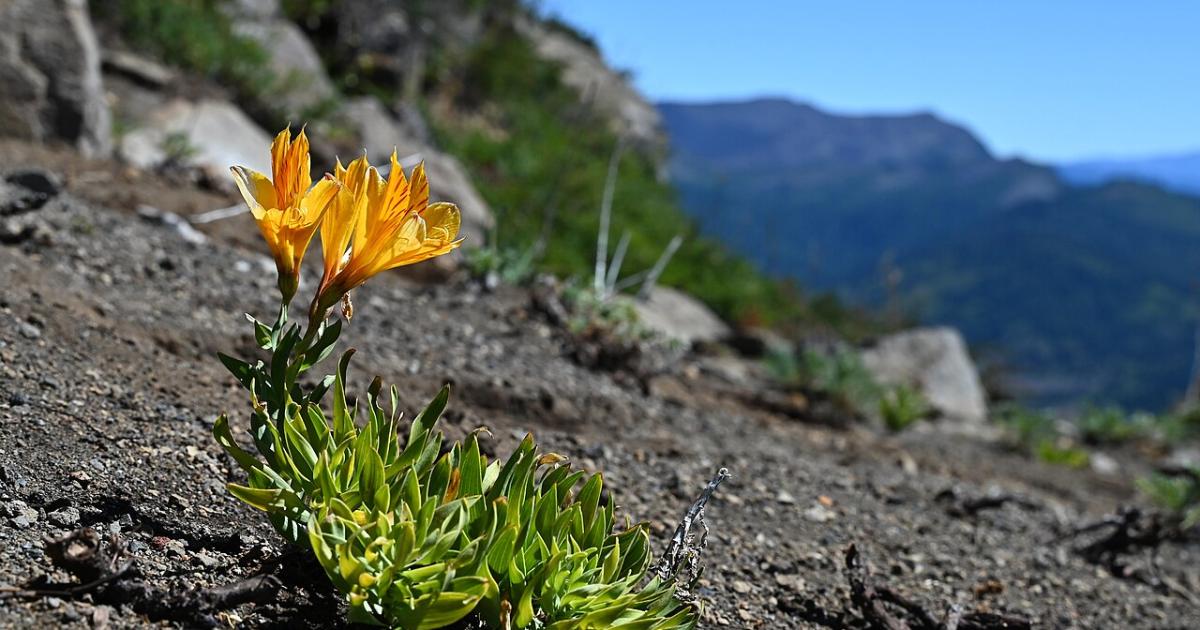

Alstroemeria – a genus of roughly 120 species native to the highlands of Chile, Brazil, and Peru – quietly reshaped how six continents think about flowers. The plant's journey from Andean slopes at 3,500 meters above sea level to kitchen tables in Kansas City mirrors something bigger: the way nature, trade routes, and human curiosity weave together. Understanding that story changes how you look at a simple alstroemeria bouquet delivery – and maybe at travel itself.

A Swedish botanist, a Peruvian mountain, and 250 years of wandering
Baron Clas Alströmer, a student of Carl Linnaeus, sent seeds from Spain to Uppsala, Sweden, around 1753. Linnaeus named the genus after his pupil. That act of naming launched a botanical migration that still accelerates. By the 1980s, Dutch hybridizers – especially the Konst, Van Staaveren, and Van Zanten breeding firms – had developed over 190 commercial cultivars. Today Colombia exports more than 15 billion flower stems annually, and alstroemerias rank among the top 5 cut flowers worldwide.
What strikes me about the timeline: 230 years passed between Alströmer's seed collection and the flower's mass-market success. Patience defined the journey. The Andes didn't rush.
Why did alstroemeria succeed where other exotics failed?
Several traits gave alstroemeria an edge in the global floral trade:
• Vase life of up to 14 days – roughly double that of standard roses
• Stem yield of 6 to 8 individual blooms per stalk, reducing waste for florists
• Cold tolerance down to USDA Zone 7 (about 0 °F / –18 °C), enabling greenhouse cultivation across Northern Europe and the Pacific Northwest
• Color range spanning more than 30 hues, from deep burgundy to salmon, cream, and bicolor streaked varieties
Resilience matters. Plants that survive Patagonian frost and equatorial altitude swings adapt well to commercial growing. The same logic applies to travelers: flexibility carries you farther than comfort.
How flowers map cultural values across borders
Different cultures read different meanings into the same bloom. In Peru, locals call alstroemeria "lirio del Inca" and associate the flower with friendship and mutual support. Japanese floral tradition (kadō) values alstroemeria's twisted leaf – each leaf rotates 180 degrees on its stem – as a visual metaphor for seeing the world from an unexpected angle. Meanwhile, Victorian-era English writers linked the plant to devotion and fortune.
I find the leaf twist especially telling. Botanists call the trait "resupination." The leaf literally flips its underside upward during growth. Travel does something similar to perspective. You leave home thinking you know what matters. You return with your assumptions inverted.

Flower symbolism at a glance
|
Culture |
Common name |
Primary meaning |
|
Peru / Chile |
Lirio del Inca |
Friendship, mutual aid |
|
Victorian England |
Peruvian Lily |
Devotion, prosperity |
|
Japan |
Yurizuisen (百合水仙) |
Shifted perspective, patience |
|
United States |
Parrot Lily |
Lasting bond, appreciation |
The takeaway? A single genus carries four distinct emotional codes depending on geography. That fact alone makes botanical history a lens for cultural literacy.
Tracing alstroemeria's route – and what travelers can borrow from it
The flower's physical journey maps neatly onto real travel routes worth exploring. The Atacama Desert in northern Chile – one of alstroemeria's native habitats – sits at elevations between 2,400 and 4,500 meters. Every August and September, rare rainfall triggers the "desierto florido" (flowering desert), painting arid ground in purple, pink, and white. The 2017 super-bloom attracted over 40,000 visitors to the Atacama region in a single month.
From Chile, the genus spread to the cloud forests of Colombia's Boyacá department, then to the Netherlands via 18th-century trade ships. Modern travelers can follow that arc: Santiago → Bogotá → Amsterdam. Each stop reveals a different chapter of the flower's story, and each city offers a distinct relationship with horticulture. Amsterdam's Aalsmeer flower auction, covering 518,000 square meters, moves roughly 20 million flowers every business day. You can visit the viewing gallery starting at 7:00 AM for a €7 ticket.
Curious about how different alstroemeria varieties reflect their origin regions? The color and petal markings often trace back to altitude and pollinator type in the wild.
What one flower teaches about sustainability and slow travel
Colombia's flower-growing region around Bogotá – centered in the Sabana at 2,600 meters – produces around 70% of the alstroemeria sold in U.S. grocery stores. Farms use equatorial sunlight instead of energy-intensive grow lamps common in Dutch greenhouses. Carbon savings matter: a 2021 study from Cranfield University found that air-freighting flowers from East Africa or South America can generate a lower total carbon footprint than heating greenhouses in the Netherlands during winter months.
The lesson for conscious travelers? Proximity doesn't always equal sustainability. A direct flight from Miami to Bogotá covers 2,487 km – far shorter than Miami to Seattle at 4,395 km. Sometimes the "exotic" destination carries a lighter footprint than the domestic one.

Four ideas alstroemeria offers the curious traveler
1. Seek native habitats, not just tourist highlights – wild alstroemeria grows in places no guidebook prioritizes
2. Notice what locals value in a plant or tradition, not just what outsiders find decorative
3. Follow trade routes backward – every product in your home has an origin story worth visiting
4. Measure a place by resilience, not spectacle – the Atacama bloom lasts weeks, not months, and that brevity amplifies the beauty
Next time you see a Peruvian lily, look closer
Flowers rarely get credit as geography teachers. Yet alstroemeria quietly maps 250 years of botanical exploration, colonial-era trade, modern agribusiness, and cross-cultural symbolism – all in a single stem with a twisted leaf. My hope: the next time you spot one at a farmer's market in Portland or a street stall in Santiago, you pause. Think about the altitude where the species originated. Think about the Swedish baron who carried seeds across an ocean.
Travel doesn't always require a plane ticket. Sometimes just learning where everyday things come from stretches your world. To dig deeper into the varieties and origins of this remarkable genus, explore a detailed guide to alstroemeria types and their backstories. The Andes sent us more than a flower – they sent a reminder that the most durable things often start in the harshest places.
Photos Wikimedia Commons:
Krzysztof Ziarnek, Kenraiz
Magnus Manske
George E. Koronaios
Pato Novoa