

We once drove from Kalamazoo, Michigan to St. John’s, Newfoundland. All of it! Across Ontario, down through the Maritimes, onto the Marine Atlantic ferry, and out the other side onto the Rock, where the light is so bright and clear I have never seen anything like it anywhere in the world. (Our Epic Canadian Road Trip, we called it, and yes, the name stuck...even down to the food. "Remember the epic lobster roll in Nova Scotia? Remember the epic cod in St. John's? Remember the epic dumplings in Montreal?" But I digress.)
It took days. The three of us ate in the car, slept in strange beds (and had the VERY best sleep of our lives aboard the ferry, both ways!!), and by the end of it, we knew each other’s road habits the way you only can after a few thousand miles together. It was, hands down, one of the best trips of our lives!
The drive was that good because of what we did before we ever backed out of the driveway. The decisions we made weeks ahead, about the car, the route, the beds, the budget, and (SO important) how much of each day we were going to leave completely empty.
Which brings us to the question I get most often from readers heading out on their first big drive:
How do I plan a road trip that actually feels like a vacation, instead of a very long errand?
Here’s your guide: what we have loved, what we have learned the hard way, and ten steps that turn a stretch of highway into the trip your family keeps telling stories about (instead of the one everybody remembers for the wrong reasons).
Let’s talk about it.

Ten steps for how to plan a road trip
While there are many ways to plan a road trip, here are ten steps that work, in the order we actually do them.
1. Decide what you are driving. Then absolutely book it first.
Every other decision on this list wraps around the vehicle. How far you can comfortably go in a day. How many people fit. Whether the trunk swallows a cooler and four duffels or just barely closes. Whether you can drive a one-way route and fly home instead of doubling back. The car is the trip.
Sometimes the answer is the car in your driveway. Often it is not. Ours has been fine for Michigan weekends and completely wrong for a two-week haul with grandparents along (a lesson we learned in the parking lot, with luggage, in the rain). And when the road trip starts somewhere you flew into, whether that’s Dublin, Reykjavík, Phoenix, or Halifax, the rental IS the trip.
I book through DiscoverCars.com, and I want to explain why, because it is not just habit.
Discover Cars is a car rental comparison site. It started in 2013 as a three-person startup called Discover Car Hire, out of Riga, Latvia, and became DiscoverCars.com in 2019. Instead of making you open eleven tabs and price the same week eleven times, it compares deals from more than 1,000 rental suppliers (the big names you know, Avis, Hertz, Enterprise, Europcar, Sixt, plus the local companies you don’t) across 164 countries and more than 50,000 pickup locations. Over 7 million travelers have booked through it. It holds a 4.6 rating on Trustpilot across more than 280,000 reviews, and took the 2025 World Travel Tech Awards for best car rental booking website and app.
Four things keep me coming back:
You pick your own dates, pickup point, and drop-off point. Uncheck the “return car in the same location” box and you can drive Porto to Lisbon, or Los Angeles to San Francisco, or pick up at the airport and drop downtown before your flight home. One-way fees exist (they are, honestly, almost impossible to avoid), and Discover Cars shows them to you up front instead of springing them at the counter.
You add the extras when you book, not at the desk. An additional driver (essential, please, do not let one person drive 900 miles), child seats, booster seats, GPS. Adding these at booking means the car is actually ready for your family when you arrive, and you are not negotiating car seat availability at 11pm in a foreign airport with a tired kid on your hip. Ask me how I know.
The price you see includes the mandatory fees and taxes. For anyone who has ever watched a “$19 a day!” quote balloon exponentially at the rental desk, this alone is worth the booking.
Free cancellation up to 48 hours before pickup. This one changes how you plan. Lock in a good rate MONTHS out, keep planning, and adjust if your route shifts. There is also 24/7 multilingual support (the site runs in 30+ languages), which matters more than you think when something goes sideways on a Sunday in a country where you do not speak the language.
Tip: book the car before you book the beds. Rental availability in small towns and shoulder-season islands disappears long before hotel rooms do.
Driving your own car instead? Step six addresses car prep tips. Everything else on this list still applies.
2. Give the route a spine, not a schedule
On our first long drive, I planned hours. Leave at 7, arrive at 11:15, ninety minutes here, back on the road by 1. Total fail.
Please learn from me!
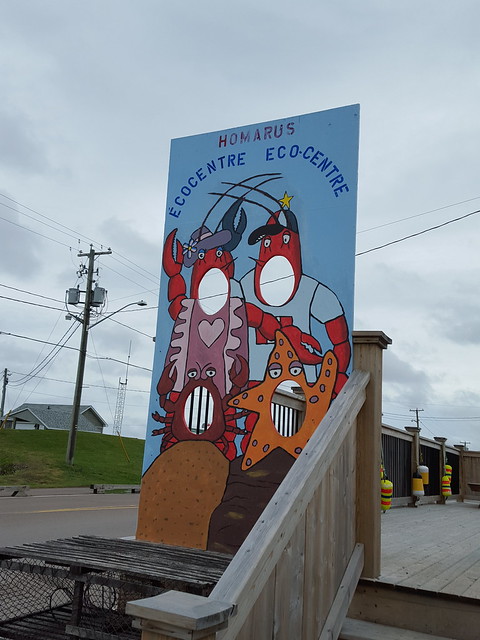
Hilarious lobster cutout sign in Shediac, New Brunswick: Lobster Capital of the World!
Give the route a spine instead. Pick your start, your end, and three or four fixed points in between (the ferry reservation, the friend’s house, the roadside sign of lobster face cutouts for that epic family photo, the one museum or art garden everyone wants). Everything between the fixed points stays soft.

Teapot tree, Kingsbrae Gardens, New Brunswick. I wandered here myself, after a long drive, and decompressed amidst the many forms of art (and llamas)
Our Michigan drives work exactly this way. Union Pier, St. Joe, South Haven, Saugatuck, Holland, Grand Haven, Muskegon, Ludington, Manistee, Traverse City, all the way up to the Mighty Mac bridge and over into the U.P. (we DO love copper country!). That is a spine. Which of those towns we actually stop in depends on the weather, the light, and whether anyone spots a farm stand. (Michigan’s sunset coast is one VERY long beach, and the sand is why it is also the fruit belt. Both facts are relevant to your snack situation, heh heh.)
Want the specifics? Here are our top 10 beach towns on Michigan’s Sunset Coast, our five favorite places for kids on the Sunset Coast, and the marvelous lighthouses strung along the whole route. This is my favorite book about my favorite coast - worth reading before you go.

My favorite lighthouse, ever: South Haven, Michigan
3. Set a daily driving maximum, and make it lower than you think
Pick your number before you leave. Five hours of actual driving per day is a good ceiling with kids in the car, six if the scenery is stunning and you just want to see more (looking at you, Ireland!), and less than that on any day with a big stop attached. Then build the route to fit the number instead of building the number to fit the route.
Driving time is never the only time on this road trip. There is gas time, bathroom time, the-cooler-fell-over time, and the twenty minutes you spend in a rest area (or afternoon at a national park) letting everyone run. A “seven-hour drive” is a ten-hour day. Plan for the ten.
On international roads, cut the number again. The Ring of Kerry in Ireland is curvy and not for the faint-hearted, and the Skellig Ring offshoot even more so. Short distance, long and glorious white-knuckled afternoon. You will want to stop constantly, because you should.

4. Book the accommodations around the drive
Once the spine and the daily maximum exist, the beds sort themselves. Book the fixed nights (arrival, the ferry night, anywhere you need a specific room type) and stay flexible on the middle ones where you can.
A budget is important, so I will point you to two pieces we have already written rather than repeat myself. Road Trip 101: Ten Tips to Save Money on Accommodations has the whole framework, from camping to vacation rentals to the timing tricks. If your group spans generations, how to choose a group vacation rental that actually works will save you real grief about who sleeps where, and our guide to multi-generational travel covers the rest.
One rule I hold to: a kitchen at least every third night. Even a kitchenette. You will want to cook something, do laundry, and eat a real vegetable, have a yard perhaps…and your budget will thank you.

Our kitchen window at Pier Cottage, County Kerry, Ireland. I picked those blackberries in our front yard – freshest breakfast ever!
5. Write your family money rules down before you go
Stick with rules, not a budget. Rules survive contact with a gift shop or art museum store, especially with kids.
Ours: one sit-down restaurant meal a day, maximum (Ed will always, ALWAYS choose local spots with amazing dumplings). Coffee gets brewed in the room (a press pot and locally bought freshly roasted beans in the luggage has paid for itself approximately four hundred times). Gas on the gas card. One big ATM withdrawal instead of five little ones, so the fees stop nibbling. Everyone gets a souvenir budget, and when it is spent, it is spent.
We have a whole piece on this: Road Trip 101: Top 10 Ways to Save Money on the Road. The short version is that road trip money leaks in tiny amounts, constantly, and setting rules before you go plugs the leaks better than willpower does.
Tip: keep the coupons from rest area information centers. They are free, they are local, and they are aimed exactly at people driving through.

Dumplings in Montreal
6. Give your car a real pre-trip check
Do this two weeks out, not the night before. Two weeks gives the shop time to actually fix whatever you (and the shop) finds. If you’re using a trailer for the trip, you can start at Brechbill Trailers when sorting out the right equipment for your vehicle and travel plans.
Oil, filters, brakes, belts, wipers, coolant, and tires. Tire pressure especially, which affects both your safety and your fuel economy more than most people realize. Check the spare (the spare!! nobody checks the spare). Confirm your roadside assistance is active and that you know the number without hunting for it.
Renting? Do the walk-around at pickup with your phone camera rolling. Every scuff, every wheel, the fuel gauge, the odometer. Sixty seconds now, zero arguments later.
7. Build the trunk kit
This is my favorite part, and it is where a road trip stops being transportation and starts being a way of life.
Ours lives in the trunk permanently:
• A blanket. Ours is a wool tartan blanket we found in a Scottish thrift store, and it has been under approximately a hundred picnics since. Best souvenir we have ever accidentally bought!
• A cooler, packed with snacks from the grocery store or farmer's market instead of the gas station. Biggest single money-saver on the whole list. We LOVE picnics.
• A press pot and good coffee (my favorite souvenir! I try to buy all along the trip. Coffee roasting terroir, in a way).
• Water bottles, refilled at every stop.
• A paper map. Yes, really! Cell service disappears in exactly the places you most want to be.
• Supplies, including wet wipes, a trash bag, a first aid kit, and a phone charger per human.
• A small bag of “new” things for the kids that only come out on the road.
• Swimsuits, towels, frisbee. I can’t resist any body of water. We all need to stretch and move!

Picnic in New Brunswick - what a view!!
8. Plan the food like it is part of the trip (because it is)
Gas station food is what happens when nobody decides. So decide!
Look up the farmers markets along your spine before you go, and note the days and hours they run. Find one genuinely good local place per driving day and put it in your notes app (or your annotated setup with a paper map. I LOVE MAKING THESE).
Then build in the sweet stops, because those are the ones your kids will remember. We have an entire piece devoted to ice cream in Ohio, which should tell you something about our priorities. In Michigan, Moomer’s in Traverse City and the homemade chocolate popsicles at Grocer’s Daughter in Empire are worth an actual detour. (GO!) And if your route bends toward the Pacific Northwest, we have written about eating your way through Seattle with a child in tow, too.

Part of my Acadian Coastline annotated map setup
9. Plan the sounds
Twelve hours in a car is twelve hours of something coming out of the speakers. Together, decide what.
We rotate: an audiobook everyone agreed on, a music block per person (democracy, sort of), a podcast hour, and a silence hour, which is the best one on this list and the one nobody believes until they try it.
Music that is genuinely good and not maddening on repeat is worth hunting for. Matt Heaton’s Happy You Made It has survived many, many miles in our car without anyone begging for mercy, which is the actual test of kids’ music!
Prep the ears for the place, too. Driving into Scotland’s Highlands? Julie Fowlis. Ireland? Kick it old school with U2, you already know the lyrics. The soundtrack showcases your destination before you arrive.
Also welcome? Air pods, laughter, license plate and billboard games.
10. Leave one day completely empty. Then head to the library.
The last step in how to plan a road trip is deciding what NOT to plan.
Leave a day. A real one, with nothing in it.
Spend your time discovering, playing, learning, resting, laughing.
On our Scotland trip, the empty day turned into an entire day at Culloden, where Lillie went back to specific parts of the battlefield again and again, listening hard, looking off into the hills. We were the very last people to leave, and we had a hard time leaving at all. None of that could have been scheduled. It happened because there was nothing else on the calendar pulling us away.
Stop for views, cool discoveries, a sunny afternoon’s call to jump in the water, a food truck (even if you’re not starving). These are the best souvenirs you can collect.

At Ingonish beach, Cape Breton Highlands National Park on Cape Breton Island, Nova Scotia, we pulled over, created stone sculptures (and then disassembled them in a giant game of jenga), swam in the Atlantic Ocean (brr), and listened to the gulls and terns accompany the wind’s song.

And when you arrive somewhere new, here is my one unglamorous, deeply nerdy, absolutely reliable recommendation: go to the local library. Not the tourist office. The library. It is the social hub of the town, the WiFi is free (yes, really!), the events calendar tells you what is actually happening this week, there are local-author shelves galore (and often a small used book selection to browse and purchase from), and there is a librarian who knows what is good. My favorite times from when we have done this was in Kenmare in Ireland, and Inverness in Scotland, and it has never once failed us.
Practical details
Rules of the road: familiarize yourself with the rules of the road, wherever you go. This includes braving the traffic in Boston or Chicago, learning quickly about driving on the opposite side of the road in Ireland (and the traffic circles that go along with it), and who has the right of way, when.
Documents to keep in the car: a driver’s license for every driver, your rental confirmation, insurance information, passports if you are crossing a border, and your roadside assistance number. Check whether your destination requires an International Driving Permit before you go.
Timing: shoulder season, always, if you can manage it. Fewer cars, better rates on both rooms and rentals, and the light in September does things the light in July cannot.
Ferries and reservations: book anything with a boat attached the moment your dates are firm. The Marine Atlantic crossing to Newfoundland sells out, and there is no plan B for an ocean!

So: where are you driving this year? And what are you going to leave off the schedule?

Signal Hill, St. John’s, Newfoundland
Jessie Voigts is the founder and publisher of Wandering Educators. She has a PhD in International Education, has lived and worked in Japan and London, and traveled around the world. She is constantly looking for ways to increase intercultural understanding, and is passionate about study abroad and international education.
All photos courtesy and copyright Wandering Educators.