
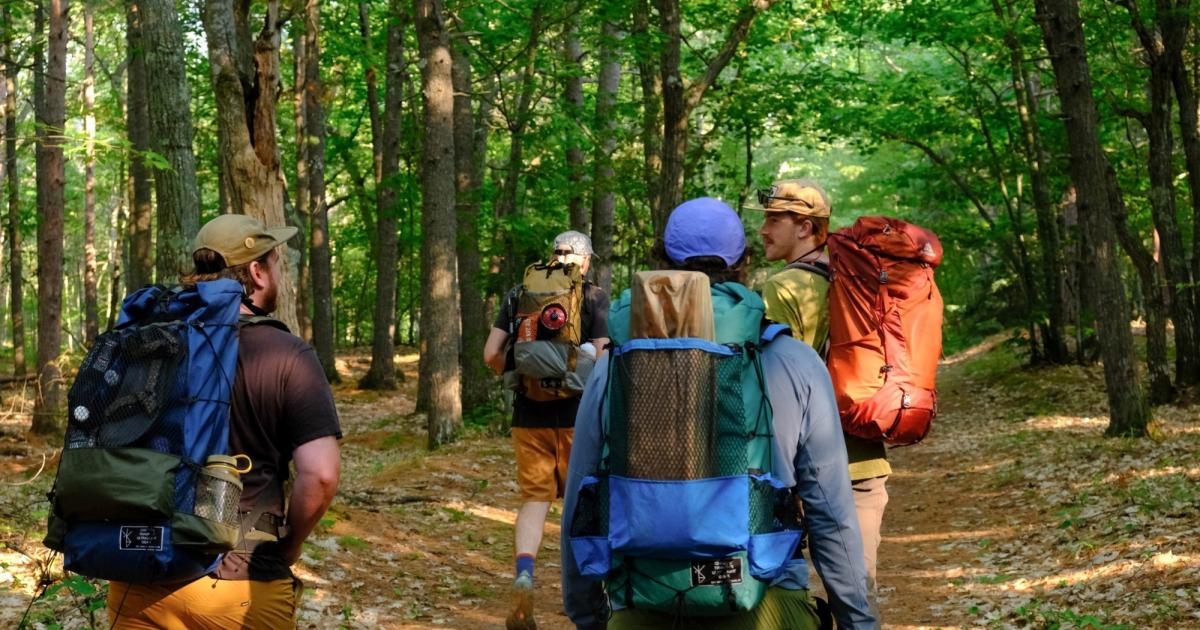

Visit Keweenaw put us onto Chicken Tramper Ultralight Gear, an incredible company in Hancock, up on the Keweenaw Peninsula at the top of Michigan’s Upper Peninsula. They told us it’s a well-known adventure ultralight gear maker, that one of their wallets has been in daily use up there for six years and is still going strong, and that locally produced and hand sewn, this adventure gear is NO JOKE for the mild to extreme outdoors people. That six-year wallet is a better durability report than I can give you. I’ve had mine a few weeks.
What I’ve been carrying is CTUG's Mini Ultralight Wallet and the Ultra Dog Bowl, and here’s what they’re like to use.

Pete is thirsty!
The wallet first. I got the Mini, although they offer different sizes. Super lightweight, sturdily built. The perfect sort of thing when I want to take just my ID, my debit card, and some cash. It holds the most basic of anything I want to carry to the beach, or fishing, or out walking the dogs. I carry a small wallet anyway, but this one is WAY lighter and much less pocket bulk. It weighs about a third of an ounce.
I truly liked the color choices. Mine is coyote and green, and they have a bunch of vibrant colors and two-tone choices. The material is X-Pac, a reinforced nylon with a diamond-like texture, and the zipper is water resistant. I could see that the side tabs are quite useful to clip to a pack with a carabiner, and you can clip the ears to the side of the zipper. Love the light weight, as it is perfect for fitting into the pocket without any extra bulk. Like the colors, like the material.
It's big enough to carry essentials, and not too big to load down your pocket. Would recommend it! This is my go-to wallet now. I especially like it because it zips shut.

An ID, a debit card, and some cash. That's all I need when Pete and Meg and I go for a walk.
The dog bowl is made of the same material. Well-constructed, and a ton of colors, also! I chose purple. I am impressed by the way that it folds up; it folds into a super slim line that shuts and clasps back on itself. Could put it on a backpack, clip it on a belt loop, or wear it as a wristband. You’ll be carrying water anyway for your dogs.

Folded, clasped, and worn. This is the same bowl Pete drank from (!!)
It’s a great little job because it’s so tiny! Super duper lightweight, weighs almost nothing. I like that it folds the way that it folds, and stays out of the way. The Standard holds 55 ounces and weighs 1.6 ounces. One dog won’t drink that much, but two dogs will. Construction is solid, and it’s waterproof obviously. Perfect companion wear on your wrist on the day hike, with enough water for the hikers and the dogs, without a lot of bulk of carrying around a bowl.
This is going straight in my truck as standard equipment for the dogs. No more metal or silicone bowls, too bulky. This will replace all of those ideas I’ve tried in a lifetime of having dogs, and take almost no space in the glovebox. Sized for any size dogs except the tiniest of slipper dogs, for whom it might be a bathtub.

Pete, settling the question of whether a dog cares what the bowl is made of
Chicken Tramper, what can I say but I'm impressed. I enjoyed looking through their website; they are making great stuff. I personally love supporting businesses in the UP. It is awesome to have ultralight weight gear, and I love the color choices. Great product line!
I love the idea that they will make custom order goods for you. That’s incredible! All their backpacks look super cool with the colors and color combos. The customization is a stand out from the crowd.
Grab a fanny pack or backpack, water bottle, and dog bowl, and your dogs will be quite happy for the hike in the woods or along Puget Sound. The wallet is $18 and the Standard bowl is $40, and both have been discounted while I’ve been looking.
We talked with Austin Gongos, who founded Chicken Tramper Ultralight Gear with Nathan Ackerman. In the interview, he tells us where the name came from, what they learned thru-hiking the Pacific Crest Trail, and why they build all of it in the Upper Peninsula.

Austin and Nathan, both wearing the gear they make. The shoulder pouches, the water bottle sleeves, and both fanny packs are their own.
Your website has a whole section headed "Why are we called CTUG?" and answers it with a video . For the people who read rather than watch: where does the name Chicken Tramper come from?
We're engineers, not creatives, so the name came from throwing a bunch of words at the wall to see what stuck. The chicken is from an inside joke in college - our logo was drawn in the 80s by Dan Lorentz, a friend from the fraternity Nathan and I met in, and the word came with the logo. Chickens are hardy animals, cool little bird dinosaurs. Tramper came from the group chat with our tramily - it's the New Zealand word for backpacking and we liked the sound of it. At first it was just a name, but it really does reflect our culture: we don't take ourselves too seriously, but we do take our gear seriously.
You two hiked the Pacific Crest Trail together, and Nathan describes it as a life changing event. What happened out there that turned into a company?
On trail, thru-hikers are gear heads, and our homemade packs sparked constant conversations about the perfect pack. We saw ultralight packs failing after 600 miles and heavy duty packs over 4 lbs, with not much in between. The spark was just how much more people wanted from their gear. Riding the line between lightweight and durable while solving problems and including some features but not others—it was a tempting puzzle for us!
Austin, you have said you found an old sewing machine and taught yourself from the make-your-own-gear forums. What was the first pack you ever made, and what did you learn from that, for the next?
The first pack I ever made was the pack I hiked the PCT with. I learned a lot about material selection, how to fit pack dimensions to different body shapes and even how body shapes change! I lost enough weight on the trail that I had to significantly modify my hip belt on the fly.

Est. 2018, Hancock. That is the Upper Peninsula town where every one of these is made.
You are both mechanical engineers from Michigan Tech. Where does that engineering show up in a backpack? Is there a decision you made differently because of it?
Backpacks are important to us and we use many engineering tools like CAD and a CNC cutting table to create custom backpacks at the lowest cost possible, but engineering shows up in our business everywhere! Engineers are basically problem solvers, and most of our product line comes from a problem or complaint people experience on the trail. We then take those complaints and engineer solutions to them, like the Bear Can Key or Water Bottle Sleeve.

Process shot! Clearing the bed after a cut. The white curls are the offcuts, and the panels they came from are already stacked for sewing.
LOVE the names Catch Up and Robin Hood. Where did the trail names come from?
Nathan's trail name is Robin Hood - some hikers from Britain named him for the arrow in his pack and the feathers in his hat (he carried an extra frame stay along the trail in case any of our frames broke). My name Catch Up came from my habit of sleeping in or having constant snacks while sitting on rocks and catching the view, then hiking quickly to catch up to my friends.
You could have built this anywhere. Why the Upper Peninsula's Hancock, and what does being located in the Copper Country actually do for the company, good and bad?
Nathan spent summers at his family's cabin in the Copper Country, and I came up for Michigan Tech and never left. It's a great place to test gear, and I love that we get to give jobs to people in our small town. The downside is we're not Amazon. We're a small team in the middle of nowhere, and we ship orders the day they come in, but nothing's showing up in a day or two. The biggest upside though is the proximity to outdoor activity, we have the big lake, rivers, climbing, skiing, running, biking etc. It's truly an outdoor playground!
You have built a team of mostly young people, several of whom say on your own site that they learned to sew on the job or taught themselves. What is it like teaching someone to sew well enough to build gear that has to survive a thousand miles?
It gives us great joy to train people how to sew. It's an incredibly useful skill that our team gets to carry with them for the rest of their lives!

See how CTUG is made! The white buckets under the table hold the offcuts from the cutting table, and the grey pieces on the left are padding being trimmed by hand.
The repair shop
You run a repair service, you only take work in person, and you give customers 15% off their next order for having something mended instead of replaced. Repairing gear competes with selling gear. Why do it?
We love keeping gear out of landfills! Our gear doesn't tend to break, and we repair it for free most of the time even if it's out of warranty. We just love being able to keep someone's favorite tent, jacket or pack working well for years to come.
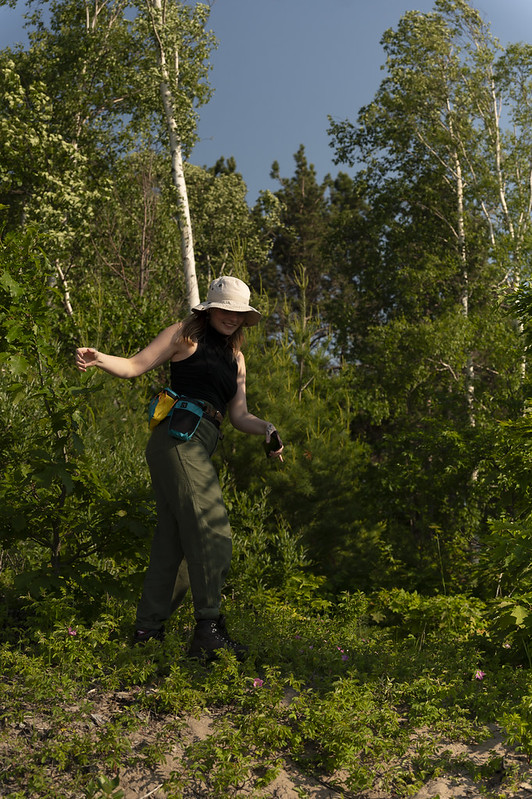
Pink wildflowers along a sand trail in high summer, and wearing a two-tone fanny pack in teal and yellow.
Your repair page says you will hold a finished item for 45 days and then donate it to a good cause. Has that actually happened, and where do those things go?
It's never happened. We don't do huge volume in repairs yet, and people are generally happy to come get their gear. The 45-day line is more of a scare tactic so people don't just leave stuff for months.
The products
The Ultra Dog Bowl folds up into a bracelet (and has a really cool seam). Where did that idea come from, and how many versions did it take?
The idea was developed with a previous employee, and we iterated a few times to get the sizing right and the DFM (design for manufacture) dialed in so it could be made quickly enough with high functionality.
For a reader who has never owned a piece of ultralight gear and is intrigued by the whole idea: what should they buy first, and what do people most often underestimate?
Never go straight for an ultralight backpack. If you're interested in getting lighter, get a LighterPack account (free) and start minimizing the weight of your other kit, figuring out what you don't use on your trips. Once your baseweight is down a bit, then you can go for a pack that will work. Also, buy used! There are many used gear forums where you can build a UL kit that doesn't break the bank.

Thirsty? Wear a Chicken Tramper shoulder sleeve.
Your made-to-order work can take anywhere from two weeks to four months. What should somebody shopping for a holiday gift know before they order?
Ordering off the shelf is the way to go - we stock so much gear that you shouldn't need to go made to order. On the made-to-order wallets, we generally get the gear out the door within a week or so.
Learn more: chickentrampergear.com
You might also like to read:
- Broken Top Hike: a Photo Essay
- Read This: 100 Things to Do in Michigan Before You Die
- Read This: Small Town Michigan
Ben Voigts is the Pacific Northwest Editor for Wandering Educators
Photos courtesy and copyright Chicken Tramper Ultralight Gear and Ben Voigts
Chicken Tramper Ultralight Gear provided the Mini Ultralight Wallet and the Ultra Dog Bowl for review. All opinions are our own.