
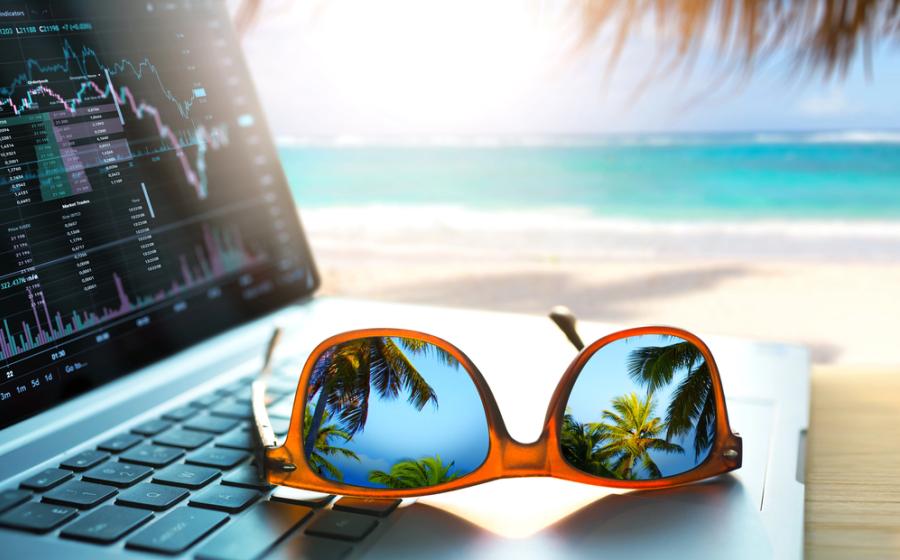

Travel has always been a form of education. From learning new languages to understanding cultural nuances, stepping outside familiar surroundings encourages growth in ways that traditional classrooms often cannot replicate. In recent years, however, a new dimension has emerged within this experience, financial awareness shaped by digital tools and global market access.
For modern travelers, especially long-term nomads and remote workers, managing money is no longer limited to budgeting for accommodation and transportation. It now includes navigating multiple currencies, understanding exchange rate fluctuations, and in some cases, engaging directly with digital financial markets.
Learning Financial Awareness on the Move
As travelers move between countries, they become increasingly aware of how interconnected global economies are. A shift in currency value, a change in local pricing, or fluctuations in international markets can all have a direct impact on daily spending.
This exposure often leads to a deeper interest in how financial systems operate. Some travelers begin to explore foreign exchange markets, while others look into digital assets as a way to manage funds across borders. What starts as a practical need, handling money abroad, can evolve into a broader educational journey.
Within this context, the tools people use become part of that learning process. For instance, someone already paying attention to exchange rates and cross-border transfers may gradually become curious about how pricing actually forms in global markets, which is where Kraken Pro for active traders comes into view. Watching a BTC/USD order book in motion, tracking how liquidity builds at different levels, or noticing how bid-ask spreads tighten and widen during periods of volatility can turn abstract concepts into something far more tangible. Over time, this kind of exposure adds a deeper layer of financial understanding that goes well beyond everyday transactions.
The Intersection of Travel and Digital Markets
The rise of remote work has made it easier for individuals to sustain long-term travel lifestyles. At the same time, access to digital financial platforms has enabled them to stay connected to global markets regardless of location.
This combination creates a unique learning environment. A traveler might spend the morning exploring a local market in Lisbon and the afternoon reviewing global price movements or adjusting financial positions. The physical and digital worlds intersect, offering continuous opportunities for observation and learning.
That same overlap is visible in how travelers move between places. Planning overland journeys often involves the same blend of digital coordination and real-world experience, and some book flexible, pre-arranged transfers through online platforms to get to their destinations more fluidly. without relying on fixed schedules or their own vehicles.
Importantly, this does not mean every traveler becomes an active trader. Rather, it reflects a broader shift toward financial curiosity and engagement. Even a basic understanding of how markets function can influence how individuals approach spending, saving, and planning while abroad.
Currency, Volatility, and Everyday Decisions
One of the most immediate lessons travelers encounter is currency fluctuation. Exchange rates are not static, and small changes can accumulate over time, especially for those moving between regions frequently.
This experience mirrors, on a smaller scale, the dynamics seen in financial markets. Volatility, liquidity, and timing all play a role in determining value. Travelers who become aware of these patterns often develop a more strategic approach to managing their money.
For example, choosing when to exchange currency or how to distribute funds across accounts can be influenced by market awareness. While these decisions may seem minor, they reflect a deeper understanding of financial systems and their real-world implications.
Digital Literacy as a Travel Skill
Just as navigation and communication are essential travel skills, digital literacy has become increasingly important. This includes not only using apps for booking and transportation but also understanding the platforms that manage financial activity.
Modern financial tools are designed to be accessible, but they still require a level of familiarity to use effectively. Learning how to interpret charts, understand pricing structures, or manage risk can enhance both financial outcomes and overall confidence.
For educators and learners alike, this represents an opportunity to expand the concept of what it means to be “travel-ready.” Financial literacy is no longer confined to formal education, it is something that can be developed organically through experience.
Understanding Risk and Responsibility
With greater access comes greater responsibility. Engaging with financial tools, whether for currency management or market observation, requires an awareness of risk.
Volatility, particularly in digital asset markets, can lead to rapid changes in value. For travelers, this underscores the importance of balancing curiosity with caution. Not every tool needs to be used actively; sometimes, observation alone provides valuable insights.
Education plays a key role here. Reliable information helps individuals make informed decisions and avoid common pitfalls. This is especially important in a global context, where regulations and protections can vary significantly.
A Broader Perspective on Global Systems
Travel offers a unique vantage point for understanding how different systems interact. Economic policies, local markets, and global financial trends all intersect in ways that become more visible when experienced firsthand.
Insights from organizations like the World Bank highlight how interconnected economies influence development, stability, and opportunity across regions. For travelers, this perspective adds depth to their experiences, transforming observations into a more comprehensive understanding of the world.
It also reinforces the idea that financial literacy is not just about personal gain, but about understanding the systems that shape everyday life.
The Future of Learning Through Travel
As technology continues to evolve, the connection between travel and education will likely become even more dynamic. Digital platforms will play an increasingly central role in how people learn, interact, and manage resources while on the move.
For modern nomads, this means that every journey has the potential to be both an exploration of place and an exploration of knowledge. Financial tools, once considered specialized or inaccessible, are now part of a broader toolkit that supports this experience.
Ultimately, the value lies not in mastering every aspect of these tools, but in developing awareness. By engaging with the systems that underpin global markets, travelers gain insights that extend far beyond their immediate surroundings.
In a world where mobility and connectivity continue to expand, learning is no longer tied to a single location. It happens across borders, across platforms, and across experiences, shaped by the choices individuals make and the tools they use along the way.