
Money drove early explorers’ northern runs across Europe, not curiosity. Investors backed caravels into the ice pack for one reason: trade with Cathay without running straight into Spanish guns in southern waters.
Money drove every choice in this field.
In 1596, Willem Barents led two unwieldy caravels past northern Norway, lost his dead reckoning during unrelenting gale-force squalls, stumbled onto Bear Island entirely by accident, and ended up trapped along Novaya Zemlya's eastern shore when polar floes converged behind his rudder. Ice locked them down. The men tore apart their own cabins for firewood and shelter. They trapped polar foxes in barrels, ate salted meat, and buried their dead in the frozen ground while the dark months dragged on.
Fast forward to today, and that same stretch of ocean between Norway and Spitsbergen has not changed. Bridge hardware evolved, but the underlying hazards have not.

The Open Water North of the Finmark Coast
Gravneset hides right behind the shingle spit in Magdalenefjorden. It’s grim ground. Over a hundred and thirty seventeenth-century whalers lie under rough beach rocks here. Shore crews spent the short summer living in filthy, sodden wool, cooking down bowhead blubber in open rock fire pits while glacier squalls battered the anchorage. Rusty barrel hoops still stick out of the gravel today. Wood crosses rotted to nothing centuries ago. If winter set in early, an entire shore gang was simply stuck on bare rock until the salt beef ran out. The driftwood crosses rotted away centuries back. If winter set in early, an entire shore gang was simply stuck on bare rock until the salt beef ran out.
Whaling Camps and Burials at Gravneset
Past the narrow gravel banks of Magdalenefjorden lies Gravneset, basically a cold graveyard on a spit. Over one hundred and thirty whalemen ended up buried under raw beach cobbles here. Shore parties spent whole seasons in drenched wool, melting whale fat in open stone pits as vicious mountain winds tore down off the plateau. Corroded iron bands still poke out of the dirt. Driftwood markers rotted away centuries back. A sudden freeze often pinned shore gangs to bare shale until their barrels of salted beef turned rancid.
The Old Dutch Settlement at Smeerenburg
Smeerenburg sits on the flat shale of Amsterdam Island. Four centuries ago, Dutch whaling syndicates turned the place into a greasy factory town. Try-pots boiled non-stop through the brief summer, choking the cliffs with tallow smoke as flensing teams hacked up carcasses at the shoreline. Seasonal frost heaves still force red brick shards, barrel wood, and yellow whale ribs up through the moss. Bull walruses sleep across the spit where coopers worked, bickering over wet rocks along the tide line. Dry cold preserves wood exceptionally well. The entire outpost looks like a whaling station abandoned just a season ago.
Modern Routes Across Historical Transit Points
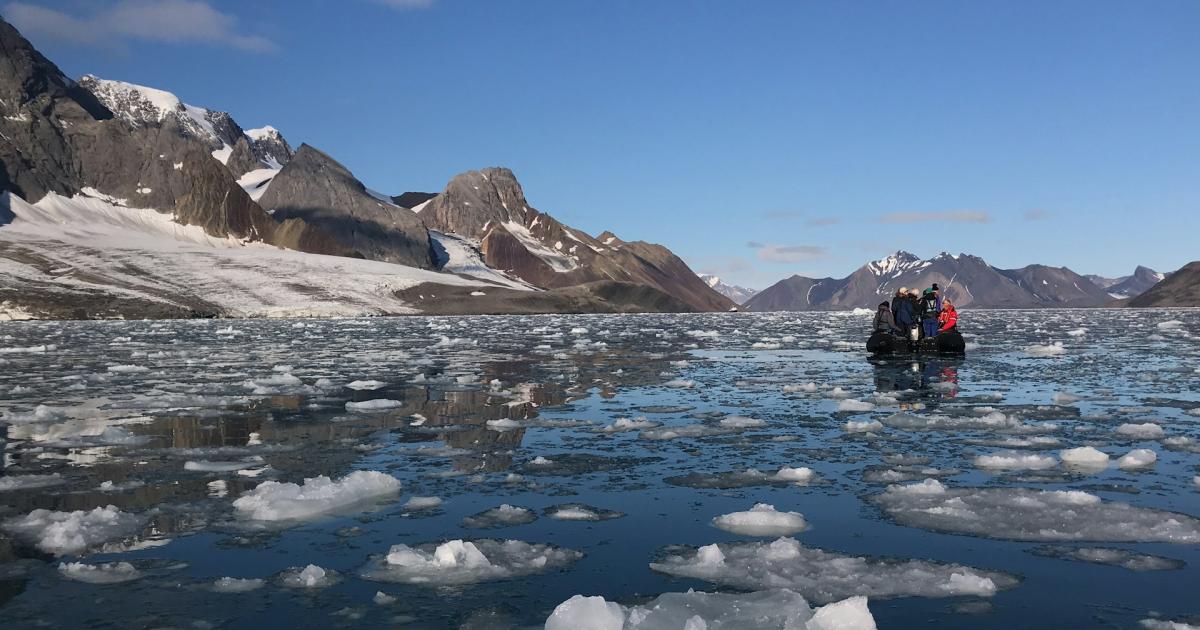
Navigating north from Tromsø toward the pack edge once cost weeks of beating square sails directly into stubborn northerlies. Modern expedition hulls follow satellite plotters now, but the Barents gap still punishes reckless navigation. Deep cargo vessels cannot safely leave dredged shipping lanes, but an Arctic cruise from Norway aboard an ice-class vessel like Aqua Lares lets passengers trace Barents' original sights through the inner channels of Samarinvågen and Liefdefjorden. The reinforced bow shoves rotten brash ice aside. This gives the bridge crew room to drop anchor in sheltered water and launch heavy Zodiacs directly onto gravel beaches where deeper hulls would run aground.
Shifting Shoals and Icefall in Samarinvågen
Glacier faces alter the sound constantly. Deep inside Samarinvågen, blue ice cliffs tear loose and dump multi-ton slabs straight into salt water, throwing four-foot surges across the stones and choking the inlet with loose debris. Melt streams wash thick mud down off the scree all summer. That silt builds shallow underwater spits where older hydrographic maps show clear, deep water. Bearded seals ride flat drift slabs right past the shoals. On the bridge, officers keep an eye glued to the water line. Dense blue ice, calved just hours earlier, floats nearly submerged in the brine, ready to bend a bronze propeller blade working at five knots.
The Edge of the Multi-Year Pack in Liefdefjorden
Up near eighty north, the open water simply stops. Multi-year floes jam against each other under the deep swell, buckling upward into broken pressure ridges that block every lead. Seals keep breathing holes open in the frozen slush, while lone polar bears patrol the ridges on the wind. Wooden caravels dreaded this barrier above everything else. Shifting ice sheets would crush heavy timber hulls in minutes. Watching that solid polar pack slide past reinforced steel frames shows why early voyages into the Northeast Passage regularly ended in splintered wood and unmarked graves.

Constant daylight ruins normal rest. The sun just circles the horizon, flat and blinding against the dark water, never setting. Crews lose track of actual hours. Wheelhouses run on blunt four-hour rotations because sailors make bad calls when the glare stays up all night. Calendar dates do not matter once the anchor grabs bottom. The only real clocks out here are the barograph on the chart table, the tide, and shifting floes out in the channel.
Hitting the wooden pilings at Longyearbyen jolts everyone awake. Mining trucks haul coal past the old wooden towers, forklifts bang over cracked concrete, and mobile phones buzz with weeks of dead emails. Past the fjord mouth, none of that racket exists. Glaciers drop ice into the chop. Walruses sleep on the spit. The Arctic waterways run on their own schedule, whether a ship shows up to watch or stays in port.