

Here’s the thing most Orlando advice gets wrong right out of the gate: it treats parks like they’re interchangeable. Like you just swap one logo for another and the day feels the same. It doesn’t. Not even close.
Each park pulls on a different emotional lever: immersion, adrenaline, or room to breathe. And in 2026, when crowds, heat, and fatigue are part of the deal whether anyone admits it or not, stacking similar experiences back-to-back is how trips can fall apart.

Our recommended mix works because it balances three very different demands on your body and brain:
• One deeply immersive, time-intensive destination that realistically needs 30-40 total park-hours before it feels complete
• One high-energy thrill ecosystem, where rides move 1,200-1,800 riders per hour, so waiting stings less
• One lower-density park that delivers excitement without crushing your nervous system, with average walking distances 15-25 percent lower per hour than on Disney peak days
That balance matters more than raw ride count once you factor in 90°F (32°C) heat and 70 percent humidity, which is the unspoken boss fight of Orlando summers.
Best Flagship Theme Park Ecosystem for Iconic, Multi-Day Immersion: Walt Disney World Resort

Disney is not a park you “pop into.” It’s a highly intricate system. You don’t visit so much as you live inside it for a few days, and that distinction changes everything about how you should plan.
Four parks, four emotional gears. Magic Kingdom hits both nostalgia and spectacle. EPCOT delights adults with food, culture, and sheer scale. Hollywood Studios compresses intensity into a tighter footprint. Animal Kingdom slows your breathing without announcing it, as there is more space, more shade, fewer screens shouting at you.
Here’s what actually catches people off guard:
• Time compression pressure: Two days feels rushed. Always. Four days feels intentional. Most first-time visitors log 8-10 hours per park day, and step counts regularly blow past 20,000-25,000 steps before dinner.
• Queue psychology: Standby waits often sit in the 45-90-minute range, but Disney hides that pain better than anyone. Some queues stretch across 3,000+ square feet of themed space, which oddly makes time feel softer.
• Crowd behavior: Attendance is huge, but it spreads across 25,000+ acres, which blunts the worst congestion compared to single-gate parks.
The real cost isn’t money. It’s mental bandwidth. Genie+, park order, rest days, dining windows. Disney rewards planners and subtly punishes improvisers.
Choose Disney if depth, continuity, and emotional payoff across multiple days matter to you; skip if you want fast decisions and minimal planning overhead.
Once that immersion box gets checked, most people crave something louder, faster, simpler.
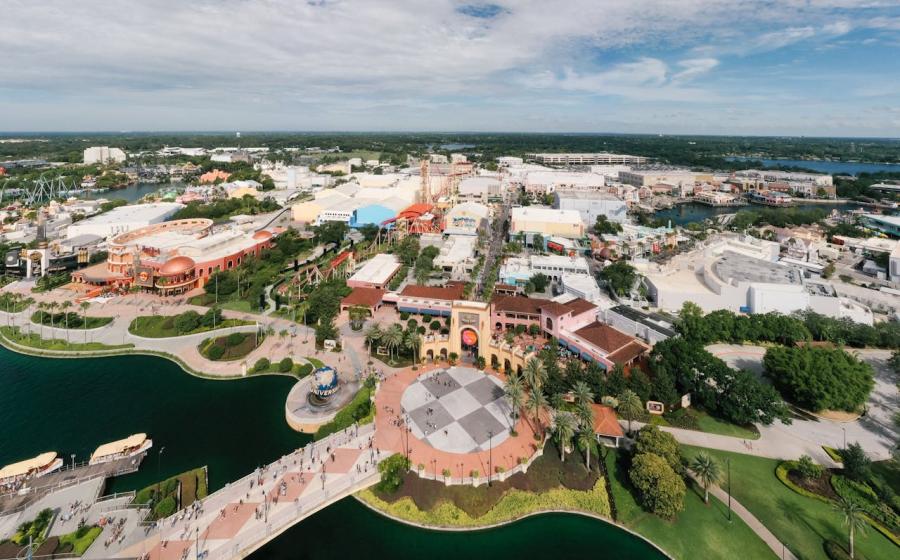
Best High-Energy Thrill and IP Density for Teens and Adults: Universal Orlando Resort

Universal understands momentum. Lines move. Rides load fast. You feel progress instead of grind.
Universal Studios Florida and Islands of Adventure really only make sense as a pair. The Wizarding World of Harry Potter stitches them together, and park-to-park tickets unlock that continuity. Layer in rides like VelociCoaster - 70 mph, 155 feet tall, pushing 4 Gs - and suddenly waiting feels worth it.
What makes Universal feel easier on your brain boils down to three things:
• Simpler planning stack: Two parks, not four. Roughly 1,000 acres total. Fewer decisions, less second-guessing.
• Ride-first layout: Attractions sit closer together, with walking distances running 20-30 percent tighter than Disney equivalents.
• Express Pass clarity: Expensive, yes, but brutally effective. It can cut waits from 60+ minutes to under 20, which completely reshapes a peak-season day.
The downside creeps in. Sensory overload. After 15-20 high-intensity attractions in a day, many visitors feel wrung out rather than satisfied.
Choose Universal if ride efficiency and adrenaline density matter more than subtle theming; skip if you need visual rest and softer pacing.
When that overload hits, the body usually wants space next.
Best Balanced Park for Breathing Room, Education, and Thrill Contrast: SeaWorld Orlando

Photo: Wikimedia Commons: Jeremy Thompson

SeaWorld works because it doesn’t try to win the same fight as Disney or Universal.
It blends coasters, live animal encounters, and wide-open sightlines, which gives your nervous system a break without turning the day into a snooze. Manta hits 56 mph in a flying position that feels faster than the number suggests. Ice Breaker launches you forward and backward before sending you up a 93-foot vertical spike, which hits differently than traditional lift hills.
Then, almost on cue, intensity gives way to calm. Dolphin habitats. Penguin exhibits. A 20-30-minute show where sitting still feels like relief, not wasted time.
What SeaWorld gets right:
• Crowd diffusion and space: Major walkways often run 30-40 feet wide, keeping movement fluid even on busy days, while animal habitats span multiple acres, encouraging slower pacing.
• Natural pacing control: The park builds rest cycles into the day without forcing them. You push when you want, coast when you need to.
The trade-off is story depth. Experiences feel episodic rather than woven into a single narrative. For some people, that’s freedom. For others, it feels lighter.
Choose SeaWorld if you want contrast, space, and a calmer rhythm without giving up thrills; skip if immersive storytelling is your main draw.
Quick Reference: Choosing the Right Park Mix for Your Trip
| Primary Goal | Best Park | Strength | Watch-Out |
| Emotional immersion | Disney World | Depth, storytelling, variety across 4 parks / 25,000+ acres | Planning complexity |
| Ride Density | Universal | High thrill efficiency, 70 mph+ coasters, fast load cycles | Sensory fatigue |
| Balance and recovery | SeaWorld | Space, contrast, lower crowd density per acre | Less narrative cohesion |
The best Orlando trips aren’t built on chasing “the best park.”
They’re built on contrast.
One park that absorbs you.
One that excites you.
One that lets you breathe.
Get that mix right, and the whole trip feels easier - lighter, calmer, more in control.