

Ontario no longer runs an educational admissions stream that takes a graduate on the strength of a degree alone. Both the Masters Graduate stream and the PhD Graduate stream are closed. The province rebuilt its nominee program around a single route. Ontario's page for each stream gives May 30, 2026 as the closing date, and both were read on Sept. 18, 2026.
Ontario's remaining stream considers one thing a school decides: the credential a program awards. Program length is the school's call too, and it helps determine how long a federal work permit can run. A university also decides whether paid work terms are built into the degree and staffs the office that advises students on permits, while the campus fixes location and cost. Ontario runs the nominations and the federal government decides permanent residence, and neither is a school's decision to make. All six points are published and checkable, so the list below compares universities on them, credential first, and leaves ranking tables aside.

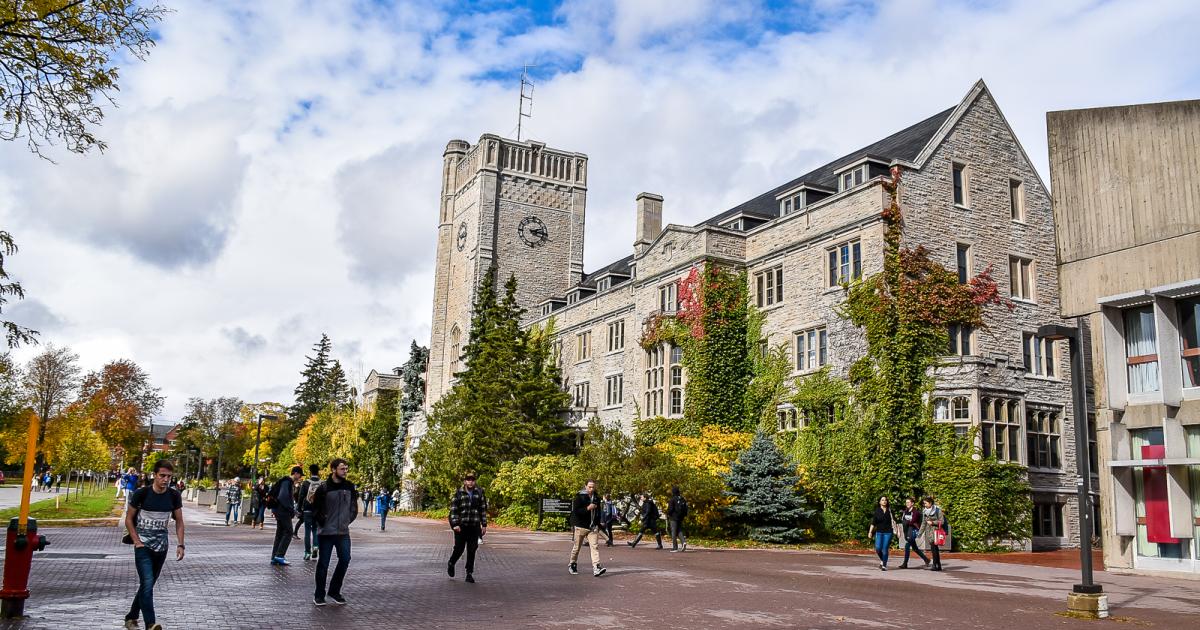
University of Toronto. Photo: City of Toronto
Where Ontario's Nominee Program Stands in September 2026
The landing page for the Ontario Immigrant Nominee Program (OINP) now shows one notice. The new Ontario Workforce Priority stream has launched and every other stream is closed. That page was read on Sept. 18, 2026.
One stream is left, with two ways into it. Skilled workers need a job offer. Self-employed doctors do not. This is the only route here that does not require an employer.
Within that stream, one rule turns on the credential a program awards. Ontario treats somebody as a recent Ontario graduate if they finished at an eligible Ontario institution in the last three years. The credential has to be one of four:
• A degree or diploma that took at least two years of full-time study.
• An Ontario College Graduate Certificate.
• A master's degree.
• A PhD.
That status removes the language test under the applicable recent-graduate provisions. It also cuts the paid work needed in the offered job from six months to three.
A one-year program clears the general education bar without making anybody a recent graduate. Ontario publishes the list of eligible institutions itself, so no school puts itself on it.
Matching the rule only puts somebody in front of the province. Ontario runs its invitation rounds on its own schedule. The permanent residence decision after that is a federal one.
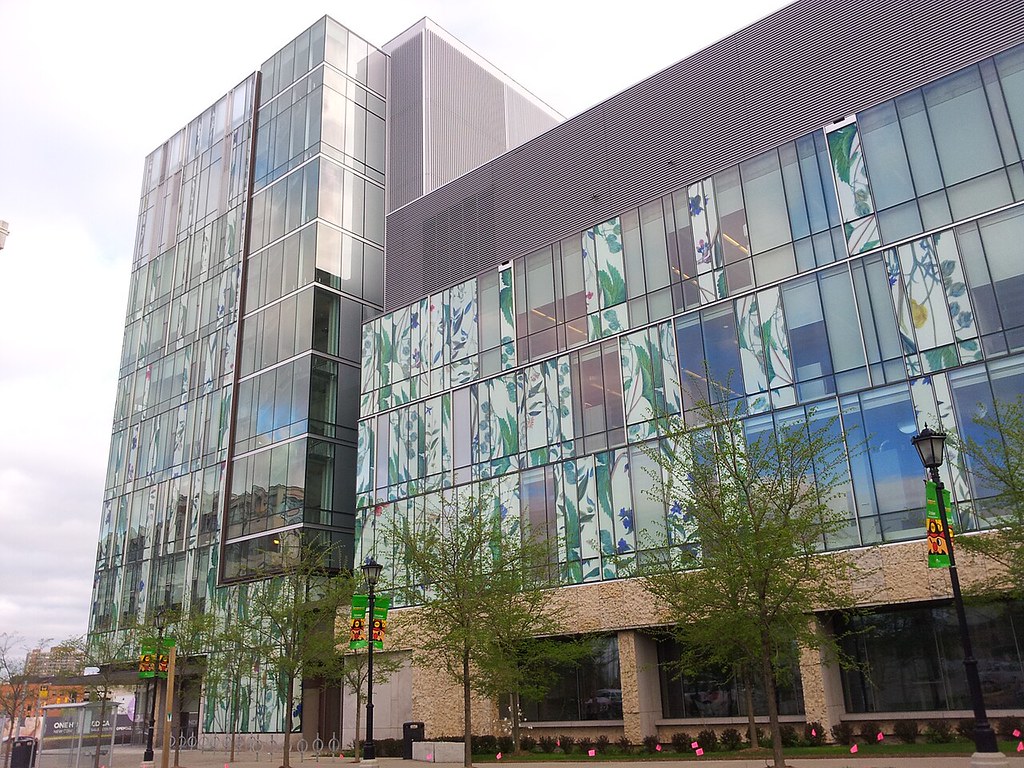
University of Waterloo School of Pharmacy Edward Park, CC BY-SA 4.0, via Wikimedia Commons
Ontario Universities Compared on Credential, Program Length and Cost
Every figure below comes from the school's own pages, read on Sept. 18, 2026.
1. University of Guelph
The University of Guelph lists more than 130 graduate programs in science, engineering, business, social sciences and the humanities. Most course-based programs finish in 12 to 16 months, a thesis-based master's takes two years and a PhD five to seven. All three appear on Ontario's credential list. Tuition runs $5,775 to $19,106 a semester for international students. The graduate pages offer what U of G calls free immigration and study permit advising. An October 2025 newsroom item called the co-op program second largest in Ontario and fifth in Canada, on 3,569 paid work terms in 2024 to 2025.
2. University of Waterloo
Waterloo's own pages say its co-op program is larger than the next two Canadian programs combined. More than 8,000 employers take its students, on placements in more than 70 countries. Most students finish four to six work terms, and a four-month term in Canada pays $9,600 to $23,400. A co-op degree there takes five school years rather than four. The three-year window Ontario allows after graduation opens a year later. The provincial rule measures credential type, and on that Waterloo is level with the rest of this list. On co-op scale, it stands ahead of every one of them.
3. University of Toronto
Toronto has the widest graduate catalogue of the six. It publishes more than 240 graduate programs across 400 areas of study, and more than 70 of those are professional programs, alongside four diploma programs. More programs mean more credential types to choose from, and credential type is what Ontario's rule reads. The main campus is in the City of Toronto, which Ontario groups with Durham, Halton, Peel and York. An employer in that group needs $1 million in gross yearly revenue to make a qualifying job offer. That threshold is a test for the hiring employer.
4. McMaster University
McMaster offers graduate degrees in more than 100 programs across six faculties. It names Health Sciences ahead of Humanities, Social Sciences, Business, Science and Engineering. The field a graduate trains in is a school decision, and McMaster puts health sciences at the front of its own list. Hamilton falls outside the Toronto group Ontario defines for employer revenue. An employer hiring there clears a lower bar than one hiring in the city. Where the employers are is worth weighing now that every route runs through one.
5. Western University
Western publishes 160 graduate degree programs. Its graduate pages mention competitive funding packages without saying what any of them are worth. Cost at Western is a question for the department and not a figure a reader can look up. More than 372,000 Western alumni live in 160 countries. That is a large network for a graduate who expects to go looking for an employer rather than wait to be found. London falls outside the Toronto group as well, so a local employer clears a lower revenue bar.
6. University of Windsor
Windsor is the smallest school here, with about 18,000 students and more than 70 graduate programs. The campus looks out on the Detroit River, next to one of North America's busiest border crossings, which the university calls the busiest of all. The job market around it is local rather than province-wide. Its census division falls well outside the Toronto group, so a hiring employer there faces a lower revenue bar. The smaller program range is the trade-off, with fewer degree types to pick from. The provincial test still turns on which degree a program awards.

University of Windsor. Swankyorangutan, CC BY 4.0, via Wikimedia Commons
Post-Graduation Work Permit and Express Entry Rules for a Degree Graduate
Federal rules run a separate set of tests, and credential type matters there as well. The field-of-study rule, published June 24, 2026, exempts graduates with a bachelor's, master's or doctoral degree. It binds diploma and certificate holders instead. The same June 24 rules ask a university graduate for Canadian Language Benchmark 7 in all four language areas. A program of two years or more can support a work permit of up to three years, under a rule published March 9, 2026. A master's earns the same three years even when it is shorter, as long as it ran at least eight months. Passport expiry still caps the permit.
The Canadian Experience Class asks for a year of Canadian work, or 1,560 hours, inside the three years before an application goes in. Its June 22, 2026 rules exclude hours worked as a full-time student, and a co-op term is named as one. Co-op earns no credit toward permanent residence. Paid terms at Waterloo or U of G still put real Canadian work on a résumé, with a supervisor's name behind it. Whether that turns into a job offer is the employer's decision.

McMaster University Jokehoe, CC BY-SA 4.0, via Wikimedia Commons
Four Checks to Run Before Accepting an Ontario Offer
A shortlist takes four checks. Match the credential each program awards against Ontario's list of four. The school itself has to appear on the eligible-institution list the province publishes. Program length helps determine the permit length, so set one against the other. Last, read the employer revenue tier for the city the job would be in. Every answer is on a government page.
Ontario calls this redesign the first of two phases and says more is coming, without naming any future stream. Everything above was read on Sept. 18, 2026, and a page checked in September is worth reading again before a deposit goes in.
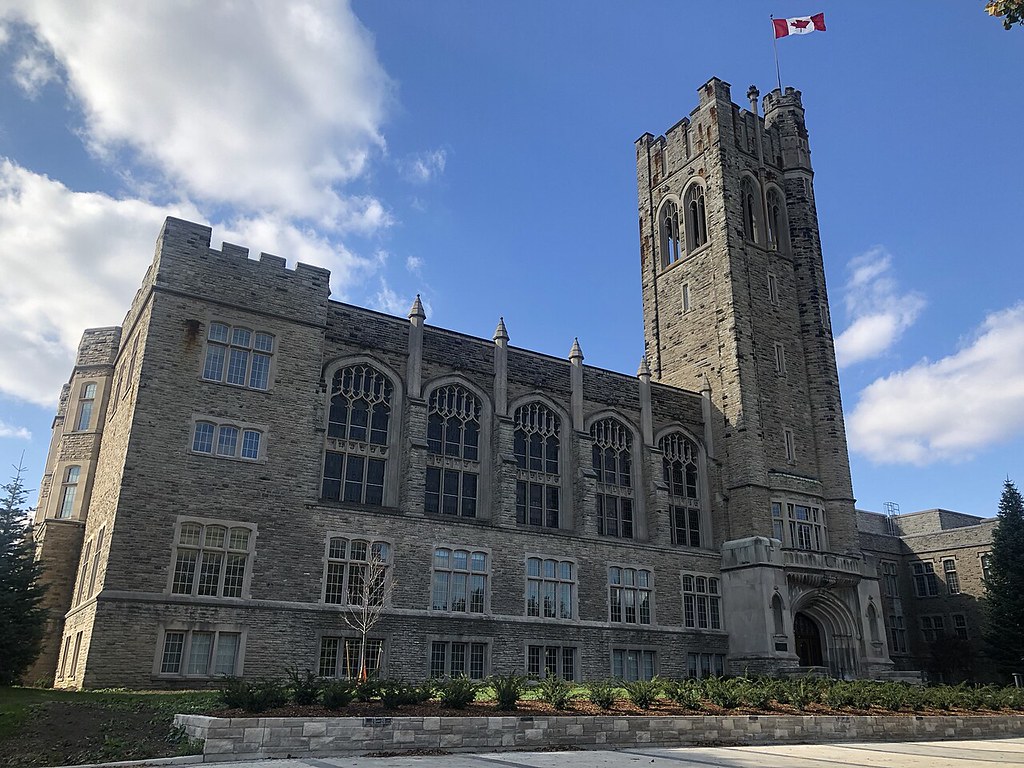
Western University. R.schneider101, CC BY-SA 4.0, via Wikimedia Commons
Choosing a university in Ontario for a permanent residence plan requires more than comparing degrees. Program length, work opportunities, location and immigration eligibility all matter, but none guarantees permanent residence. The best approach is to choose a university that supports long-term career goals while meeting the relevant requirements. Since Ontario's PNP rules can change, students should always check the latest provincial and federal guidelines before making a final decision.