


After almost two decades of publishing Wandering Educators, I greet every new travel planning tool the same way: with curiosity, and with my suitcase-tested skepticism close at hand.
The question filling my inbox this year?
Should I use AI to plan my travel?
My answer?
Yes! And also: carefully.
Here's your guide to what AI travel planning does brilliantly, where it stumbles, and six ways to put it to work on your next journey.

Curvy, traffic-jammed (as you can see), and worth it
What AI travel planning does well
Logistics galore. Drive times, rail connections, ferry schedules to confirm, packing lists for a rainy week on the Irish coast, a rough daily budget in three currencies. AI assembles the bones of travel planning in seconds, and it does so with YOUR guidelines in mind.
It is also an indefatigable brainstorming partner. Ask for five towns within two hours of Shannon Airport with a weekly market, and you'll get a usable list before your tea (Barry’s, of course) cools. Ask it to compare shoulder season weather in October versus April. Ask it what a week of buying local groceries costs where you're going (food math, solved).
Of special note for travelers like me: accessibility pre-research. Some days I travel with a wheelchair scooter, and AI is brilliant at letting me know which sites have elevators, which have step-free entrances, and which involve a half-mile gravel path nobody mentions on the booking page. Also, PARKING. Accessibility is a big deal to me, so this is important. Verify EVERY answer (more on that below!), but as a first sweep and broad look, it saves real energy.
Use this awesome tool! You just need remember it IS a tool – and to know exactly where it stops and to use yourself (and writers with travel planning expertise!).

Oh, this Ring of Kerry view!! We had a local market-sourced picnic here by the side of the road, and never wanted to leave
What AI travel planning misses
Ask any AI to plan a week in Co. Kerry, and it will hand you the big three: the Ring of Kerry, Killarney National Park, and Muckross House.
All lovely. We've experienced all three (the jarvey cart tour at Muckross, with our driver singing to the horse, remains a family treasure!).
But no AI itinerary will send you up the road past Westcove House to the farmhouse bakery where Jane bakes the BEST croissants our family has ever eaten (I’d fly to Ireland JUST for these!).
It won't suggest a detour to the Skellig Ring (and where to get that smoked fish for your al fresco meal).
It won't know about the pharmacist one town over who will learn your names, teach you the local names for medicines, and tell you that seawater cures a great deal of ailments, including the 3 that you are asking them about.
And nothing in its training data will insist that you read up on the ancient hill forts scattered along Ireland’s back roads, one of which entranced our daughter for a WHOLE day, but was never mentioned in any guidebooks or travel site posts.
Or, the “Irish traffic jam” mentioned by our favorite server at the corner pub: Sheep in the road. Be patient and wait was the local advice. Or, the random ice cream truck at a narrow-edged lookout…and the curious donkeys in attendance.

Got on a first name basis here, in County Kerry...
Those marvelous travel discoveries came from staying long enough to chat with people, and being curious about following the side roads recommended by locals.
Every journey we take, the best parts arrive the same way.
There's a sharper problem, too: AI inherits the internet's errors and serves them with confidence. One of my favorite St. John's restaurants, Tavola (where the gregarious owner, Bob Hallett, once talked with us about fishing, Italy, and music over lunch), closed its doors. It still appears in plenty of older online guides. AI learned from those guides and reiterates that in searches. An itinerary built on old information sends you to locked doors, changed hours, and restaurants that live on only in blog posts – including mine. Verify, verify, verify.
AI itineraries also overpack. Ask for a full day in Quebec City and you may get five museums, three neighborhoods, and a walking tour lined up for you before dinner. The streets and staircases of Vieux-Québec are steep (wear comfortable, stable shoes!), and no algorithm has tired feet at four in the afternoon.
Tip: Build in the bench, the café, the unhurried hour, the people watching. Build in your kid’s tolerance for itinerary, your spouse’s joy at coffeeshops and bakeries, your own need to sit and look at the waves. Underplanning makes everyone happy.
And AI cannot know what hour the light turns crystal-clear over St. John's harbor, or that partridge berries ripen on the slopes of Signal Hill in August. The internet barely knows these things. The machine that reads the internet knows them even less.

This view looking inward from Signal Hill in St. John's, Newfoundland!
Six ways to use AI travel planning well
While there are many ways to utilize AI in your travel planning, here are six that will get you started:
1. Start with the bones. Routes, drive times, connections, packing lists. AI can tell you the Ring of Kerry drive takes about three and a half hours without stops. (It is also curvy and not for the faint-hearted. Your hands on the wheel will teach you that part! Don’t worry about the busted mirror. It happens to everyone.)
2. Verify everything with an actual door. Any place AI suggests that can close, move, or change hours: check the official website (or call). I call it my Tavola rule (I sure miss that restaurant). If a restaurant, museum, market, or B&B matters to your journey, confirm it exists and the open hours before you build a day around it.
3. Use it to prepare questions, then ask people for the answers. Have AI draft your questions before you go: what to ask at the local market, which historical sites locals think are overrated, where families actually eat. Then head to my favorite first stop in any town, the library (Kenmare's is a Carnegie library!), and ask the librarian. The initial questions are AI's. The answers, and the friendships, are yours.
4. Feed it your specifics. Generic prompts produce generic trips. Tell it you're traveling with a teenager who loves marine biology, that you use a mobility scooter some days, that you'd rather eat one wonderful meal than three average ones. That you love coffee more than wine, that shopping local is important, that bookstores hold a special allure, that you will always stop for music and art. The itinerary suggestions improve with every personal detail you add.
5. Make it your pre-trip research assistant. This is where AI shines for educators! Ask for a reading list before you go (the Jacobite history before Scotland), music from the region (Julie Fowlis filled our car before the Highlands!), key phrases in the local language, and the history of the places you'll experience. Travel teaches so much more when you arrive prepared to recognize what you're seeing.
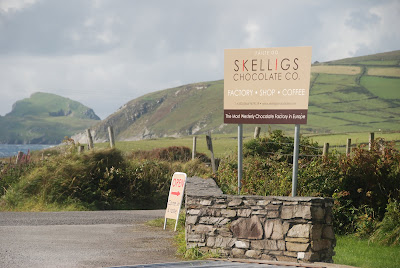
6. Leave space to explore. An itinerary planned to the minute has no room for the counter person at the Skellig Chocolate Company, who walked us from station to station, sharing stories of sourcing and making as we tasted along. Her time with us was the VERY best gift. Our chocolate gifts to loved ones at home arose directly from her recommendations. Truth: yes, we did eat all of our own chocolates while finishing driving the Skellig Ring. Heh.
Tip: Plan your mornings with AI's help, and leave your afternoons open.
AI travel planning questions, answered
Which AI is best for travel planning?
Whether you try a dedicated AI trip planner app or a general chatbot, they are more alike than different. The quality of your prompt matters far more than the logo on the tool. Give the same detailed prompt to two of them and keep whichever output you'd actually follow. Give as much detail as possible! This will help customize the bones of your itinerary.
How do I use AI for travel planning without getting burned?
Treat every AI itinerary as a first draft written by a well-read assistant who has never left the house. Verify anything bookable, anything with hours, and anything that costs money. (When AI invents a restaurant or a price, the industry calls it a hallucination. Your wallet will call it something else!)
Will AI replace travel advisors and local guides?
No. For complex journeys, multigenerational trips, and accessible travel, human expertise still is the best resource available. Humans share things they love! They know the best walking tour, the back entrance, and the chocolate shop. AI knows the brochure.
The tools will keep improving. The principle will hold: AI plans a competent trip; the people you meet make it a memorable one. Plan the bones with the machine. Verify everything. On the ground, go talk to the bakers, the librarians, the pharmacists, the server at your corner pub, and the chocolate makers. Your journey will absolutely bloom.

Have you used AI to plan a journey? What did it get right, and what did it miss?
Click through to read more of our articles about AI (and how to use it):
How to Make AI Writing Sound Human (Without Losing Your Voice)
Read This: Prompting Originality: The A.I. Handbook for Humans
Top Signs Your Writing Was Generated by AI (and How to Fix It)
Jessie Voigts is the founder and publisher of Wandering Educators. She has a PhD in International Education, has lived and worked in Japan and London, and traveled around the world. She is constantly looking for ways to increase intercultural understanding, and is passionate about study abroad, family travel, and international education.
Find her online via Instagram, Facebook, or LinkedIn.