
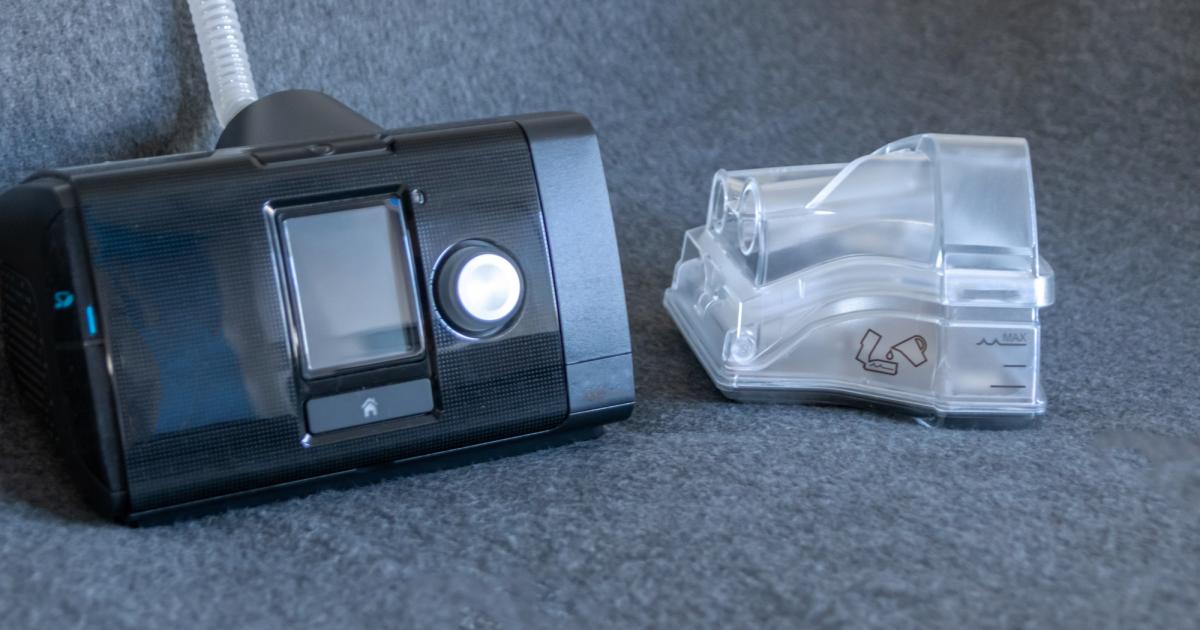

The night before our first flight to Ireland, we stood in the kitchen at midnight with a CPAP machine, a tangle of cords, a physician’s letter, and a genuine question: is any of this going to be a problem at the airport?
It was not. But that is only because we did the homework first.
If you have sleep apnea, you have probably had the same midnight moment. Your machine is critical! The machine is medical equipment, and going without it for a week is not something most of us want to contemplate (there is a reason you got it in the first place).
After almost two decades of publishing Wandering Educators, and a lot of miles with a CPAP in the bag, we can tell you that flying with a CPAP is one of the most well-established accommodations in air travel. The rules exist. The staff know what your machine is. You just need to know what to bring, what to say, and when to say it.
Here’s your guide: the paperwork, the security line, the water question, using it in the air, and the power situation once you land...plus advice from two people who know this territory well.

Before you go: the paperwork that makes everything easier
The single most useful resource is still the US Department of Transportation’s Steps Taken to Ensure New Security Requirements Preserve and Respect the Civil Rights of People with Disabilities. As the American Sleep Apnea Association notes, print the DOT’s fact sheet and carry it. You will almost certainly never need it. On the one trip where you do, you will be very glad it is in your bag.
There are three things to gather:
1. Depending on your airline, a letter from your physician. It should state that you have been prescribed CPAP therapy and that you are able to travel. Some international carriers want it dated close to your departure (Aer Lingus no longer requires a letter from your doctor; see our interview below). TSA does not require it, but it costs you nothing and it ends conversations quickly.
2. Your machine’s FAA compliance label. If you intend to use the CPAP during the flight, the machine must be labeled as approved for in-flight use. Most machines made in the last decade carry the label on the underside. If yours does not, contact the manufacturer and ask for a compliance letter.
3. Your prescription or a copy of the device order. Rarely requested. Useful at customs in a handful of countries, and useful if you need a replacement part at your destination.
Tip: photograph all three documents and keep them in your phone, and keep the paper copies in the CPAP bag, not the checked luggage.
At security: what actually happens
Your CPAP does not count as a carry-on. In its own case, it rides free, under the seat, in the overhead bin, or in a spot the crew designates. It does not eat your one personal item.
Airlines do not charge for it.
At the checkpoint, plan on this:
• Take the machine out of its case and put it in a bin for X-ray. Tubing, mask, and accessories can stay in the bag.
• Bring a large clear plastic bag or a clean pillowcase to set the machine on or in while it goes through the scanner. The bins are not clean, and you are going to breathe through this thing tonight. Let’s avoid the ew factor.
• Expect a swab. TSA officers routinely swab medical devices for explosives trace detection. It takes seconds.
• You can ask for help. TSA Cares will arrange a Passenger Support Specialist to meet you at the checkpoint if you request it at least 72 hours before your flight (855-787-2227). This is a free service and a good one, especially if you are also traveling with mobility equipment.
Never put your CPAP in checked luggage. Bags get delayed. A machine that arrives on Thursday does you no good on Monday night.

out of the case, into the bin
The water question
There are two separate issues here, and travelers tangle them together constantly.
Distilled water is a medically necessary liquid. It is exempt from the 3-1-1 rule. You may carry more than 3.4 ounces. You must declare it at the checkpoint, remove it from your bag for separate screening, and be prepared for it to be X-rayed or opened and tested.
Your humidifier chamber must be empty before you fly. Always. Water sloshing in a chamber at altitude ends badly for the electronics.
Honestly? On most international flights, we skip the humidifier entirely and buy distilled water at the destination (in much of Europe, look for it in pharmacies or supermarkets sold for irons: eau déminéralisée, destilliertes Wasser, acqua distillata). Ask the front desk. Hotels near medical centers almost always know where to send you.
Using your CPAP in the air
You do not have to, and most people skip it on a daytime flight. On a long-haul overnight, though, being able to actually sleep changes the first two days of your trip.
Here is what it takes:
Give the airline 48 hours notice. This is a real requirement, not a courtesy. Call or use the special assistance form.
Bring battery power. Most aircraft seat power will not run a CPAP, and airlines generally will not let you plug in. Airlines require you to carry enough battery to power the device for 150% of the scheduled flight time, which covers delays and diversions. Some carriers ask for flight time plus three hours instead. Ask yours.
Know your lithium battery numbers. Batteries must travel in the cabin, never in checked baggage. Under 100 watt-hours, you are fine. Between 100 and 160 watt-hours, you need airline approval in advance, and you are typically limited to two spares. Over 160 watt-hours is not permitted. Your battery’s watt-hour rating is printed on the case.
Package spares properly. In the original packaging, in the machine, or with the terminals taped. Loose batteries rolling around a bag is exactly the thing the rule exists to prevent.
Ask for the specs. Airlines are required to tell you the allowable dimensions and weight for in-flight devices. Get that in writing when you call.

We interviewed two travel experts on flying abroad with a CPAP – Rosemarie Curran of Aer Lingus, and Candy Harrington of Emerging Horizons.
Here’s what Rosemarie Curran of Aer Lingus had to say about traveling with a CPAP…
WE: What accommodations do you provide for travelers with a CPAP?
RC: Aer Lingus adheres to the DOT regulations that require passengers traveling with a CPAP travel with an FAA approved machine. The machine needs to be labeled as FAA approved. There is no carry-on fee for the machine.
Passengers are not able to plug in the machine. However, they should have sufficient battery power to last 150% of the flight (in case of delays, etc.)
WE: Do you have any advice for people with these disabilities?
RC: Please contact us with the information when you make your booking or as soon as you have your requirements together. When contacting us, provide detailed information regarding your specific, individual needs. This will ensure that we will be able to assist an effective and efficient manner.
Here’s what Candy Harrington had to say about traveling with a CPAP…
Known as the guru of accessible travel, Candy Harrington has covered this niche exclusively for decades. She’s the founding editor of Emerging Horizons and the author of several accessible travel titles, including the classic Barrier Free Travel: A Nuts and Bolts Guide for Wheelers and Slow Walkers — you can read our review and interview here. She also has advised us on traveling with a mobility disability in Ireland and Scotland. Tape measure in hand, Candy hits the road often, in search of new accessible travel options.
WE: Traveling with a CPAP can be stressful, worrying about electricity, baggage, etc. Do you have any travel tips for traveling with a CPAP?
CH: When you’re traveling overseas with a CPAP, I think the trickiest thing is remembering to pack along adapters AND a converter. I know too many people who have simply plugged their machines into the socket (used an adapter and no converter) and fried their batteries.
This also happens with scooters and power wheelchairs. Just because the plug fits, doesn’t mean it’s OK to plug it in. Adapters merely make the plugs fit. Converters convert the electricity so there will be no damage. If you use the former without the latter, you’ll be in big trouble. Always think before you plug in!
WE: How can travelers that require a CPAP make sure their machine stays safe (thinking airlines!)?
CH: Quite simply, don’t let it out of your sight — take it along with you in the cabin as carry-on luggage. Additionally, if you will need to use it along the way, you have to give the airlines 48 hours notice. You must also carry along enough batteries to power the device for 150% of the flight time, and they must be packaged appropriately (in the machine or original package is best). And, of course, the machine must be approved for in-flight use. The airlines are also required to give you specifications on allowable dimensions and weight, so contact your carrier for that information.
WE: Anything else you’d like to share with us?
CH: I would also pack along a power strip and an extension cord. Sometimes outlets are limited in hotels, and they may not be close to the bed.
Additionally, I would contact the manufacturer of your machine and ask them where you can get it serviced at your destination, just in case you run into problems. Chances are everything will be fine, but having this information at your fingertips will save time, should an emergency arise. Plus, it gives you a little more confidence and some peace of mind.
WE: Thanks so much, Rosemarie and Candy!
Adapters, converters, and the one label you must read
Candy’s rule is the one that saves machines: just because the plug fits doesn’t mean it’s OK to plug it in. An adapter changes the shape. A converter changes the electricity. They are not the same thing and they are not interchangeable.
One thing has changed since we first published this. Most CPAP machines sold in the last decade ship with a universal power supply. Look at the power brick. If it reads INPUT: 100-240V, 50/60Hz, your machine handles both North American and European current on its own, and a plug adapter is all you need.
If your brick does not say that, if it says 110V or 120V only, you need a converter, and Candy’s warning applies to you exactly as written.
Two more things:
• Read the label on your brick, not on a forum. Models vary. Older machines, secondary humidifiers, and third-party batteries do not always share the main unit’s tolerance.
• Never run a CPAP through a cheap travel converter. If you do need one, buy a quality unit rated well above your machine’s draw.
Tip: photograph the power brick label before you pack. It answers the question in three seconds when you are standing in a hotel room in Galway at 11pm.

Once you land
Pack a power strip and a short extension cord. This remains the single best piece of advice in this article. Hotel rooms in older buildings, and most of Europe is older buildings, have one outlet, and it is across the room behind the desk. Also: cruise cabins, guesthouses, and rental cottages.
Know where you’d get it serviced. Call the manufacturer before you leave and ask for authorized service locations at your destination. Write it down.
Pack backup consumables. An extra mask cushion, an extra filter, and spare headgear weigh nothing. A cracked cushion at the halfway point of a two-week trip is a miserable, entirely avoidable problem.
Consider a travel CPAP if you fly often. The travel models are dramatically smaller than home units, run on battery, and mostly ship FAA-approved. If you are flying internationally more than once or twice a year, ask your provider whether one makes sense for you.

one outlet. across the room. of course.
Your pre-flight CPAP checklist
Print this, or screenshot it.
• Physician’s letter (dated close to travel if your carrier requires it)
• Copy of prescription
• Printed DOT fact sheet
• CPAP in its own case, as a free additional item
• Humidifier chamber emptied and dried
• Machine’s FAA-approved label confirmed (if using in flight)
• Airline notified 48 hours ahead (if using in flight)
• Batteries charged to 150% of flight time, in carry-on, terminals protected
• Watt-hour rating checked (under 100Wh, or approval obtained)
• Power brick checked for 100-240V; adapter and/or converter packed
• Power strip and extension cord
• Spare mask cushion, filters, headgear
• Clear bag or clean pillowcase for the security bin
• Distilled water plan for the destination
• Manufacturer’s service contact at destination
• TSA Cares called, if you want checkpoint assistance (72 hours ahead)
Frequently asked questions about flying with a CPAP
Does a CPAP count as a carry-on bag?
No. In its own case, a CPAP is treated as medical equipment and does not count toward your carry-on or personal item allowance. There is no fee.
Do I have to take my CPAP out of the bag at security?
Yes. The machine itself comes out for X-ray screening, the same way a laptop does. Tubing and mask can stay packed. TSA PreCheck does not exempt you from this.
Can I bring distilled water through security?
Yes. It is a medically necessary liquid and exempt from the 3.4-ounce limit. Declare it, take it out of your bag for separate screening, and expect it to be tested.
Do I need a doctor’s note to fly with a CPAP?
TSA does not require one. Some international airlines do, particularly for in-flight use. Bring one regardless.
Can I use my CPAP during the flight?
Usually yes, on aircraft with 19 or more seats, if your machine is labeled FAA-approved and you notify the airline at least 48 hours in advance. You must run it on battery.
Do I need a voltage converter overseas?
Only if your power supply is not rated for 100-240V. Check the brick. Most modern machines are dual voltage and need only a plug adapter.
Can I put my CPAP in checked luggage?
You can, but don’t. Delayed and lost bags are common, and lithium batteries are not permitted in the hold at all.
Traveling with a CPAP is a solved problem. The systems exist, the staff are trained, and the accommodations are written into regulation. The only part that is on you is the preparation. Now you have the list.
Where are you headed, and what will you finally get a good night’s sleep for?
Ed Forteau is the co-founder and co-publisher of Wandering Educators. For almost two decades, he has traveled the world alongside his wife and co-publisher Jessie Voigts and their daughter, always in search of the stories that make a place impossible to forget. You can find him on LinkedIn.
This article is for general information and is not medical advice. Talk with your physician and your equipment provider before you travel.
Note: This article was originally published in 2017 and updated in 2026
Resources on Disability Travel here at Wandering Educators
The Imperfect Traveler’s Guide to Traveling with Pain
Traveling with a Mobility Disability in Ireland and Scotland
Finding Unexpected Joy in Turkey
10 Tips for Traveling with ME/CFS and Long COVID
The Ultimate Accessible Road Trip Travel Guide
Jessie Voigts is the founder and publisher of Wandering Educators. She has a PhD in International Education, has lived and worked in Japan and London, and traveled around the world. She is constantly looking for ways to increase intercultural understanding, and is passionate about study abroad, accessible travel, and international education.
Find her online via Instagram, Facebook, or LinkedIn.