
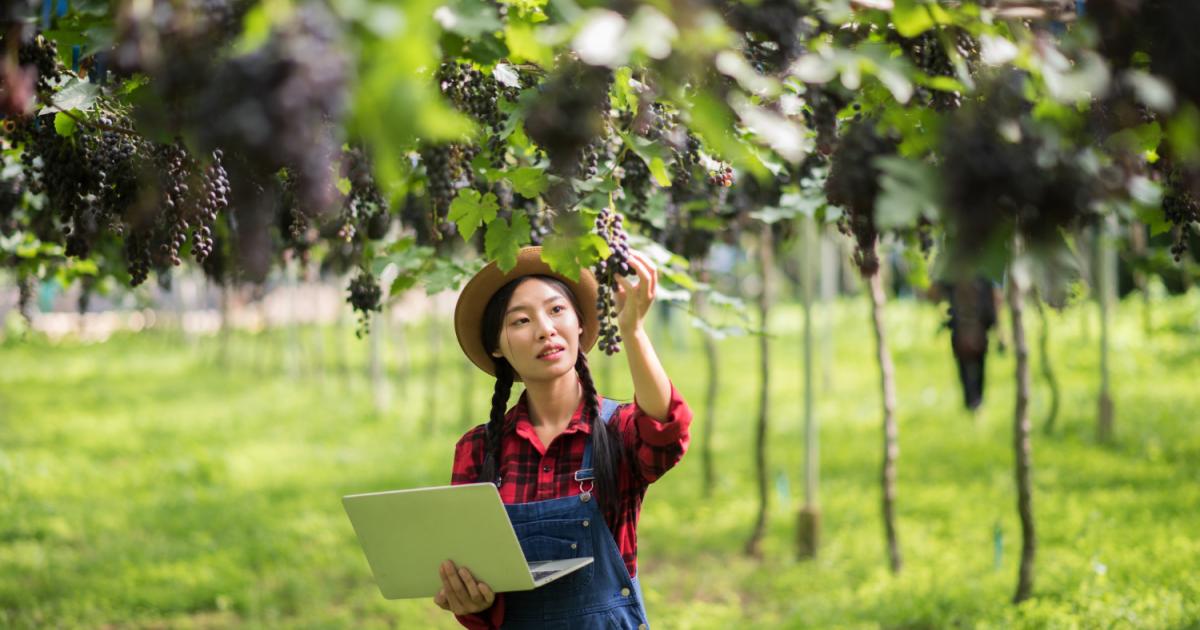

Khao Yai is the sort of place that makes a short trip feel bigger than it looks on a map. Drive out of Bangkok, switch from city traffic to mountain roads, and in a couple of hours you'll experience a dramatic change from the drab city buildings to natural forests, meadows, vineyards, and lush farms. A weekend in Khao Yai will show you Thailand in a different light because nature is not confined to one area here, but closely related to farming, food, tourism, and local business.
Here is what a quick weekend escape to this highland region teaches you about the country's forests, farms, and booming young wine scene.

Ancient Wilderness Meets Modern Wildlife Protection
Driving along the winding roads that lead into Khao Yai National Park, the primary forest takes over quickly. Massive dipterocarp trees form a canopy high above, giant ferns crowd the roadside, and wild orchids hang from mossy trunks. Established in 1962 as Thailand’s very first national park, this UNESCO World Heritage area spans over 2,000 square kilometers across four provinces.
Standing on an overlook like Pha Diew Dai or hiking toward the roaring Haew Suwat waterfall, you get a sense of just how wild Thailand used to be. The park is home to hundreds of bird species, including giant hornbills whose heavy wings make a deep woosh in the air as they fly overhead. If you join a night safari with a local park ranger, you might even spot wild deer, civets, or a herd of wild elephants emerging from the tree line to lick salt deposits.
Beyond its natural beauty, Khao Yai serves as a baseline for environmental care in the region. To protect the wild habitat, Khao Yai leads Thailand's 2025 park rankings with 2.14m visitors, which is why park authorities strictly enforce rules like zero single-use plastics, speed limits to protect crossing wildlife, and nightly bans on loud activities. Watching rangers manage such high visitor numbers while keeping the primary forest intact shows how eco-tourism can work when clear boundaries are set.
Sustainable Agriculture and High-Altitude Farming
As you journey down from the upper parts of the forest to the valleys of Pak Chong, the green forests give way to the green fields. The cool climate of the valley, with cool nights, breezy winds, and nutritious soil, has made this place one of the most fertile agricultural areas in Thailand.
A drive through the country offers you the chance to witness dragon fruit orchards, cornfields, and dairy pastures. Among the sites to see is Farm Chokchai, which provides the experience of integrated farming from organic farming of the soil up to pasture-raised dairy farming. Travelers can visit the Hokkaido Flower Park with its fields full of bright purple verbena and red celosia flowers. These vibrant flowers look breathtaking against the mountain backdrop.
What makes this farm country unique is the easy integration of traditional agriculture with fun activities. People come to pluck their own fruits, enjoy freshly made ice cream from fresh milk, and stroll around the undulating hills. You will see people riding bicycles on quiet side roads, dining in organic restaurants hidden amidst corn fields, or enjoying a game of golf at the best golf courses in Khao Yai, where manicured green fairways sit right against the edge of the forest. It proves that agriculture does not have to be purely industrial; it can be integrated with nature and eco-friendly travel.

The Rise of Tropical Winemaking in New Latitude Wine Country
The biggest surprise that visitors encounter is the huge vineyards of European style located in tropical valleys. It is a fact that winemaking requires a temperate climate within the range of 30 to 50 degree latitude. However, while Thailand sits near the equator, the elevation of Khao Yai at 300 to 350 meters above sea level allows for a special microclimate to exist there. Viticulture is possible here due to cool night breezes and lower humidity.
These high-altitude estates are pioneering what the global wine industry calls "New Latitude" wines. Estates like PB Valley Winery and GranMonte Vineyard have turned the valley into a respected wine-producing region.
Taking an open-air tram tour through the grape trellises reveals how local vintners adapted to tropical conditions. By using careful pruning techniques and managing soil moisture, winemakers here harvest high-quality grapes once a year during the dry winter months. Visiting during a wine-tasting session lets you sample locally produced Shiraz, Tempranillo, and Chenin Blanc paired with fresh regional foods.
This is a living experiment in agriculture. You learn how to grow grapes in the tropical sun and discover that using ingenious agricultural methods and respecting the local soil, even traditional industries can be established in strange places.
Ready to Experience Thailand in a Different Way?
A weekend in Khao Yai leaves you with a fresh perspective on the country. Beyond the bustling city streets of Bangkok and the crowded beaches of the south lies a peaceful region that balances deep wilderness with local agriculture and modern winemaking.
Whether you are listening to the sound of wild hornbills high in the forest canopy, sampling fresh produce straight from a valley farm, or sipping locally produced Shiraz while watching the sun set over the mountains, Khao Yai proves that Thailand's countryside is full of pleasant surprises.
