

When our daughter was small, she stood in front of the Colossal Statue of Tutankhamun at the Institute for the Study of Ancient Cultures in Chicago, curled her hands into fists just like his, and stared him down for the longest time. He is roughly 3,350 to 3,360 years old. She was not intimidated (!!). Meandering throughout the museum, she kept stopping, dreaming, thinking. That first (of many) visit inspired countless drawings and sculptures at home (not to mention a lifelong journey of learning).
Egypt itself is still on our family's list. But like Paris before it, we have spent years learning Egypt from afar, and researching ancient Egypt tours for the someday-soon trip. Our research is your gain today!
Here's your guide: the kinds of tours, six checks before you book, when to go, and what your tour should include (plus how to get the kids gloriously obsessed before you fly).

A forest made of stone
What an Ancient Egypt Tour Actually Includes
Egypt is one of the few destinations where I will always recommend a guided tour, even for independent travelers. The sites are spread along hundreds of miles of the Nile, the ticketing changes often, and the difference between looking at a wall of hieroglyphs and understanding one comes down to a single person: your Egyptologist guide.
A good ancient Egypt tour typically bundles your guide, ground transportation, site entries, hotels or a Nile cruise cabin, and internal flights (Cairo to Luxor or Aswan is a long way!). Most run 7 to 15 days. The longer tours are worth it; there is SO much to see.
Tip: When comparing prices, list what each tour includes side by side. A "cheap" tour that excludes entry fees, internal flights, and tipping kitty can cost more than an honest all-in price.
The Kinds of Ancient Egypt Tours (and Who Each One Suits)
Nile cruise tours
The classic, and (this mermaid must be honest) the one that calls to me most. You sail between Luxor and Aswan, stopping at temples along the river: Karnak and Luxor Temple, then Edfu, Kom Ombo (home of the crocodile god Sobek!), and Philae near Aswan. Your hotel floats with you, so you unpack once. Wonderful for first-timers, families, and anyone who wants to watch the Nile slide past at breakfast. Agatha Christie fans, you already know. A Dahabiya Nile cruise, for example, follows a similar route but takes place on a smaller traditional sailing boat, offering a different perspective on the river journey. These vessels have a long history on the Nile and are often associated with slower travel between the ancient sites.
Small-group and private guided tours
Land-based, flexible, and easier to tailor. A small group (look for 16 or fewer) means you can actually hear your guide in a crowded tomb and ask questions the WHOLE time. Private tours cost more, but for families with young kids or travelers with mobility needs, setting your own pace is worth every penny.
Archaeologist-led and museum-affiliated tours
The splurge tier includes journeys led by working Egyptologists and archaeologists, sometimes with special access to sites and scholars. If your budget reaches, this is the difference between visiting Egypt and studying it as you go. Museum-affiliated journeys (like those run by major institutions) occupy this same tier.

Your hotel, floating past 3,000 years of history
How to Choose an Ancient Egypt Tour: Six Checks Before You Book
While there are ancient Egypt tours galore, six checks will sort the treasures from the rest:
1. Ask who leads it
In Egypt, licensed guides are trained Egyptologists, but training and gift vary. Ask for your guide's name and background before you book. A company that can't tell you is a company that treats guides as interchangeable. They are not!
2. Check the group size
Sixteen or fewer, ideally. Tombs are small. Voices echo. Your questions matter.
3. Read reviews for the guide's name
The best operators have reviews that name guides again and again ("Ask for Ahmed!"). Companies that keep their best storytellers earn reviews like that, year after year.
4. Study the pace
One major site per morning, with rest in the heat of the day, is so much more enjoyable than a checklist sprint. If the itinerary promises the Egyptian Museum, Giza, Saqqara, AND Memphis in one day, everyone will remember nothing.
5. Confirm what's included
Entry fees, internal flights, tips, and the extras (the Great Pyramid's interior, Tutankhamun's tomb, and special-access tickets often cost extra). Ask for the all-in number.
6. Ask about responsible travel
How does the operator treat its guides and crew? Does it support local communities? Do itineraries include local restaurants and makers, or only hotel buffets? Good operators love this question. Evasive ones have answered it already.
When to Go, and What It Costs
October through May is Egypt's cooler season, and the sweet spot for touring; summer temperatures at Luxor regularly soar well past 100°F. Shoulder months (October-November, March-April) bring fewer crowds than the December-January peak. You know I will always advocate for shoulder season!
Costs vary enormously by tier. Budget group tours can run around $100-150 per person per day, mid-range small-group and cruise tours roughly $200-400, and archaeologist-led luxury journeys far beyond that. Add international flights, tourist visa (currently $32 for a single-entry, 30-day visa at an embassy; $30 for e-visa, or around $25 exact cash upon arrival) and tips, which are a real and expected part of Egyptian travel economy. Your passport needs six months of validity beyond your return date. We recommend the e-visa for ease of applying (and it is good for 90 days!). No stress, right from home, no lines.
Leave room in the budget for eating well! Koshari, ful medames, fresh-squeezed juices, markets fragrant with cumin and mint: we have a whole guide to what to eat in Egypt.

Ramses II, keeping his appointments since 1264 BCE
The Sites Your Tour Should Include
A strong itinerary touches three regions. Of special note:
Cairo and Giza. The Giza plateau (the Great Pyramid, its neighbors, and the Great Sphinx), plus Saqqara's step pyramid of Djoser, the oldest of them all. Then the museums: the Grand Egyptian Museum near Giza, purpose-built to hold wonders like Khufu's royal barque and the Tutankhamun collection, and the historic Egyptian Museum on Tahrir Square, where you can see my favorite hippo. Stacey Ebert's wonderful look at Cairo through an educator's eyes is your pre-trip reading.
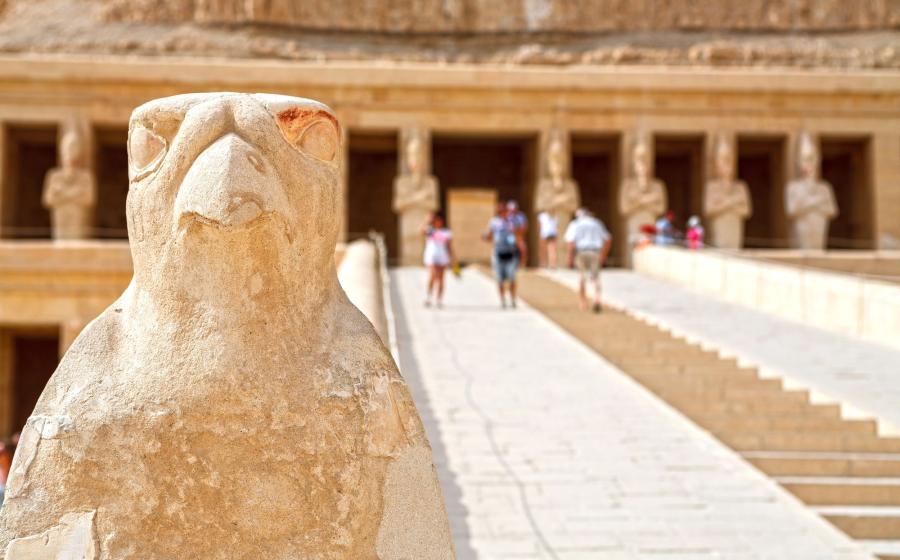
Luxor. Ancient Thebes! Karnak Temple (walk the avenue of sphinxes and stand in that forest of stone columns!), Luxor Temple, and, across the river on the West Bank, the Valley of the Kings and Hatshepsut's terraced temple. Luxor alone deserves two full days.
Aswan and beyond. Philae Temple on its island, the Aswan High Dam, felucca sails at golden hour, and, if your tour offers it, the pre-dawn trip to Abu Simbel, where Ramses II carved a temple into a mountainside. Twice a year, the rising sun reaches all the way into the inner sanctuary. Ancient engineering that still keeps its appointments (count me in!).
Our recommendation for where to start: Egypt’s Official Ministry of Tourism and Antiquities. This website is marvelous!

Photo Egyptian Museum Facebook
Ancient Egypt with Kids: Start Before You Fly
You won't be surprised to learn my favorite part: the preparation! Ancient Egypt is the gateway history for so many kids, and a little feeding makes the obsession bloom.
Head to a museum with an Egyptian collection first
Our daughter's fascination was born in Chicago, at the Institute for the Study of Ancient Cultures, with entire walls of sculpture and the tiniest sarcophagi, all in a row. The British Museum's Egyptian galleries are another world-class starting point (we have a whole article on its History of the World in 100 Objects). Watching your kid get lost in learning is the very best travel prep there is!
Read, watch, and learn together
Familiarize yourselves with the cuisine, culture, and history. Mythology books and enhanced storytelling, mummification books, coffin dogs, and ancient Egypt documentaries (we love Nat Geo’s Egypt's Ancient Empire | Egypt From Above (Full Episode) The Nile River. Armchair journeys down the Nile, and attempts at-home-chicken mummification in the same summer that we picked reeds by our lakeshore and made papyrus (it is hard!).
By the time you land in Cairo, your kids will be the ones excitedly telling everyone they meet about Sobek.
We also recommend the fun activities on the Egypt Official Ministry of Tourism and Antiquities’ Children’s World website: https://egymonuments.gov.eg/en/child-world/
On tour, let them lead
Kids spot the painted details, the cartouches, the animals in the hieroglyphs. Give them a job: find the scarab in every temple. They will (and they'll beat you to it every time!). Make sure they have their own camera – the wonder that they show as a photographer will not only make your journey richer, but influence their entire life. It’s a new way of seeing the world, isn’t it?
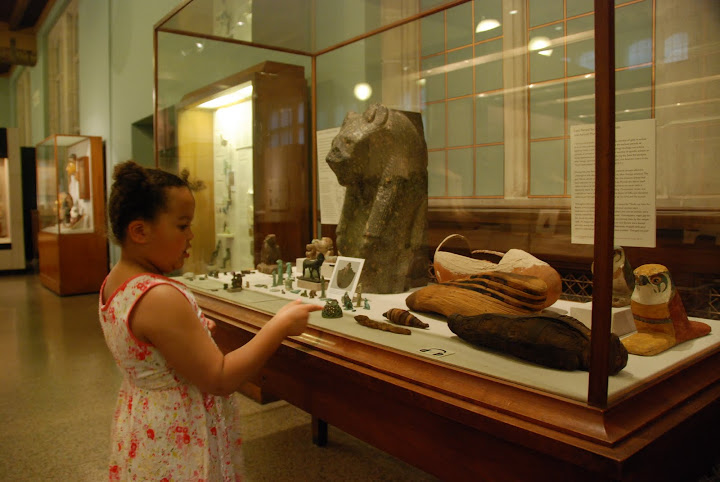
the obsession begins
Traveling Respectfully in Egypt
Here are a few intercultural things we teach before any trip (like this one). Dress modestly, especially at religious sites, and pack layers for hot days and cool tombs. Learn a few Arabic greetings, as the effort is always received warmly. Tip fairly and without resentment. Tipping is woven through Egyptian service work. Never touch the reliefs or climb the monuments, and never, ever buy "antiquities" (real ones are stolen heritage, and fake ones fund the trade). Your tour sets the tone here, which is exactly why check number six matters.
Frequently Asked Questions
Can you still visit the pyramids in Egypt?
Yes! The Giza plateau is open to visitors, and you can enter the Great Pyramid's interior with a separate ticket. Interior access rotates among the pyramids for preservation, so ask your operator what's open when you travel.
Can you visit the Grand Egyptian Museum?
Yes! Check the museum's official site for current hours and what's on display, and confirm your tour includes it; the newest itineraries do. Dig into their site (see what I did there?): https://gem.eg/
Is the Egyptian Museum in Cairo open?
Yes! The historic museum on Tahrir is open. Get a preview here at their site, https://egyptianmuseumcairo.eg/
Tip: Ask your operator which museum(s) your itinerary includes and what you'll see in each.
How do I check ancient Egypt tour reviews?
Read recent reviews on independent platforms, and look for guides mentioned by name, honest notes about pace and heat, and how operators handled problems. A perfect five-star profile with no specifics tells you very little (or, it tells you quite a bit, which is probably not what they were aiming for). Join travel groups on Facebook (Road Scholar, Girls Love Travel, etc.), as there is nothing like firsthand experience from someone who was there a few days ago.
When is the best time to take an ancient Egypt tour?
October through May. Shoulder months for fewer crowds; December and January for the gentlest temperatures (and the biggest crowds).
How much does an ancient Egypt tour cost?
From roughly $200-$300 per person per day for budget group tours to several times that for archaeologist-led journeys. Compare all-in prices, never base prices.

4,500 years old and still showing off
Egypt has been teaching travelers for more than two thousand years; Herodotus was a tourist there before the Parthenon was old.
We plan to join that long line of learners, our daughter with her sketchbook in hand.
Have you traveled through ancient Egypt? What intrigued you most?
Further Reading here on Wandering Educators (as one does)
- Through the Eyes of an Educator: Cairo, Egypt
- 8 Reasons Why You Should Include Egypt on Your Travel List
- The Royal Barque of Khufu, Eternal Pharaoh
- The British Museum & A History of the World in 100 Objects
- Move Over, Egypt: 5 Countries Around the Globe with Pyramids
- History Tours Worth Taking: An Educator's Guide to Traveling Through the Past
- Historic Walking Tours: How to Find (and Savor) the Best in Any City
Jessie Voigts is the founder and publisher of Wandering Educators. She has a PhD in International Education, has lived and worked in Japan and London, and traveled around the world. She is constantly looking for ways to increase intercultural understanding, and is passionate about study abroad and international education.