
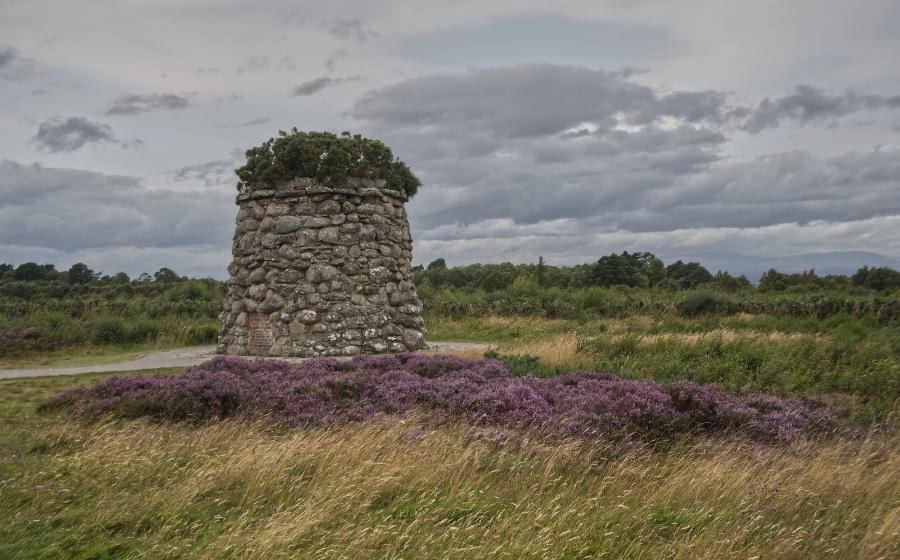

The morning we arrived at Culloden, the mist hadn't lifted off the moor yet. We were there when the doors opened, and hours and hours later, a kind staff member found us out on the battlefield to let us know the site was closing. We were the very last to leave (we are ALWAYS the last to leave). Our daughter kept going back to the Clan grave markers, looking off into the hills, listening hard. She did not want to go.
Neither did we. Culloden had a firm hold on our souls. (Still does!)
That entire day was a history tour. Nobody herded us onto a bus. There was no laminated itinerary (although the audio guide is incredible). But we walked the ground with guides who knew its stories, then walked it by ourselves...and we came away changed.
After almost two decades of publishing Wandering Educators, I hear one version of this question again and again: How do I find history tours that are actually worth my time and money?
Here's your guide: what we have loved, what we have learned, and how to choose history tours that bring the past alive (instead of tours that feel like a pop quiz with better scenery).

If you climb up the 618 stairs at Skellig Michael, a UNESCO Heritage Site in Ireland, you have access to dedicated heritage guides! #worthit
What the best history tours have in common
I have experienced history tours on four continents, with a young child, a teen, and my own parents in tow. The wonderful ones share a few things, and once you know what to look for, you can spot them before you ever hand over your credit card.
A guide who tells stories, instead of reciting dates
At Muckross House in Killarney National Park, our guide was so personable, regaling us with stories the whole way through: the Herbert family spending nearly ten years (and their entire fortune) preparing for Queen Victoria's visit in 1861, hoping for a royal title that never came. You feel that hope, and that ruin, in every room. Dates can be found on Wikipedia or a quick search. Real stories live in a place that can be experienced.
Time to linger
The best history tours build in unstructured time, or at least don't punish you for wanting more. At Culloden, our daughter meandered in and out of the visitor center, asking questions, heading back to the battlefield and Leanach Cottage over and over. Ed and I found a place to sit and let her. If a tour promises six sites in three hours, I skip it. One site, experienced deeply, beats a highlight reel every time.
Something you can touch, hear, taste, or do
History is a full-body experience! The weight of a knife in your hand at a medieval banquet. The wind coming off a wet moor, and the smell and feel of it. A hot, freshly made pasty after a morning of exploring Copper Country. When a tour engages all five senses, the learning sets firmly in time, place, memory, and landscape.
A connection to the people who live there now
The very best guides are locals, artists, authors sharing their own culture and history. You can hear it in every story they choose to share.
Tip: Before booking, read the reviews and count how many times the word "story" appears. It is the single most reliable signal I have found.

History by doing at Molly Gallivan’s enchanting cottage, Ireland (we also recommend Bunratty Folk Park - we stayed a whole day!)
The kinds of history tours (and when each one shines)
While there are history tours galore out there, most fall into a handful of types. Here's when each one gains its place on your itinerary.
Historic walking tours
This is my favorite way to learn a city! A good walking tour moves at the pace of curiosity, and you can ask questions the WHOLE time. In Stratford, Ontario, head to Stratford Walking Tours (Lauri's themed explorations of a town most people only know for theatre). In Paris, the Paris Greeters will walk you through their own neighborhood, showing you their favorite things (free, and wonderful!).
Tip: Wear comfortable, stable shoes. Always. Everyone.
Living history
This is history by doing, and it is unbeatable with kids. At the Quincy Mine in Michigan’s Keweenaw Peninsula, our daughter strapped on a hard hat and stepped into a vintage cogwheel tram cars to plunge seven levels underground into the dark, cool earth. Deep in the copper mine, she ran her fingers over cold rock wall, stood in awe beneath a massive subterranean hoist, and realized exactly how GIGANTIC the miners' drills actually were (and how loud they must have been!). Back on the surface, she got to peer inside the world's largest steam hoist engine and imagine operating the giant machinery. She talks about it still.

NO ONE will forget this history tour 7 levels underground
Battlefield tours
These ask more of you as a learner, and need to have time, respect, and a sense of curiosity. Culloden is where the future of Scotland was decided in an uneven battle in 1746, and walking it, you wonder HOW soldiers fought across that soggy, wet marsh. Our whole family teared up at the Clan grave markers. Read about the Jacobites before you go, so you can understand the magnitude of being here.
Similarly, Gettysburg is a carefully curated landscape of monuments, stone walls, open fields, and preserved buildings that tell the story of a warring nation. Visiting this National Military Park can bring deep insights into the history of our nation (and people).

House museums and estates
One Irish estate on the Ring of Kerry we went to time and again was Derrynane House, home of "the Liberator," Daniel O'Connell (1775-1847). The gardens are extensive, and within the house are beautiful reception rooms, cases of honors, awards, medals, and gloves (given to Daniel in honor of him not dueling again). The thing that most impressed our 8-year old daughter was his death bed, shipped back from Italy. It was very small, and she said, "I would not like to sleep in that." It stuck with her so much that she returned to that room several times on each visit.
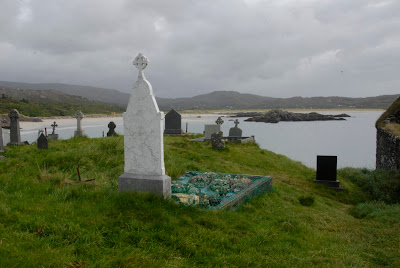
We also spent a great deal of time in the cemetery there. It was an extraordinary experience: a cold, misty day in fall, just having come from the Derrynane House tour, somber. Then, we found new cultural ways of being, in the cemetery, in the love we saw on grave markers, in the very air. POWERFUL!
Folklore and ghost tours
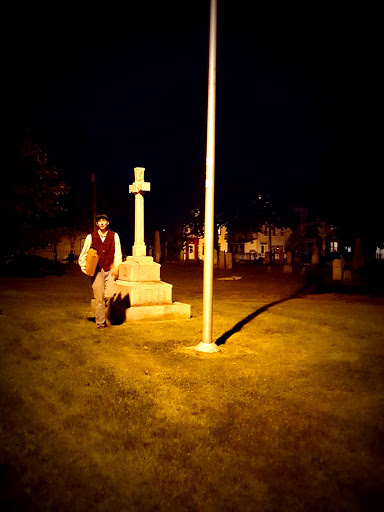
Yes, these count as history tours (yes, really!). In Fredericton, New Brunswick, we took the Haunted Hike with a local theatre group, the Calithumpians. Story after story experienced, graveyard visiting, and eerie alleys walked down. It had an outsized impact on us!
Ancient sites
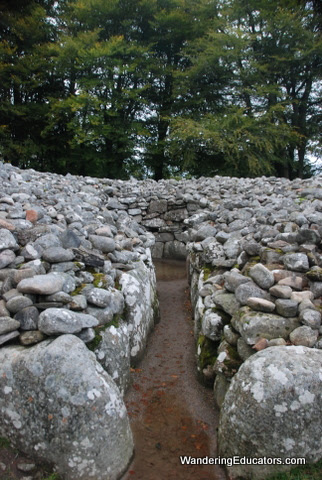
Some places don't need a costume or a script, because the stones themselves speak. Many times, we climbed Staigue Fort in Co. Kerry, where our daughter stood inside still-sturdy ancient walls, imagining the battles and the people those walls protected. We clambered around Clava Cairns, bronze age burial chambers near Culloden, as a break. There's nothing like an historic structure to help kids run off energy while learning.
Need more time?
If a day tour isn’t enough, enroll in a multi-day history trip with Road Scholar, the world leader in educational travel for older adults. (Note: you must be over 40 to travel with them!) You’ll join a Group Leader, a small group of other curious, intellectual travelers, and expert historians to delve deep into local history, from Civil Rights Movement history in Alabama and Georgia, to military history in Gettysburg or the beaches of Normandy.

Photo: Road Scholar
We have had time travel moments in almost every place we’ve visited. I think it’s because we are so interested in history – and open to creatively visualizing ourselves in the past!
How to choose history tours worth your money
While there are many ways to evaluate a tour, here are six practical checks I run before booking anything:
1. Check who leads it. A folklorist, a historian, a costumed interpreter who has done this for decades, a local who grew up three streets away. Any of these is a good sign, as is less script, more passion and love of place.
2. Ask about group size. Smaller is better. You must be able to ask questions and hear the answers. If the answer is "we cap it around two dozen or under," book it.
3. Favor depth over coverage. One era, one site, one neighborhood. The six-sites-in-three-hours tour leaves you with photos of places you never truly experienced.
4. Book the first slot of the day. Grey, misty mornings at battlefields and ancient sites are quieter and cooler, and (I will say) the past feels closer. You'll share the ground with fewer people and more birdsong.
5. Check accessibility honestly. I travel with mobility considerations, so I ask ahead: how far, what terrain, are there places to sit? Muckross offers handicap parking around back, a small elevator inside, and the jarvey cart if walking is difficult. Good operators know these answers immediately.
6. Read one book first. Just one! Under the Hawthorn Tree before Ireland with kids. A Jacobite history before Culloden. The Keweenaw National Park Junior Ranger book (free, online - and with PLENTY of activities!). Even the right film counts (I see you, Harry Potter!). A little context beforehand means you recognize what the guide is showing you, and your questions get so much better.
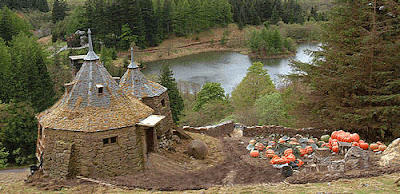
Hagrid's hut in Glencoe - how cool was it that we stayed near this filming location?
History tours with kids
You won't be surprised to learn I think history tours are one of the BEST things you can do with children.
The trick is letting them lead.
At the Institute for the Study of Ancient Cultures at the University of Chicago, our daughter wandered the sprawling museum finding small things to discover (an ancient scarab beetle amulet, only five inches across, inspired countless drawings and sculptures at home) as well as large: entire walls of sculpture, and the Colossal Statue of Tutankhamun, roughly 3,350 to 3,360 years old, that absolutely entranced her. She faced him, hands also curled into fists, for quite a long span of time. There is nothing in the world like seeing your kid get lost in learning!

Some history is heavier and more meaningful. When Ed took our daughter to the United States Holocaust Memorial Museum in Washington, DC, they stood in the room filled with victims' shoes and looked at each other with something between horror and compassion. They still talk about it. Shoes mean something. Choose the weight of the history to match the age of the child, and then talk about it afterward, and again next year.
And take heart: kids remember doing. The knife at the banquet. Plunging into a mine. The crown. The fort walls. The staring contest with a pharaoh. Carrying a shield, hefting a sword.

Kids, swords, & shields = prime memories
The practical details
Passes
In Ireland, the OPW Heritage Card covers heritage sites across the country and pays for itself quickly. Many national parks and countries offer an equivalent; check before you buy individual tickets.
Free and nearly free history tours
Paris Greeters (free local walking tours), US National Park Service ranger programs and museums (Culloden-level goosebumps, zero dollars), official destination offices, town historical societies galore.
When to go
Shoulder season, if you can. You’ll find smaller groups, softer light, guides with time to chat.
One more thing (our best tip!)
When you arrive somewhere new, visit the local library. It is the social hub of any town, and librarians know which history tours are treasures and which ones to skip. This has never once failed me.
For us, history grabbed hold on a misty moor in Scotland, in a schoolroom in Ireland, in front of a statue in Chicago, at meaningful walls in DC, deep in a mine in Copper Country.
I hope you find the places that hold yours. Where has history refused to let go of you?

Further educational family travel resources I've written here on Wandering Educators:
Historic Walking Tours: How to Find (and Savor) the Best in Any City
Places to Travel with Family: Nine Trips That Teach Your Kids Something Real
Educational Family Trips: How to Raise Kids Who Love to Learn While Traveling
10 Ways to Raise an Intercultural Child
Why We Love Traveling with our Daughter
Cultural Travel: A Guide to Trips That Teach
Cultural Immersion Travel: A Guide to Being Welcomed In
Walking the Black Heritage Trail: History, Stories, and How to Visit
Ancient Egypt Tours: What to Know Before You Book
Jessie Voigts is the founder and publisher of Wandering Educators. She has a PhD in International Education, has lived and worked in Japan and London, and traveled around the world. She is constantly looking for ways to increase intercultural understanding, and is passionate about study abroad and international education.