

I have been publishing Wandering Educators for almost two decades. I have a PhD in international education. My passport has stamps from places I have lived, and places I have passed through too quickly.
For much of my early years experiencing and writing about travel, I was wrong about almost everything.
Mostly, I was wrong about how much time learning a culture requires. I thought a few days could deliver understanding. I thought good pre-trip research (my specialty!) would substitute for being there, that I’d hit the ground running. I thought the destination mattered more than the time you spent in it.
I had it backward.

Why I keep coming back to slow
The thing the field teaches you, eventually, is that culture happens at the pace of conversations. Instead of having an itinerary, focus on genuine conversation. Not surprisingly, these genuine conversations require enough time on the ground that someone is willing to start one with you.
In Co. Kerry, this looked like settling into Pier Cottage in Westcove for a week. By the second day, Jane at the farmhouse bakery up the road knew our names and what we liked. By Wednesday, the Fish Guy at the Kenmare market was setting aside fresh hake for us to keep making the simple fish stew recipe he'd shared. We loved our Irish cottage so much that when we found Cara Turner, a local ceramic artist, we commissioned a personalized sculpture of the three of us in front of Pier Cottage. (It still has pride of place in our home).
By the time we left Pier Cottage, we knew which rooms got the best light at which hour, the taste of locally roasted coffee brewed at dawn and enjoyed while perched on a rock and watching the waves, the sound of the harbor at low tide, the smell of brown bread baking up the road, and the deep bark of the Irish wolfhound a few houses down who announced every visitor on the lane.

Ceramic art of Pier Cottage, where we stayed (a whole week!) in Co. Kerry
In Newfoundland, it looked like riding the Marine Atlantic ferry across the Cabot Strait through the night, the lull of the waves rocking us into the best sleep of our lives, and then settling into the JAG Hotel in St. John's for a week. By the second day, the staff was delivering Newfoundland Chocolate Company truffles to our room every afternoon, and my daughter and I had a ritual of coffee and homemade chocolates by the picture window. By the fourth day, we had learned why Bob Hallett of Great Big Sea opened a restaurant called Tavola, what Dale Jarvis means when he says all his ghost stories are 'true' Newfoundland folklore, and, during whale watching, the smell of Puffin Island as you approach it on the boat from Bay Bulls (as a farmgirl, I recognized it the moment we got close enough — chicken coop).
In Stratford, Ontario, it looked like doing the Stratford Festival Costume Warehouse tour where volunteer docents share decades of funny stories and marvelous props, and you can actually try on the costumes (TRY ON!!). We could feel the weight of forty seasons of velvet and brocade in our hands, smell fabric and old greasepaint everywhere, and walk out understanding why this old railway town in Canada is one of the greatest theatre cities in North America.

Ahoy! In Stratford, ON, at the Stratford Festival Warehouse
None of this happens when you are passing through.
I have come to call this slow way of traveling cultural immersion.
This article is the answer to the question I get asked most often: how do I actually get beyond the tourist trail?
Six ways to experience cultural immersion
While there are many ways to experience a place as a local, here are six practical (and delicious) ways to start a cultural immersion trip.
1. Visit the local library when you arrive.
Not the tourist information center, surprisingly (although they are awesome). Visit the library. It is the social hub of a town, the home of the local newspapers, the place where the librarian will tell you about events you would never have found, and the best free WiFi within walking distance. I have spent hours in the children's section of the Shannon library in Ireland with my then-young daughter, comparing how Gaelic picture books look different from English ones. Whether you read before you go or while you're there, literary travel truly shows essence of place. I have learned about Scottish folk storytelling workshops at the Inverness library and about Jazz Archive holdings at the Edinburgh central branch. Nearly every town worth visiting has a library. Hardly any traveler thinks to go.

Skip the tourist office. Find the library.
2. Rent a home or apartment, not a hotel.
A hotel keeps you separate from the place. A vacation rental, even for a week, drops you into a neighborhood. You walk past the same neighbors. You learn which bakery opens at six and which café has the best terrace at four. You spend time gazing out the windows to see unexplained wave patterns on Loch Ness. You have a kitchen, which matters more than most travelers expect (see number three). My family's stays at Pier Cottage in Westcove, Ireland and at the Cottage at Inverfarigaig, Scotland, are some of the most immersive travel weeks I have ever had.
3. Shop at the local markets and cook at home.
The fastest doorway into a culinary culture is the market. The second fastest is your own kitchen with the ingredients you just brought home from it. Markets show you what is in season, what is locally made, what people will give opinions about. At the Kenmare Wednesday Market in Co. Kerry, the Fish Guy will set aside fresh hake for you if you ask. At Marché Jean-Talon in Montreal, the woman with the pickled daisy buds is the third-generation pickling in that same kitchen. You will eat better, learn more, and spend less than at any restaurant the hotel concierge recommends.
Even better tip: take a cooking class! It’s an extraordinary experience, and your souvenir of a memorable trip and fabulous recipes is lifelong.
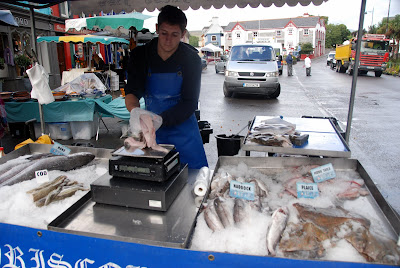
Ask the vendor about that one. You'll learn something (a recipe we still make!).
4. Ask. Ask the librarian. Ask the shopkeeper. Ask the market vendor. Ask the bakery owner.
Driving the Ring of Kerry is curvy…and not for the faint-hearted. Divert off to explore the Skellig Ring, and you’ve got yourself into a quintessential Irish travel moment. Add to it by (you guessed it!) being curious and friendly. At the Skellig Chocolate Company, I’ll never forget talking at length with the most interesting person at the counter, and delightedly following her to ALL the stations of the store, as she shared stories of sourcing ingredients, handmaking it, and sharing these delicious chocolates with the world. Of course, THIS was our souvenir to bring home for our loved ones – the deliciousness in hand, and the story of people and place.
Here’s how:
Ask kindly and genuinely.
In Istanbul, my new local friends and I explored places both famous and hyperlocal - including a bookstore, where the owner advised me on the best Turkish authors to read (and helped me winnow it down to the one that would actually fit into my suitcase).
Ask the woman at the produce stand for her favorite recipe with what you just bought. Ask the shop owner where she takes her family to eat.
Ask the bakery owner where the best park is to walk off the croissant. Ask the docent at the museum what he would visit on his day off.
Most people are delighted to share. Most travelers never think to ask.
5. Read the local news.
Pick up the local newspaper at the café. Or subscribe to a local online news site with an event calendar. You will learn about the regional cheese festival next Saturday, the artist talk on Tuesday evening, the concerts that everyone in town attends, the new bakery opening on the corner. Local life happens at the events listings, but you have to think more broadly to look.
6. Travel with curiosity and an openness to learning.
This is the foundation under the other five. Cultural immersion is not a passive experience. You must bring a question, be interested in a craft, or love a cuisine you genuinely want to learn. Listen more than you speak. Be willing to be the one who does not know.
If you're traveling with kids, I have written a companion article on Places to Travel with Family: Nine Trips That Teach Your Kids Something Real. I think you'll like it! It's a love letter to family travel (and our family).
The travelers I have watched do this best arrive with their minds and hands open. What follows is magic.
What cultural immersion actually requires
Three simple things: curiosity, time, and the willingness to be welcomed in.
These are what every cultural immersion trip needs. The first two are easier to plan for. Pack your curiosity. Book the longer trip. Shoulder season (May and September in most of Europe, late spring in Scotland, October in Quebec) gives you better light, lower prices, and locals with the energy to talk because they are not exhausted by peak-season crowds. A week in one place will teach you more than three days each in three. Local pace announces itself around day four, never on day two.
The third is harder. The willingness to be welcomed in cannot really be packed in a suitcase. You bring it with you or you do not. In practice, it includes being patient with the slowness of trust, accepting that the place is not yours, and being okay with the not-knowing.
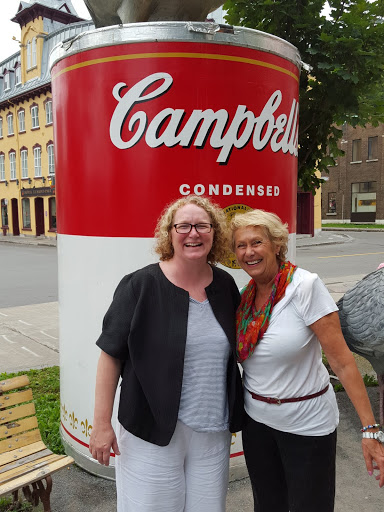
Absolutely laughing nonstop with new friend Michelle in Quebec City
The currency of cultural immersion is time and the willingness to be welcomed in.
Becoming culturally immersed and going beyond the tourist trail comes down to how you spend your time in the destinations you’ve chosen to explore.
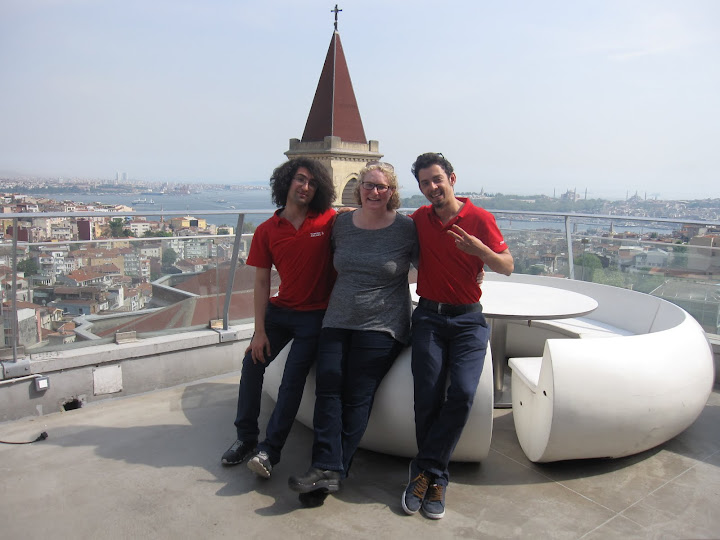
Laughing and hamming it up for the camera with my new local friends in Istanbul. Next, we went for lemonade.
Have you done a cultural immersion trip? Where did you go? What did the place teach you?
Further educational family travel resources I've written here on Wandering Educators:
Places to Travel with Family: Nine Trips That Teach Your Kids Something Real
Educational Family Trips: How to Raise Kids Who Love to Learn While Traveling
Historic Walking Tours: How to Find (and Savor) the Best in Any City
10 Ways to Raise an Intercultural Child
Why We Love Traveling with our Daughter
The Importance of International Experiences
Cultural Travel: A Guide to Trips That Teach
History Tours Worth Taking: An Educator's Guide to Traveling Through the Past
Jessie Voigts, PhD, is the founder and publisher of Wandering Educators. She has a PhD in International Education, has lived and worked in Japan and London, and traveled around the world. She is constantly looking for ways to increase intercultural understanding, and is passionate about study abroad and international education.
Find her online via Instagram, Facebook, or LinkedIn