
Parent-teacher conferences move fast. You get a folding chair, a glance at their school projects, and about twelve minutes before the next family is up next. In this limited time, most of us ask what we can measure: How’s her reading? Is he keeping up in math? Anything I should know about? These are all good questions, but they don’t address the part of school I care about most, which is whether my kid is learning to live well among people whose lives look nothing like hers.
That’s the seed of global citizenship education.

If you want the full picture of what it is and why it matters right now, start with our guide, Global Citizenship Education: What It Is and Why It Matters Now.
Here are ten questions you can actually ask a teacher, why each one matters, and what a good answer sounds like so you know it when you hear it.
One thing first, because it’s important. These are not gotcha questions. A teacher who is weaving global perspective into a crowded curriculum is doing hard, often invisible work, usually without extra planning time. Ask these the way you’d ask a colleague you respect. You’re on the same side. You both want this kid ready for a connected world.

1. What does global citizenship look like in your classroom on a normal week?
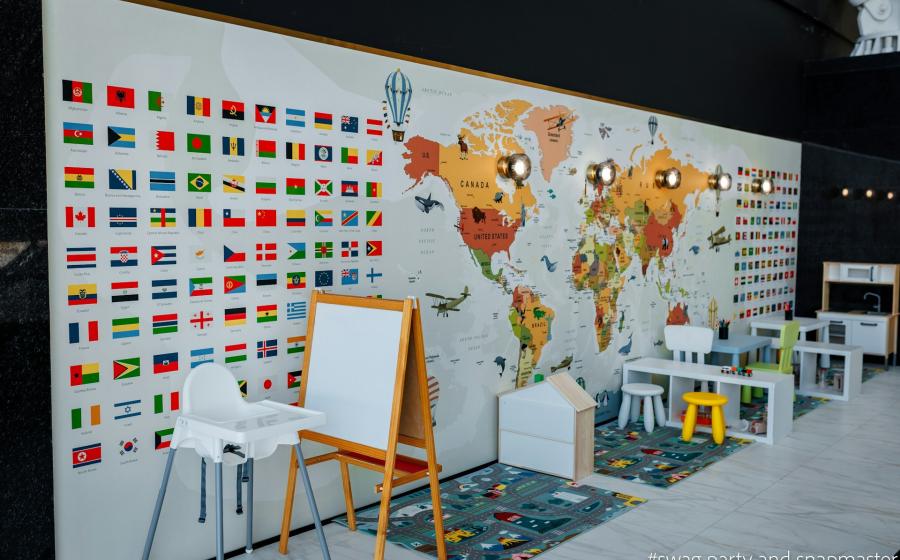
Look wide, and start with the ordinary week, not the special unit. Global citizenship education lives in the recurring habits, the maps that stay up, the picture books read side by side, the news compared across countries. A themed “Around the World Week” in April is lovely. The Tuesday learning via maps year-round is what actually forms an intercultural child.
What a good answer sounds like: something specific and small. “We keep a world map by the door and mark where our read-aloud stories come from.” “Every Friday, we compare a headline from two countries.” “We read books from around the world.” If the answer is only a once-a-year spotlight, you’ve learned something useful, kindly.
2. How do you bring in voices from outside our community?
Every classroom (and person) has a default frame, usually the one closest to home. The whole point of global citizenship is helping kids see past that frame to people they may never meet. Ask how the wider world is welcomed into the room.
What a good answer sounds like: books written and illustrated within a culture rather than about it, guest voices, digital pen pals, connected classrooms, films that follow one real kid’s life somewhere else. It’s simple. Is your child hearing about other places from outsiders (or at all?), or hearing from the people who actually live there?
3. How do you handle current events and hard global topics?
Climate news, migration, conflict, all of it is present in the classroom whether the curriculum invites it or not. You’re not asking the teacher to take a side. You’re asking whether there’s a thoughtful, age-appropriate way these questions are answered when a child brings them up.
What a good answer sounds like: a framework, not avoidance and not advocacy. “We focus on understanding multiple perspectives and checking sources, not on landing on the ‘right’ opinion.” That answer should reassure you, no matter where your own family sits politically. (More on that in question five.)
4. What can we read and learn at home to support this?
Teachers are walking libraries, and most of them love this question because it means you’ll continue their work past the classroom door. The long tail of global citizenship is books, the specific, gorgeous, from-somewhere-else stories that let a kid try on another life for an afternoon.
What a good answer sounds like: actual titles, ideally ones written from inside a culture. If the teacher lights up and starts naming books, you’ve found a partner. Jot them down. Then go explore at the library (using my tried and true trick for finding gems: scan the entire shelf, once you've found the book you came to check out. Treasures await!).
For early learners, a good visual introduction is DK’s Children Just Like Me, by Anabel and Barnabas Kindersley. Here's a short video from the book, to get you started.
A few of the many picture books we have read, reviewed, and loved:
Crepes by Suzette
Where is Simon, Sandy?
5. How do you keep this non-partisan?
Say it plainly, because it’s the fear under a lot of parent hesitation, and teachers feel it, too. Global citizenship education is a framework, not a position. It asks students to know accurately, empathize genuinely, and act constructively. None of those are on a ballot.
What a good answer sounds like: comfort with the question and a clear sense of the guardrails. “We teach kids to gather accurate information, consider more than one perspective, and keep it age-appropriate. The discipline of the framework is exactly what keeps my personal views out of it.” A teacher who can say that is protecting your child and protecting themselves, at the same time.
6. Could our family’s background or travels contribute something?
This one changes the whole dynamic, and it’s my very favorite. Your family might be a genuine resource for that classroom. Maybe you speak another language at home. Maybe a grandparent grew up somewhere the class is studying. Maybe you took a trip that connects to a unit. Maybe your kid brings in cultural celebrations (with food and games!), has their parent speak about their intercultural experiences, or teaches via their show-and-tells.
What a good answer sounds like: genuine interest, and maybe an invitation. Even a shy kid stands a little taller the day their family’s story becomes the lesson. (And teachers, stretched thin, rarely turn down a real-world connection that shares different perspectives with their class.)
7. What does age-appropriate look like at this grade?
A kindergartner and a tenth grader are doing quite different work under the same topic, and it helps enormously to know where your child is on that arc. Little kids build the socio-emotional core (empathy, perspective, belonging) mostly through stories and wondering. Older kids move toward analysis, then toward genuine agency and action.
What a good answer sounds like: a teacher who can locate your child on that developmental ladder. “At this age we’re mostly practicing perspective-taking through literature.” “By now they’re ready to research a real global question and do something with it.” Our hub article maps the K-12 progression across three school levels if you want the full picture before you ask (and learn how to do this at home, too).

8. How does this connect to what my child already cares about?
Global citizenship isn’t a separate subject competing for airtime. It’s a lens, and the best teachers thread it through whatever already has your kid’s attention. The soccer fan can trace where the World Cup teams come from. The gamer can notice which countries make the games. The kid obsessed with sharks can follow ocean policy across borders. Your K-Pop Demon Hunter fan brings a great deal of culture (and music!) to the classroom.
What a good answer sounds like: a teacher who knows your child well enough to answer specifically. That specificity tells you two things at once: that they see your kid, and that they understand global citizenship as a way of seeing rather than a box to check.
9. Is there an action or service piece?
Knowledge and empathy are the first two dimensions. The third is behavioral - actually doing something, at whatever scale a kid’s age allows. A book drive. A garden. A letter. A class fundraiser tied to something they studied. The size or the project doesn’t matter. The habit of moving from caring to doing is actually the whole world.
What a good answer sounds like: at least one concrete example, even a modest one. And if there isn’t one yet, this is a warm place to offer help. Action projects are exactly where a willing parent can lift a load off a busy teacher.
10. What’s one thing we could do at home in 15 minutes?
End here, because it turns this conference into a plan, and show the teacher that you are a committed part of your child's educational team. Ask the teacher for one small, repeatable practice you can run at your own kitchen table, and you’ve just extended the classroom into your home.
What a good answer sounds like: something you could start tonight. Compare how two countries covered the same news. Read one picture book from somewhere new. Find on the map where dinner’s ingredients came from. We built a whole companion piece around exactly this, The 15-Minutes-a-Day Global Citizenship Starter Pack, sorted by grade band, so you don’t have to invent it from scratch.

One more thing, for the drive home
Notice which of these ten questions was hardest for the teacher to answer easily. That’s not a mark against anyone. It’s information. It usually points to the dimension, knowledge, empathy, or action, that’s toughest to build in that particular classroom. Note: this is also the one where your fifteen minutes at home will do the most good for your child.
You don’t need to ask all ten questions in those few minutes. Pick two or three that matter most to your family and your kid, and focus on those.
A single real conversation with a teacher about how your child is learning to belong to a wider world is worth more than any worksheet in the folder, or project on their desk.
Further reading from our Global Citizenship archives
Global Citizenship Education: What It Is and Why It Matters Now: the full guide this piece is built on, kindergarten through graduation
The 15-Minutes-a-Day Global Citizenship Starter Pack: the at-home companion, by grade band
10 Ways to Raise an Intercultural Child
Through the Eyes of an Educator: Global Citizenship
Educational Family Trips: How to Raise Kids Who Love to Learn While Traveling
Global Education: How to Conquer Global Intolerance
Teachers for Global Classrooms Program
White House Summit on Study Abroad and Global Citizenship
Jessie Voigts is the founder and publisher of Wandering Educators. She has a PhD in International Education, has lived and worked in Japan and London, and traveled around the world. She is constantly looking for ways to increase intercultural understanding, and is passionate about study abroad, global citizenship, and international education.