Parent-teacher conferences move fast. You get a folding chair, a glance at their school projects, and about twelve minutes before the next family is up next. In this limited time, most of us ask what we can measure: How’s her reading? Is he keeping up in math? Anything I should know about? These are all good questions, but they don’t address the part of school I care about most, which is whether my kid is learning to live well among people whose lives look nothing like hers.
Here’s the sentence I’d tape to every family’s fridge and every teacher’s desk: fifteen minutes a day, every day, outlasts a themed activity or month every single time. Why? It's the power of compounding.
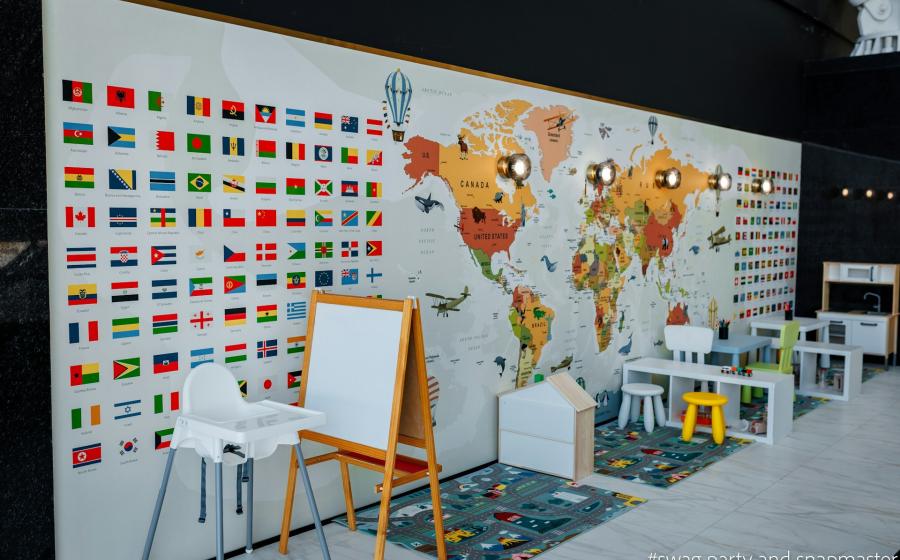
A “Countries of the World” week in April is a lovely photo op. What actually shapes a kid’s intercultural being is the small, repeated practice, the map that stays up, the question that comes back around, the habit that becomes a reflex.
A cultural exchange happens when people from different countries or communities come together to share their traditions, stories, art, and everyday life. Whether its through travel, study abroad, joint projects, festivals, or even online collaborations, it helps transform distant cultures into real faces and voices removing prejudices and stereotypes.
It’s a bit bizarre when I turn on the television and see Nicaraguans outraged, chanting, marching, hiding their identities in a revolutionary stance. The images on the screen don’t align with my personal images of home cooked meals, family run farms, and revolution on a quieter level, but that was 2017 and this is now…
My hair looks different, my backpack is always open, and I have a medium brown complexion. I'm sun-kissed. I am kissed by the sun. Now, if you live in Boston or in Medford, where I go to Tufts, and you saw me walking down the street, you'd probably make nothing of it.
I was waiting for the ferry from Montevideo to Buenos Aires with my friends a few weeks ago. A long way from Boston. I was charging my phone when a kid walked up to me and asked in Spanish "Why are you brown?"
"You're brown all over. You look like soil."
Are Americans inherently conditioned to be criminals? Are we raised to wreak havoc on our communities by breaking the laws that are in place to protect us? My short answer is no. However, when looking at statistics, it is alarming that America is known as the world’s prime jailer. “Representing just 5 percent of the world’s population, we now hold 25 percent of its inmates. The “tough on crime” politics of the 1980s and 1990s fueled an explosion in incarceration rates.
Today, Sister Cities International (SCI) announced that the theme for the 2016 Young Artists and Authors Showcase (YAAS) will be “Peace through People.” For the first time, the organization will also include two new categories as part of their 29 year old initiative which strives to engage young people around the power of art in diplomacy. These new categories will include a digital Photography Challenge and a more robust Film Challenge, which will be open to young people around the world ages 13-22.