

Few mythological traditions have proven as durable as the stories born in the frozen landscapes of Scandinavia. Norse mythology originated among peoples who navigated brutal winters, unpredictable seas, and an environment that demanded respect for forces beyond human control. Thousands of years later, those stories have spread into every corner of global culture. Understanding why starts with the land that shaped them.
The Landscape That Built the Myths
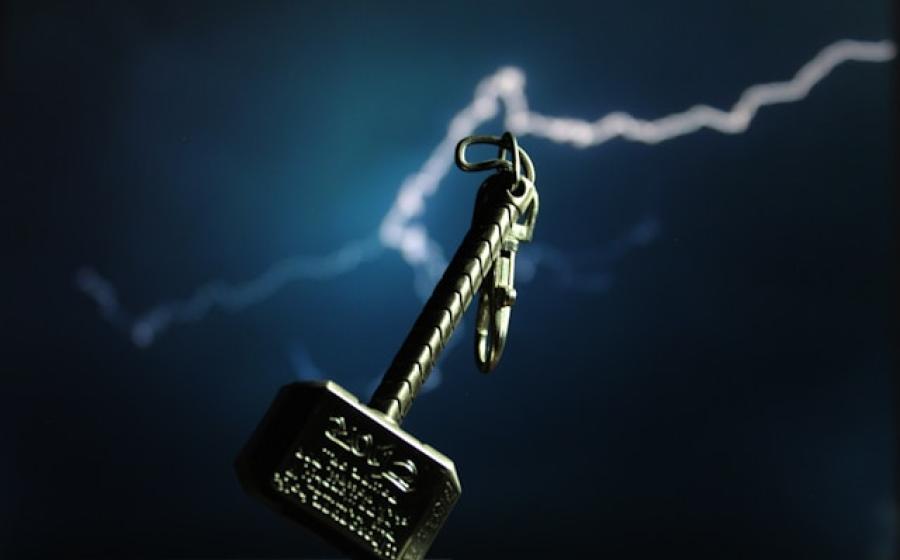
Scandinavia is not a passive backdrop. Norway's deep fjords, Iceland's volcanic plains, and Sweden's ancient forests are the original source material for these stories. The Norse cosmos was structured around Yggdrasil, a great ash tree connecting nine realms, and the landscape reinforced this worldview at every turn. Storms were Thor's hammer at work. The northern lights were the Valkyries riding overhead. Nature was not scenery. It was theology.
Travelers who visit these regions encounter mythology not as abstraction but as geography. In Norway, the Lofotr Viking Museum in the Lofoten archipelago is built around the largest Viking longhouse ever excavated, while Oslo's Bygdøy peninsula houses three ninth-century vessels — the Oseberg, Gokstad, and Tune ships — among the best-preserved longships in existence. In Sweden, the Royal Mounds at Gamla Uppsala, believed to mark the graves of ancient kings and gods, sit barely an hour from Stockholm. Denmark's Jelling complex, a UNESCO World Heritage Site, preserves runic stones raised by Viking kings in the tenth century.
Iceland, however, offers the most immersive experience. As the country where both the Poetic Edda and the Prose Edda were written down in the thirteenth century, Iceland is effectively the archive of Norse mythology. The Prose Edda, compiled by historian Snorri Sturluson around 1220 CE, and the anonymously authored Poetic Edda, dated to roughly 1270 CE, are the primary sources for virtually everything known about the Norse gods.
What These Sites Teach Beyond the Stories
Physical sites communicate what texts alone cannot: these stories were functional. Rune stones were public inscriptions recording deaths, marking boundaries, and preserving legal memory. The longhouse was a communal hall where skalds performed oral poetry, keeping history alive across generations. The longship was an engineering achievement that enabled Norsemen to navigate both open ocean and shallow rivers, making the Viking Age one of medieval history's most expansive periods of exploration.
This emphasis on practical knowledge — navigation, craftsmanship, oral literature, governance — gives Norse mythology its particular staying power as an educational framework. It was never purely fantastical; it was rooted in real solutions to real problems.
Why Norse Mythology Travels So Well
The reach of these stories in contemporary culture is remarkable. From J.R.R. Tolkien, who drew extensively on Norse legend when building Middle-earth, to the Marvel Cinematic Universe's global franchise built around Thor and Loki, to the acclaimed God of War game series, Norse mythology has proven one of the most adaptable storytelling traditions in the world.
Much of the appeal lies in its emotional architecture. The Norse gods are not omnipotent. Odin sacrifices an eye for wisdom. Thor is powerful but fallible. Even the world is destined to end at Ragnarök — not through divine punishment, but through the exhaustion of an age. This combination of cosmic scale and genuine vulnerability resonates across cultures in ways that more triumphalist mythologies rarely achieve.
That same richness has reached digital entertainment as well. Professional online slot review platforms make it easy to discover just how thoroughly this mythology has been adopted across digital entertainment. Among the titles cataloged there, Hacksaw Gaming slots & games like Rise of Ymir and Le Viking translate Norse imagery into immersive experiences for players worldwide. It is a striking measure of how far these stories have traveled from the fjords.
The themes behind this enduring appeal span multiple disciplines:
● Fate and agency: Norse heroes act fully knowing their doom is prophesied, raising philosophical questions that remain current.
● Oral tradition: The skald tradition shows how communities preserve identity without written records.
● Cyclical renewal: Ragnarök is followed by rebirth, making it one of mythology's most sophisticated treatments of endings.
A Destination Worth the Journey
Key sites for those exploring Norse heritage firsthand:
|
Site |
Country |
Why It Matters |
|
Lofotr Viking Museum |
Largest excavated Viking longhouse; replica ship; hands-on programs |
|
|
Gamla Uppsala |
Sweden |
Royal burial mounds; pagan temple foundations beneath a medieval church |
|
Þingvellir National Park |
Iceland |
World's first parliament; UNESCO-listed geological rift valley |
|
Jelling Runic Stones |
Denmark |
Tenth-century inscriptions; often called Denmark's birth certificate |
What Scandinavia offers the curious traveler is rare: a mythology that is simultaneously well-documented and physically present. The rune stones are still in their fields. The longships remain in their museums.

The landscapes that shaped Valhalla and Yggdrasil are as dramatic and uncompromising as they were a thousand years ago. That combination explains why Norse mythology endures as one of the world's great educational destinations — rewarding the journey not with scenery alone, but with a genuinely different way of thinking about fate, nature, and what it means to face the unknown without flinching.