
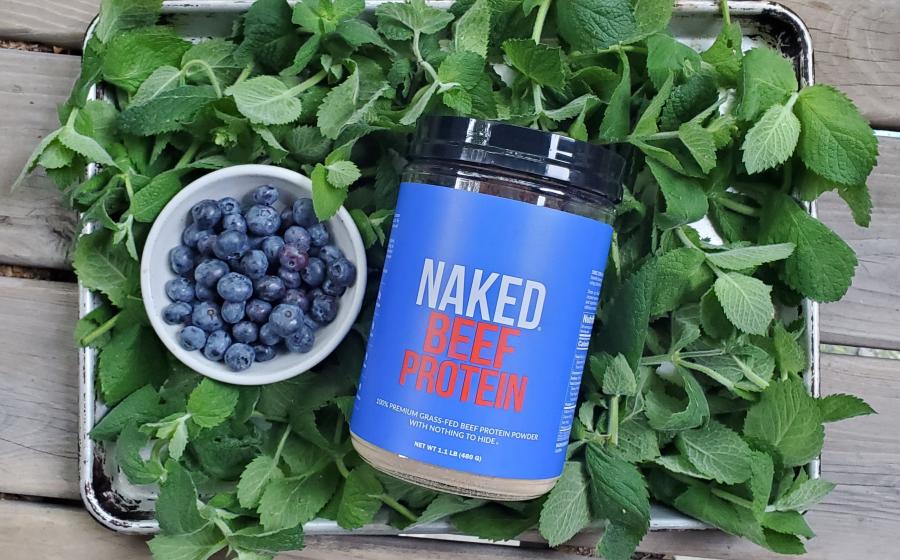

This morning, I stood at the kitchen counter with a bowl of blueberries we'd just picked, holding warmth from the sun, dappled with raindrops, still. Deep purple-blue, dusty with that silvery bloom that tells you they came off the bush and went nowhere else first (we are NOT mentioning the many that were sampled while picking. IYKYK).

Picking blueberries today (the best kind of grocery run)
Next to them, a gorgeous green bouquet of mint from my mom's garden, and oh, the smell! You know that moment when you tear a mint leaf and the whole kitchen changes? That.
Into the blender they went, with cold well water, 3 ice cubes, and one scoop of protein powder. Thirty seconds of noisy crunching.
And then: the most gorgeous smoothie, flecked with green and purple, smelling like a Michigan summer morning. The extra bonus that made it fancy? Read further for the recipe!
I'm a farmgirl at heart, and there is nothing (NOTHING!) like making something nourishing from things that were growing an hour ago.
But let me back up, because the smoothie is the end of the story. The beginning is a question that follows us through every stage of life, at home and on the road: am I getting enough protein?
The answer changes as we age (more than most people realize!), and it changes again when we travel, when meals get unpredictable and our days get long.
So that's what you’ll find out here: how protein needs change by age, how to get enough at home and while traveling, the utterly delicious powder we tested, and a blueberry mint smoothie recipe and a green tea mint smoothie recipe, both worth making before your next adventure!

Summer, in three ingredients
Why Protein Matters for Every Traveler
Travel is a lot for our bodies, at every age. Think about what a single travel day actually involves: walking miles of museum floors, carrying bags up endless flights of stairs, standing in lines, navigating airports, hiking to the viewpoint, chasing a toddler through a garden, keeping up with grandchildren who have apparently unlimited energy (how??), planes, trains, automobiles (and which side of the road?). Summer adds heat, long days, and unpredictable meals to the mix.
Protein supports muscle maintenance, strength, recovery, and satiety, which is a lovely word for feeling full enough that you're not hunting for a snack an hour after breakfast. And we ALL know that protein is often the hardest thing to get on the road. Continental breakfasts lean heavily on pastry (can be delicious, but gone in an hour). Road trip food skews salty and carby. Conference lunches are a gamble (as are those aged granola bars in your laptop bag).
Here's the part most families miss: the traveler who needs protein most at your table changes over time. What a teenager needs is different from what their parents need, and different again from what their grandparents need.
Let's break it down.
Protein Needs by Age: What Changes and When
A quick note before the numbers: these are general ranges from published nutrition sources, and individual needs vary. Anyone with kidney disease, another major medical condition, or special dietary needs should talk with their doctor or registered dietitian before changing their protein intake.
Kids and Teens: Growing Bodies, Growing Curiosity
Growing bodies need steady protein, and the good news is that most kids and teens who eat regular meals get plenty from food alone: milk, yogurt, eggs, beans, peanut butter, chicken, fish. Protein powders are generally unnecessary for children, and real food should always come first at this age.
What kids DO need is food curiosity, and that's where travel shines! A teenager who tries fresh hake at a fish market, compares cheeses at a farm stand, picks peaches at a local orchard, tries new global foods at local grocery stores, or learns why beans and rice appear together on plates around the world is building a lifetime of good eating.
Feed the curiosity, and the protein takes care of itself.
Your 20s, 30s, and 40s: The Busy Building Years
For most healthy adults, the baseline recommendation is about 0.8 grams of protein per kilogram of body weight per day, and many nutrition sources suggest more (sometimes quite a bit more) for people who are very active, training hard, or pregnant or nursing.
The challenge in these decades isn't usually knowing what to eat. It's TIME. These are the years of early flights, back-to-back meetings, conference travel, and eating a granola bar in the rental car and calling it lunch (alas, we've all been there). A protein routine that survives a busy travel day matters more than a perfect one.
One more reason to care now: muscle mass begins a slow, gradual decline starting around our 40s. The protein habits you build in these years are the foundation you'll stand on later.
Your 50s and Beyond: The Shift
Here's what surprises most people: as we age, our bodies become less efficient at using the protein we eat, so many adults over 60 need MORE protein, at the very time appetites often get smaller.
Many nutrition sources, including a widely cited international expert group, recommend that older adults aim for around 1.0 to 1.2 grams of protein per kilogram of body weight per day, above the standard adult recommendation. For a 150-pound person, that works out to roughly 68 to 82 grams a day.
Why it matters for travel: protein can support the strength, mobility, and steadiness that long travel days require. The museum stairs, the cobblestones, the luggage, hopping on the train: staying strong for all of it starts at the breakfast table.
Tip: The easiest protein habit I know, at any age, is front-loading the day. Get a solid dose of protein at breakfast, before the day gets away from you, and everything else is more forgiving.
How to Get Enough Protein at Home
Real food first, always: eggs, yogurt, fish, beans, lentils, nuts, chicken, cheese. Protein powder is a supplement to a balanced diet, and never a replacement for real food. A powder simply makes it easier to hit your target on busy or imperfect days.
At home, getting enough protein mostly comes down to rhythm:
• Anchor your breakfast with protein. Eggs, Greek yogurt, or a protein smoothie instead of toast alone. This is where many cultural practices comes in handy – the smoked fish at breakfast, the kippers at a buffet, the legumes in all forms that bring smiles from around the world.
• Spread protein across the day. Bodies use protein better in steady doses than in one giant meal.
• Keep easy protein visible. Hard-boiled eggs, cheese, hummus, and nuts at eye level in the fridge, pantry, travel snack bag.
• Make the blender a habit. A smoothie is the fastest protein delivery system in the kitchen, and it's the one kids will actually help make! GET THIS: There are travel-sized blenders! Genius.
How to Get Enough Protein While Traveling
The road is where good intentions go to die (lol), so your key is preparation:
• The pre-road-trip smoothie. Blend before you buckle up and carry it in an insulated bottle; it holds up beautifully for a few hours.
• Pack the powder separately. A small container or zip bag of protein powder weighs nothing, and blends or shakes up anywhere you have water. Many hotel breakfast bars have everything you need to make your own delicious protein smoothie.
• The early flight breakfast. When you're leaving at 5am and food options are grim at best, a shaker bottle saves the morning (and, let’s be honest, the entire day).
• Stir it into oatmeal at a hotel or rental. It disappears into the oats and gives an enormous protein boost.
• Use the rental kitchen. Farmers market fruit and veg + blender = the best souvenir routine I know.
• The museum day starter. Museum days are MILES of walking or wheeling. Start strong!
• After hiking, gardening, or a long beach walk. Recovery fuel that doesn't require cooking.
Shop the Farmers Markets Wherever You Travel
This is my favorite protein strategy of all, because it's also key component of learning about your location: wherever you go, find the market.
Local fruit teaches us about terroir. Cherries in Traverse City, peaches in Georgia, berries at whatever stand you wander past: pair them with a neutral protein base and you have a breakfast that tastes like the place you're visiting. Markets are where you find the peaches, the honey, the fresh eggs, the local cheese, and the person who grew them, and ten minutes of chatting at a market stall will teach you more about a region than you’d ever expect.
Favorite market experiences are souvenirs themselves! I will never forget walking the Toyko fish market, and then ducking down a small alley to find a small restaurant to nourish us. Wandering markets in Paris, absolutely WISHING we had a rental instead of a hotel, and making “do” with picnics in gardens. My favorite market in Kenmare, Ireland and one of our most beloved recipes, ever. ALL the London markets, hither and yon, that I discovered while working in London.
The farmer’s market is a key destination in just about every single city we’ve visited; talking endlessly about food, recipes, land, and family with growers provides such an abundance of riches (and deliciousness!).
What We Use: Naked Beef Protein Powder
After researching the wide variety of options, we tested Naked Beef Protein from Naked Nutrition. It's an unflavored beef protein powder made with exactly two ingredients: beef protein isolate and sunflower lecithin. That's the whole label!
Here's what one serving delivers:
• Protein: 21g
• Collagen: 17g
• Calories: 90
• Sugar: 0g
• Carbs: 0g
• Ingredients: beef protein isolate and sunflower lecithin
The protein is sourced from European beef bones and processed in Sweden, and the brand says it contains all nine essential amino acids and is naturally rich in glycine, proline, and hydroxyproline (amino acids associated with collagen). It comes in unflavored, vanilla, and chocolate; we tested the unflavored version.
Because it's made from beef, it's completely dairy-free and lactose-free. That's a big deal for a lot of people; if whey upsets your stomach, most of the protein powder aisle is off the table. This one isn't.
What do the numbers mean in everyday terms? One scoop gets a 150-pound adult roughly a quarter to a third of the way to a 1.0 to 1.2 g/kg daily protein goal, for just 90 calories and zero sugar. That's a real head start on a day when meals might be catch-as-catch-can.
And why unflavored? Because it lets the good stuff lead.
Fresh blueberries, garden mint, peak-season peaches, farmers market strawberries in whatever town you've landed in: the fruit is key. If you've ever bought a bag of protein powder and abandoned it because it was too sweet (raises hand), you understand.
Extra bonus: ADD in the veggies. I will never, ever forget the protein smoothie we made with garlic scapes. We served them in shot glasses as an apéritif for a family bbq gathering. While most ventured forth courageously, ALL were in awe. Secret recipe #1!

Two ingredients. That's it.
Our Blueberry Mint Smoothie Test
Which brings us back to the kitchen counter this morning. Time for the fun part!
Into the blender: freshly picked blueberries, mint from mom's garden, cold well water, ice cubes, and one scoop of Naked Beef Protein Powder.

About to get delicious in here. Don’t laugh – I put all the mint and blueberries at the bottom, but then it looked not so colorful, so added another on top. Onward!
It blended completely smooth. No grit, no clumps, no chalky sludge at the bottom of the glass (if you've used protein powders before, you know that's not a given!). The texture was lighter than a milk-based smoothie, closer to a rich, foamy juice, which on a hot July morning is exactly what I wanted.
And the taste? Truth: unflavored doesn't mean invisible. On its own, the powder has a faint, mild savoriness. But in the smoothie? The blueberries and mint shone like the bright stars they are. Sweet-tart berries up front, that cool mint lift at the finish, and the powder just... disappeared. It tasted like summer, with staying power.
The extra fancy bonus I’d mentioned? This drink whipped up with an ENTIRELY beautiful, rich, cold-foam-esque top. If I’d had a little matcha powder to hand, I’d have created some art atop it. I settled for a sprig of mint, as I’d just picked a half bushel…
Refreshing? Very. Would it work before a road trip, after a long morning walk, or on a busy summer day? Yes, yes, and yes. I stayed satisfied well into the afternoon, which for me is the real test.
Blueberry Mint Protein Smoothie Recipe
Here you go... our blueberry mint protein smoothie, ready in about two minutes:
Ingredients:
• 1 scoop unflavored protein powder (we recommend Naked Beef Protein)
• 1 cup fresh or frozen blueberries
• 6-8 fresh mint leaves
• 6-8 oz cold water
• Ice
• Optional: a squeeze of lemon
• Optional: a spoonful of chia or flax for fiber (unless you just picked 16 pounds of blueberries, in which case, you’re good)
Instructions: Blend until smooth. Taste, then adjust: more water to thin it, more mint if you're a mint person (I am!), more berries for sweetness.
More combinations to play with: green tea mint (for those caffeinators that don’t love coffee, gasp! Recipe below!), peach basil (trust me on this one), strawberry lemonade, mango lime (vacation in a glass!), a protein smoothie bowl topped with berries and seeds, or a garden/farmer’s market surprise with whatever looked best at the stand this morning.
What Food Teaches Us (My Educator's Angle)
Food is a teacher, and it starts teaching before we ever leave home.
Those blueberries teach about soil, hard work, rain, sun. West Michigan is fruit belt country; our sandy soil and lake-tempered climate grow some of the best blueberries (and apples, and peaches) in the world. When you pick fruit where you live, you learn what your region does well, and then you start asking that question everywhere you travel (what grows HERE? what's in season HERE?).
The mint reminds me about family. My mom's garden has been going for decades, and every handful of mint carries all of that: seasons of tending, years of care, the particular pleasure of eating something a person you love has grown. Gardens teach seasonality, patience, and memory. They're some of the best classrooms we have. I remember going out to our garden with my great grandmother, weeding our one row a day (do it early, while the dew is still out and the weeds are easier to pull!), and rewarding ourselves with a nice juicy tomato, eaten in hand while we headed back to the kitchen for breakfast.
I love picking blueberries when there are families at the blueberry farm. You hear the BEST things from small voices a row or two over, and just KNOW they are making lifelong memories, all while learning about land, place, growing, and that food is fun.
Smoothie-making is a wonderful learning activity across generations. Compare fruits side by side. Smell the herbs and describe them. Talk about where each ingredient grows and why. Read the nutrition label together and figure out what 21 grams of protein actually means (and why we need protein!).
Kids learn so much from food, and they learn best hands on (don’t we all?).

Recipe #3: Green Tea Mint Smoothie
My husband is keen on getting his green tea each day. We whipped this one up as his bonus protein beverage, and it’s now on his daily to-do list...maybe it will be on yours, too?
First, brew your green tea as directed. If you like brewed mint, add your leaves now! If you want a fresher taste, add the mint into the blender later.

Just look at that creamy goodness
Ingredients:
• 1 scoop unflavored protein powder (we recommend Naked Beef Protein)
• 6-8 fresh mint leaves
• 6-8 oz brewed green tea, chilled
• Ice
• Optional: a squeeze of lemon
Instructions: Blend until smooth. Taste, then adjust: more water to thin it, more mint to taste (Ed likes his with less mint. To each their own!).

Why yes, those are wrong-side-up Michigan-shaped ice cubes in our green tea mint protein smoothie. Represent!
Who Might Like This Protein Powder (and Who Won't)
Based on our testing, Naked Beef Protein makes the most sense for:
• Busy adults of any age who want a protein head start without extra sugar or calories
• Adults over 60 working toward higher daily protein goals
• People who need a dairy-free or lactose-free protein powder
• People who find flavored protein powders too sweet (so many of us!)
• Travelers and road trippers who want real nourishment between stops
• Smoothie lovers who want the FRUIT to be the flavor
• Anyone who appreciates a two-ingredient label
It is not the right choice for:
• Vegetarians and vegans (it's beef-derived, plain and simple)
• People who avoid beef-based products for personal, cultural, or religious reasons
• Children, who generally get all the protein they need from regular meals
• People who prefer sweet, flavored powders and don't want to add their own fruit
• Anyone looking for a full meal replacement (this is a protein supplement, and it isn't trying to be dinner)
• People with medical restrictions around protein intake (talk to your clinician first)
• Anyone with allergies or dietary concerns related to the ingredients
The Bottom Line on Protein at Every Age
Getting enough protein doesn't require turning breakfast into a project, at 25 or at 75. It requires knowing what your stage of life actually needs, and building a routine simple enough to keep: real food first, protein spread through the day, and a travel strategy for the days when meals can be hit or miss.
For me today, that was blueberries still wet from the rain, fresh mint from my mom's garden, cold water, ice cubes, and protein powder. A simple smoothie can be a small act of preparation, nourishment, and learning before the next adventure, at any age.
Healthy travel starts at home!
Have you found a protein routine that works for your travel days? What's growing in YOUR garden right now?
FAQ: Protein Needs by Age
How much protein do I need per day by age?
For most healthy adults, the baseline is about 0.8 grams per kilogram of body weight daily, with higher amounts for very active people. Many nutrition sources recommend adults over 60 aim higher, around 1.0 to 1.2 g/kg. Kids and teens generally get what they need from regular meals. Individual needs vary, so check with your healthcare provider.
Do older adults really need more protein?
Many nutrition sources say yes. As we age, our bodies become less efficient at using dietary protein, so intake recommendations for older adults are often higher than for younger adults, even as appetites shrink. That gap is why protein powders can be a practical tool after 60.
Do kids need protein powder?
Generally, no. Most children and teens who eat regular meals get plenty of protein from food, and real food should come first at that age. If you have concerns about a child's nutrition, talk with their pediatrician.
How do I get enough protein while traveling?
Plan for it: blend a smoothie before a road trip, pack protein powder in a small container for hotel breakfasts, stir it into oatmeal, and shop farmers markets for local fruit and protein-rich finds like eggs and cheese. A shaker bottle plus water works anywhere.
Is there a dairy-free protein powder option?
Yes. Beef protein powders (like the Naked Beef Protein we tested), egg white protein, and plant-based powders are all dairy-free and lactose-free options for people who can't use whey. We highly recommend Naked Nutrition! We are impressed by their clean products and ethos.
What does Naked Nutrition unflavored beef protein powder taste like?
On its own, it has a faint, mild savoriness (it's not sweet at all). In a smoothie with fruit, it melts into the background. If you've been disappointed by overly sweet protein powders, this neutrality is the appeal. (waves hands! me, me!)
Is protein powder a meal replacement?
No. A protein powder is a supplement meant to complement a balanced diet of real food. Think of it as a protein boost for busy or active days, and not as dinner.
What can I mix with protein powder in a smoothie?
Fresh or frozen fruit, vegetables (especially leafy greens and cucumbers!), herbs like mint or basil, water or milk, yogurt, oats, chia, or flax. My favorite summer combination: that blueberry mint cold foam deliciousness.
Helpful Resources
• National Institute on Aging: Healthy Eating as You Age
• Harvard Health: How much protein do you need every day?
• PROT-AGE Study Group position paper on protein intake for older adults (JAMDA)
Jessie Voigts, PhD, is the founder and publisher of Wandering Educators. She LOVES picking blueberries, and on most days in July in Michigan, you will find her in a blueberry field at dawn, starting her day in the best way.
Note: We received Beef Protein from Naked Nutrition for review purposes. All opinions are our own.
All photos courtesy and copyright Wandering Educators