

Some of the best hours of my life have happened inside museums, and a surprising number of them cost nothing at all!
I love finding gems like the Toledo Museum of Art, where general admission is free, and where the parking is free too. Both at once is rare enough that I want to say it twice: We have spent whole afternoons there for the price of the drive, and nobody at the door has ever asked us for anything.
That is the thing most lists of free museum days miss. A great many wonderful museums are simply free, all the time, everywhere in the country, and the free-day calendar is only one route in.
What this guide encompasses is everything we have found: the museums that never charge, the national programs that travel with you, the free days worth planning around, and the three widely recommended programs that will not work the way you have been told.

This expands exponentially when you have kids. The photo below is one of my favorite memories in art museums with our daughter, and was at the aforementioned Toledo Art Museum. This, like many art museums either near us or on our travels, had become a familiar place to her (following in my footsteps!). She'd hasten to varying galleries and check on her favorite pieces of art, then slowly perambulate around the new exhibits. Once she was assured of both old and new, she'd pick a spot and draw for a while.
Finding free museums meant that we could visit often, become familiar with the art and exhibits and docents (a marvelous way to teach kids to love art), and one of the many reasons we love traveling with our daughter. It's extraordinary!

Lillie settling in to draw, after checking that her favorite pieces of art were where she remembered. She had a LIST of things to draw that day.
You know the sound of a museum, if you have spent any time in one with a child. The squeak of small sneakers on a hard floor. The way a big gallery swallows every sound except your own echoing footsteps. Somebody’s cough three rooms away. The cold of a stone bench when small legs give out, and a truly terrible cup of coffee from the café while they keep looking, because they are not finished and you would not dream of hurrying them. The seemingly endless time in the gift shop after, where the perfect postcard of their favorite piece is found (and proudly paid for with their own money).
And I think about the fact that we walked in, wandered for hours, and walked back out without a ticket transaction anywhere in the middle of it.
Truth: museum admission has gotten expensive. Thirty dollars a head at some of the biggest institutions in the country, and that is before parking (oh, the parking). For a family of four, a single afternoon of looking at art can be unaffordable. It's WORTH IT! But. There are options!
Here is your guide to getting in free anyway.
What follows is not a list of coupons that will expire. It is a working knowledge of the four separate systems that give away museum admission in the United States, so that you can walk into a city you have never visited before and know exactly what to ask for at the desk.
Here we go...
The first thing to understand about free museum days
Free museum admission in America is not one program. It is four unrelated systems stacked on top of each other, and most people only know about one of them.
There are museums that are simply free, always, to everyone. There are national membership and reciprocity programs that travel with you from city to city. There are recurring free days and free evenings at museums that otherwise charge. And there are resident-only programs that will not help you at all when you are the visitor, which is exactly why travelers get confused when they read a free-museum guide written for locals.
The always-free tier
These are the museums where you simply walk in, and there are more of them than most people realize.
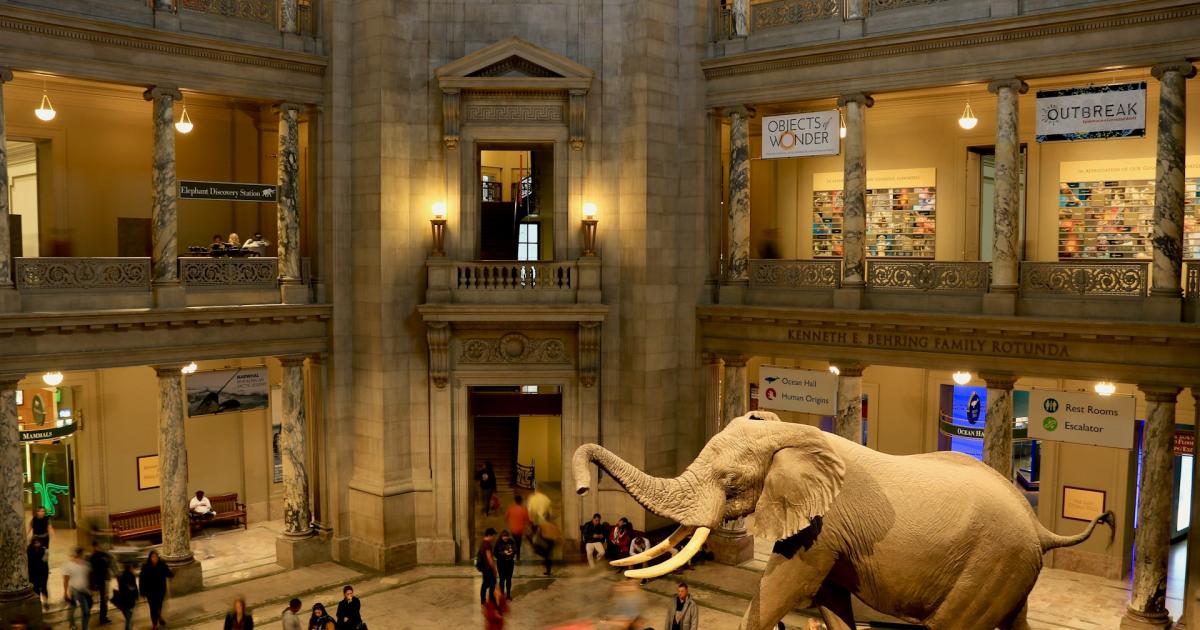
The Smithsonian is the giant here. Every Smithsonian museum is free, with one exception: Cooper Hewitt in New York charges admission (adults $20, though everyone 18 and under is free, and there is Pay What You Wish daily from 5 to 6pm). Everything else, from the National Museum of Natural History to the National Portrait Gallery to the National Zoo, is free to walk into. ALL of it!
Tip: free does not always mean walk-up. The National Museum of African American History and Culture, the National Air and Space Museum, and the National Zoo all require free timed-entry passes. Reserve before you go, or disappointment will ensue.
A few more notes that trip people up. The National Gallery of Art is not a Smithsonian museum (a distinction most people get wrong), and it is free every day with no passes at all. The Smithsonian Castle is currently closed for renovation, and the National Museum of the American Latino is closed for its transformation, opening only for special events.
Beyond DC, there are museums that are simply free all the time, scattered across the country. Here are a few to get you started:
• The Saint Louis Art Museum. Free every day.
• The Cleveland Museum of Art. General admission always free, no reservation needed for individuals.
• The Nelson-Atkins Museum of Art in Kansas City. Free every day, for everyone, though all guests now have to check in online or at a kiosk before entering the galleries.
• The Walters Art Museum in Baltimore. Free and open to everyone, no ticketing.
• The Kimbell Art Museum in Fort Worth. The permanent collection is always free (special exhibitions are ticketed, but they run half-price on Tuesdays and Friday evenings). Parking is free too, which almost never happens. Underground garage, both surface lots, and the street. Thank you, Fort Worth!
• The Minneapolis Institute of Art. Permanent collection free every day, no tickets, no reservations. This one is my absolute favorite - I used to study and write there, in grad school!
• The Broad in Los Angeles. General admission always free.
• The Getty Center and the Getty Villa. Admission free, timed reservation required. The catch is parking: $25, dropping to $15 after 3 p.m., $10 after 6 p.m., and free on Saturdays after 6 p.m.
The Getty is worth dwelling on, because a free museum with $25 parking will still cost a family of four twenty-five dollars, and that kind of math runs through this entire category. I have come back to it at the end.

Smithsonian - one of our national treasures
University museums are almost always free
One more group of museums is free all the time, and it is the one people overlook most often. If you are near a college town, you are near a museum that is probably free. Why?
University art museums are free far more often than civic ones, and the reason is institutional rather than generous. They exist to teach. The collection is a classroom for the art history department, the conservation students, the undergraduates taking one studio course to fill a requirement, the school field trips. An admission desk gets in the way of the actual job, so a great many universities simply do not have one.
The quality is the part that surprises people (genuinely surprises them!). These are not consolation prizes for travelers who could not get to a real museum. These are extraordinary museums! A few of the strongest collections in the country sit on campuses, assembled over a century or more by departments with very particular tastes and very patient donors.
A few of my favorites worth visiting, all confirmed free as of this writing:
Harvard Art Museums, Cambridge, Massachusetts. Free to every visitor, every day, Tuesday through Sunday, 10 to 5. No ticket required, though you check in at the visitor services desk on arrival. Three museums under one roof and a glass courtyard that is worth the trip all by itself. Go stand in it!
Yale University Art Gallery, New Haven, Connecticut. “Free and open to the public,” in their own words. Tuesday through Friday 10 to 5, with Thursdays open until 8 from September through June, and weekends 11 to 5. Closed Mondays, so plan around that one.
Princeton University Art Museum, Princeton, New Jersey. Free to all, and open six days with late hours on Thursday and Friday until 8 p.m. Sunday is noon to 5. (Those Thursday and Friday evening hours are a gift for anyone traveling with a school schedule.)
University museums in Michigan worth visiting
The University of Michigan Museum of Art, Ann Arbor. UMMA puts it better than I could: "At UMMA, everyone is welcome. For free." No tickets, no admission, no catch. Closed Mondays, open 10 to 5 Tuesday and Wednesday, 10 to 8 on Thursday and Friday, and 11 to 8 on weekends. Those evening hours are unusual for a museum of this quality and they make a weeknight visit genuinely possible.
The Kelsey Museum of Archaeology is a short walk down the same street, also at the University of Michigan in Ann Arbor, and this is the part that makes the drive worth it. Two free museums on one campus, both on South State Street, is a whole day for the cost of parking. The Kelsey notes, "Admission to the Kelsey Museum is always free, but donations are encouraged and appreciated." Tuesday through Friday 10 to 4, weekends 11 to 4, closed Mondays and university holidays, and open until 7:30 p.m. on the third Thursday of every month (a lovely thing to know if you are driving in after work). The collection began with Professor Francis Kelsey's own excavations, which he brought students along on, so the teaching purpose I described above is the museum's actual origin story. We have a full article on it, and it is one of my favorites: Kelsey Museum of Archeology brings Ancient Egypt into the modern age, where Dominique King writes about Djehutymose, the museum's mummy, who has a social media presence. All public areas are wheelchair accessible, and they lend sensory friendly kits, which is worth knowing before you go.
Whenever we are in A2, both of these are key stops (along with Zingerman's, Bruegger's, ALL the bookshops, and at least one coffeeshop. Yes, the museum visits are post-bagel and coffee, and before late lunch and shopping). It's all about scheduling.
The Eli and Edythe Broad Art Museum at Michigan State, East Lansing. "We're always free + open to all," in their own words. The museum is open Wednesday through Sunday, 10 to 6, closed Mondays and Tuesdays. It's worth checking their special hours before a holiday visit, because the museum closes for the break between December 23 and January 10. Why do I love this place so? Perched on the edge of Grand River Ave, next to my old office at Berkey Hall, the Zaha Hadid entices - and the reward once inside is, yet again, stunning. Art, beauty, landmark architecture, and the sense of arriving in a world of beauty, right on a bustling Big Ten campus where I earned two degrees and had my first job in international education.
The MSU Museum, also on campus in East Lansing, focuses on natural science and culture, rather than art. It is Michigan's first Smithsonian Affiliate, and it reopened in January 2026 after an eighteen-month renovation. "Admission is free for all visitors," in their words. Hours are Tuesday through Saturday, 10 to 5, closed Sundays and Mondays. I spent quite a bit of time here during my undergraduate studies. There's something about the quiet of a museum that focuses thought, AND allows for meandering, serendipity, and inspiration. I did a lot of that here. One time, I was surprised to discover an entire quilt exhibit based on the Michigan Quilt Project! Well, I ditched the studying and spent almost two hours wandering and learning about these beautiful quilts, and artists. Per usual, WORTH IT.
A decade of living, learning, and working at MSU taught me much about where to eat...along Grand River Ave, obviously! I recommend Bruegger's of course, and El Az (we love their topopo salad!), and the many boba and coffee shops, and of course, Peanut Barrel or Crunchy's for excellent burgers.
Tips for visiting university museums
Two things to know before you go, as university museums behave differently from civic ones.
Their calendars follow the school, not the season. Hours contract between terms and over the summer at many campuses, which is the reverse of what you expect from a museum in July. Check the hours for the specific week you are traveling rather than the general ones.
And parking is a real cost. Admission is free and campus parking frequently is not, which catches people out. Look for a visitor lot or a structure before you arrive, and budget for it the way you would budget for a ticket (ten dollars of parking to see a Rembrandt is still a wonderful trade). Additionally, check the school calendar for big sporting events and time your visit for a different day. The parking charges increase exponentially during games.
One more thing worth saying to the educators reading this. University museums are unusually good at welcoming school groups and homeschool families, because teaching is literally the institution’s purpose, and many have education staff whose job is exactly that conversation. If you are planning a class visit, email the education department rather than the general information address. The response you get back is often remarkable!
Sculpture gardens are often free when the museum is not
Here is one of our very favorite art museum tricks, because it both saves a day when the admission price is more than you wanted to spend and allows plenty of time and space for littles to run, picnics to be had, and art to be part of daily life.
The outdoor art is frequently free even when the galleries are not. Not by accident, and not as a consolation prize. Sculpture gardens are very often run jointly with a city parks department, which means they are legally and operationally a public park that happens to hold a serious collection. Park rules apply, so there is no admission desk.
The Minneapolis Sculpture Garden is the clearest case, and the one most people picture. It is a partnership between the Walker Art Center and the Minneapolis Park and Recreation Board, it includes more than forty works from the Walker’s collection, and it is free, every day of the year, from 6 a.m. to midnight. You can go and stand in front of Spoonbridge and Cherry at seven in the morning with a coffee, for nothing, which is a wonderful way to start a day in Minneapolis! During my time in graduate school at the UM, I was there often, in all kinds of weather. I studied, watched sunrises and sunsets as study breaks, met friends for picnics and talks, did yoga with friends and a view, made a snowman, and reveled in the beauty (especially that of my very favorite sculpture in the world, a horse by Deborah Butterfield). It was beyond marvelous to have BOTH outdoors and art available, for free, all the time.

Ed and Lillie at Spoonbridge and Cherry
Seattle’s Olympic Sculpture Park works the same way. It is the Seattle Art Museum’s outdoor space, listed among Seattle’s public parks, and admission is free. Calder’s Eagle, with Puget Sound and the Olympic range behind it, is one of the great free views in American art (and it costs you nothing but the walk down).
And in Washington DC, the National Gallery of Art’s Sculpture Garden follows the gallery’s own policy, which means free with no passes required. In winter the central fountain becomes an ice rink, which does charge, though walking among the sculpture still does not.
Two cautions.
Not every sculpture park is free, and some of the most famous ones charge real admission. The parks-department partnership is the thing that predicts free, so check for that relationship rather than assuming. We absolutely LOVE Michigan's Frederik Meijer Gardens & Sculpture Park, but there is an admission fee. It is definitely worth if it you have room in your budget.
And parking will cost you. Minneapolis has a pay lot and a garage, Seattle has street parking that fills early on a sunny weekend. The art is free. The price of actually getting to it rarely is (this theme is becoming quite the reminder in this whole article, I see).
For families, outdoor collections solve a problem that indoor ones create. Children can talk at normal volume, move at their own speed, and touch nothing expensive by accident. A sculpture garden is frequently the better first encounter with serious art, and nobody has to be shushed!

Lillie with her favorite horse (a DaVinci!) at Meijer Gardens & Sculpture Park
Four national programs that travel with you
These four programs work in city after city rather than in one place, which makes them the ones that actually earn their keep for a traveling educator.
1. Museums for All. If you have a SNAP/EBT card, you get admission for a nominal fee, typically between nothing and three dollars, at participating museums nationwide. It is one of the most generous programs in American culture and almost nobody knows it exists. Tell everyone!
2. The ASTC Travel Passport Program. This is the science-center version, and it is SUPER useful for families. Join one participating science center or children’s museum and you get free or discounted admission at hundreds of others, with one rule to remember, which is that the reciprocity generally does not apply within 90 miles of your home institution. The program was designed for people on the road rather than for people at home, so it rewards you precisely when you are traveling.
3. NARM and ROAM. Two reciprocal membership networks. A membership at one participating institution at the right level gets you into hundreds of others around the country. If you visit more than two or three museums a year, the budget math on these is very good.
4. Your library card. Genuinely! A great many public library systems lend museum passes the same way they lend books, often covering a whole family. Seattle Art Museum honors passes from four regional library systems. SFMOMA honors the Bay Area’s Discover & Go passes. ICA Boston does library passes for ten dollars. I suspect more free museum admission goes unclaimed through library systems than through any other route in the country, and you are already carrying the card that unlocks it!
Tip: check your library’s museum pass catalog before you book anything. Some systems let you reserve a pass for a city you are traveling to, not just the one you live in.
Three programs people still recommend that will not work the way you think
I would rather disappoint you here while reading than have you find out at a ticket desk four hundred miles from home.
Bank of America’s Museums on Us is real, it is still running, and it is excellent. The first full weekend of every month (November 7 and 8, 2026, for example, then December 5 and 6, etc.), Bank of America, Merrill, and Bank of America Private Bank cardholders get free general admission at a long list of very good museums: the Met, the Art Institute of Chicago, MFA Boston, the Philadelphia Museum of Art, LACMA, the de Young, Denver Art Museum, the National WWII Museum, Seattle Art Museum, and dozens more.
But it admits one person. The official terms say “one general admission only per eligible cardholder,” and the offer is not transferable. A family of four needs four qualifying cardholders. Nearly every article you will read about this program implies otherwise, and families keep turning up at the desk expecting four tickets. Bring your card and a government-issued photo ID, and expect one entry.
Blue Star Museums, the free-admission program for active-duty military families, runs from Armed Forces Day in May to Labor Day in September. The 2026 season ended on September 7, and the NEA has not announced 2027. More than 2,000 museums took part this year. If you are a military family reading this in the fall, the program is between seasons, so check back in the spring.
There is better news with that concept, though, because plenty of museums extend military admission on their own all year long. SFMOMA admits active military or veteran ID holders plus one guest. MFA Boston admits active military and veterans free with up to five guests. The National Museum of African American History and Culture waves veterans, active-duty military, and first responders straight through without a pass, plus four guests.
Smithsonian Magazine’s Museum Day is the one to strike from your list. It was a lovely thing, a single September Saturday when participating museums nationwide opened free with a downloadable ticket. The last one ran on September 17, 2022. There is no current Museum Day page, no announced date, and the museum event listings for it are all historical. Roundup articles keep publishing it every autumn anyway. Do not plan a museum visit around it.
Recurring free days worth planning a trip around
These are the verified, current patterns at museums that otherwise charge admission. I have separated the ones open to everybody from the ones that require you to live there, since the residency rules are where most travelers get caught out.
Open to everyone, with no residency requirement:
Whitney Museum, New York. Free Friday nights, 5 to 10 p.m. Free Second Sundays, all day. And free every single day for anyone 25 and under, which is the best student deal in the country by a wide margin. TWENTY-FIVE!
ICA Boston. Free for all every Thursday, 5 to 9 p.m. Advance tickets required. Watch out for First Fridays, when the museum closes at 5 p.m. for a ticketed 21+ event.
Seattle Art Museum. Free First Thursday, at both SAM (10 a.m. to 8 p.m.) and the Seattle Asian Art Museum (10 to 5), with docent tours, live music, and drop-in art-making. The museum tells visitors to “leave your wallet at home,” and I LOVE them for putting it that way.
Museum of Fine Arts, Houston. Free Thursdays, permanent collections, for everyone, courtesy of Shell. Open until 9 p.m. Special exhibitions excluded.
High Museum of Art, Atlanta. UPS Second Sunday, noon to 5, free for all, with family programming and no tickets required. November 8 and December 13, 2026, then January 10, 2027.
The Phillips Collection, Washington DC. Third Thursdays, free 5 to 8 p.m.
LACMA. Free for all visitors the second Tuesday of each month.
Denver Art Museum. Twelve SCFD Free Days a year, and (thank you, eternally!) they have already published 2027: January 12, February 9, March 9, April 25, May 11, June 8, July 30, August 10, September 11, October 12, November 6, December 14.
Philadelphia Museum of Art. Pay What You Wish Friday nights, extended through spring 2027. Note carefully: it is the first, third, and fourth Friday, not every Friday. The second Friday is excluded, which catches people out constantly.
MFA Boston. $5 Third Thursdays after 5 p.m., pay-what-you-wish with a five dollar minimum, day-of tickets only.
Resident-only, which is worth knowing about but will not help you as a visitor:
The Field Museum, Chicago, is now free to Illinois residents every Wednesday. Weekly!! This is a major upgrade from the scattered free days older articles still list. Reserve online, because same-day tickets are not guaranteed.
The Art Institute of Chicago is free to Illinois residents on third Thursdays, 5 to 8 p.m. And Illinois educators get in free every single day, which is the strongest standing teacher benefit I found anywhere in the country. Illinois teachers, go!
The Met is pay-what-you-wish (minimum one cent) for New York State residents and for students from New York, New Jersey, and Connecticut. A New York library card counts as proof.
The American Museum of Natural History is pay-what-you-wish for New York State residents, though the ticketed exhibitions cannot be added to that ticket.
MoMA’s Uniqlo Friday Nights are now New York State residents only, with advance reservation. This changed, and a lot of guides have not caught up.
The de Young and the Legion of Honor are free on Saturdays to residents of nine Bay Area counties, permanent collection only, advance reservation mandatory. The posted program runs through December 31, 2026.
LACMA is free to LA County residents on weekdays after 3 p.m.
MFA Boston opens free to Massachusetts residents on four civic holidays a year. The 2026 Indigenous Peoples' Day opening has passed, so the next ones are MLK Day, January 18, 2027, then Memorial Day on May 31 and Juneteenth on June 18. Massachusetts residency is required, so bring ID with your address on it.
Colorado deserves its own paragraph! The Scientific and Cultural Facilities District is a voter-approved sales tax that funds more than 300 organizations across seven metro counties. The free days stagger across the zoo, the botanic gardens, the nature and science museum, and the art museum, so a Denver family can string together free cultural days most months of the year. Voters chose to tax themselves for this, which I find rather moving every time I think about it.
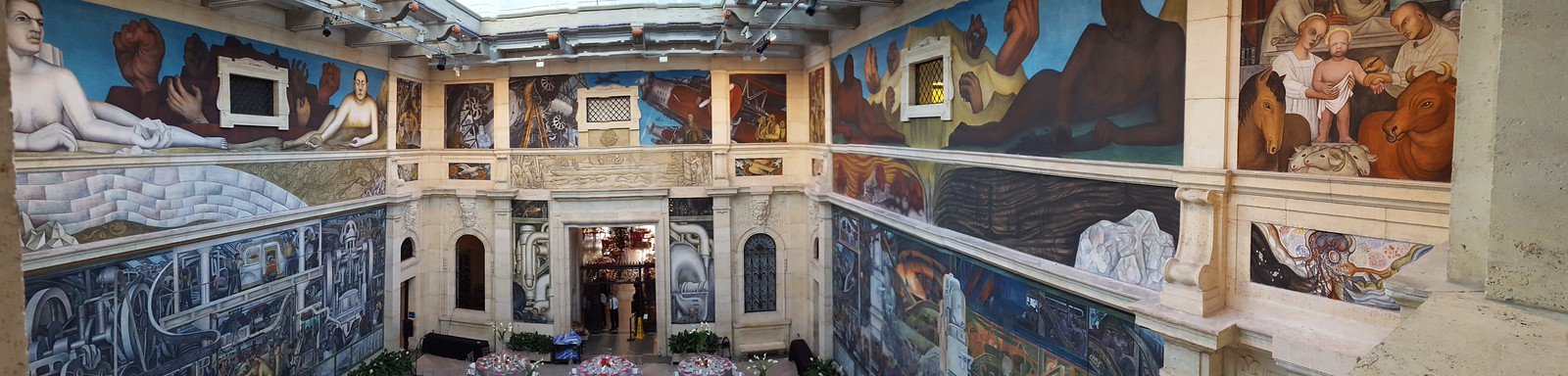
The Detroit Institute of Arts is free, always, to anyone who lives in Wayne, Oakland, or Macomb county. Not a free day. Not a free evening. You walk up, show an ID with your address on it at the front desk, and go in. (Tuesday through Thursday 9 to 4, Friday 9 to 9, weekends 10 to 5, closed Mondays. That Friday evening is a gift for anyone who works.)
There is a reason for the free, and it is one of the better stories in American museums. The collection came close to being sold during Detroit's 2013 bankruptcy, because the city owned the art and creditors could look at it as an asset. What saved it was a rescue called the Grand Bargain: foundations, museum donors, and the State of Michigan put up $816 million over twenty years, which went to retired city workers' pensions rather than to the museum, and in exchange the DIA became an independent charitable trust whose collection can never be counted as city property again. Detroit left bankruptcy in December 2014 with its Bruegel and its Van Gogh still on the walls.
The free admission is a separate act of civic decency. Residents of the three counties voted a property tax on themselves to fund the museum, and in exchange they get in free. They renewed it in March 2020, in all three counties, for another ten years. People voted twice to tax themselves so that their neighbors could stand in front of Diego Rivera's Detroit Industry Murals without paying at the door!
Here's my bird's eye view of this marvelous mural:
How old does a child have to be to pay? It depends enormously.
This table surprised me more than anything else in the research, and it is worth checking before you buy a single ticket.
| Museum | Free for ages |
| Whitney Museum | 25 and under |
| Denver Art Museum | 18 and under, every day |
| SFMOMA | 18 and under |
| The Phillips Collection | 18 and under |
| Cooper Hewitt | 18 and under |
| ICA Boston | 18 and under |
| de Young / Legion of Honor | 17 and under |
| MoMA | 16 and under |
| Art Institute of Chicago | Under 14 (Chicago teens under 18) |
| The Met | 12 and under |
| MFA Houston | 12 and under |
| MFA Boston | Under 7 (ages 7 to 17 pay $14) |
| High Museum, Atlanta | 5 and under |
| Field Museum, Chicago | Under 3 |
A twenty-two-year-old graduate student walks into the Whitney free, while a four-year-old pays at the Field Museum, and both of those are current policy in the same country in the same month. Plan accordingly, especially if you are traveling with elementary-age children, because many museums stop counting them as children far earlier than you would ever guess.

Teachers, this part is for you
There is no national free-admission program for teachers (and I looked very hard for one). What exists instead is a patchwork of local arrangements, all well worth working.
The Art Institute of Chicago admits Illinois educators free, every single day.
The Field Museum admits Illinois teachers from pre-K through twelfth grade free with an employee ID.
MFA Boston charges K–12 teachers $15 rather than $30, with proof of teaching status.
The Phillips Collection in Washington charges students and educators $10 rather than $20.
SFMOMA gives SFUSD staff a complimentary general admission ticket.
The Seattle Art Museum admits Highline Public School families free.
Because the pattern is local and district-specific rather than national, the single most useful thing you can do is carry your school ID and ask at the desk, every time.
Educator benefits are wildly under-advertised, and the worst possible answer is no! (I would guess a great many teacher discounts in this country go unclaimed simply because nobody thinks to ask.)
The catch...and there is always a catch
Free admission comes with fine print, and reading it beforehand is what separates a lovely morning from a long drive home with disappointed children.
Timed passes sell out. The Smithsonian’s ticketed museums release passes thirty days ahead, with a small same-day batch released online by 8:15 a.m., so a museum can be entirely free and entirely unavailable on the same Tuesday.
Special exhibitions are almost always excluded, and this trips up more families than anything else on the list. The de Young’s Free Saturdays cover the permanent collection only. Houston’s Free Thursdays exclude special exhibitions. Bank of America’s program excludes them explicitly. If the show you drove four hours for happens to be the special exhibition, you will be paying for it.
Parking will eat the savings. The Getty is free and parking is $25. The High is free on Second Sundays and parking runs $18 to $25. Nelson-Atkins is free every day and the garage is $20. The Kimbell, alone among them, is free to enter and free to park.
“Suggested donation” is not the same thing as free, and the social pressure standing at that desk with a line behind you is real. At the Met, pay-what-you-wish genuinely means you may pay one cent if you are a New York resident, and the museum’s own published policy says so, so please do not let anyone make you feel otherwise.
Programs change constantly. Philadelphia’s Pay What You Wish Fridays have started, stopped, restarted, and been extended repeatedly over the past few years. Houston’s Free Thursdays are corporate-sponsored, which makes them structurally more fragile than a voter-funded program. So check the museum’s own website during the week you plan to go, rather than trusting a roundup article, and I would include this one in that warning.
And buildings close, sometimes for years. This one is easy to forget, because a museum that is free and open on paper can still be half shut in practice. The Smithsonian Castle and the National Museum of the American Latino are both closed as I write this, and even the Toledo Museum of Art, which is free (and has a free parking lot), currently has much of its collection closed for reinstallation (the Glass Pavilion, Education Wing, Sculpture Garden, and Library are open, and those alone are worth the drive). Reinstallations run for months, renovations run for years, and almost no roundup article mentions them.
Free museums beyond the United States
Britain is the standout, and it is extraordinary. The national museums are free, all of them, to everyone, forever: the British Museum, the National Gallery, Tate Britain and Tate Modern, the Victoria and Albert, the Natural History Museum, the Science Museum, the National Portrait Gallery. Special exhibitions are ticketed, but the collections themselves are open to anyone who walks in. The Rosetta Stone. The Parthenon Marbles. Turner after Turner after Turner. For nothing! When I ran a study abroad program in London for a Big Ten university one summer, ALL of my free time was spent at museums. I'd often take students with me; they were excited because I was excited! The exploration, education, awe, and camaraderie at museums across London were the highlight of that summer.

Go global! The Louvre is free on Fridays after 6pm.
Perhaps my VERY FAVORITE! Off the coast of Cannes, there is a marvelous underwater museum you can snorkel to the art for no cost (obviously). One of our favorite artists, Jason deCaires Taylor, sank six enormous portrait masks in the shallows off Île Sainte-Marguerite, 80 to 150 metres from the beach, in three to five metres of water, and swimming out to them is free, with no booking and no ticket (the faces are modeled on real residents of Cannes, from an eighty-year-old fisherman to a ten-year-old schoolboy). The ferry from the Port of Cannes is about 16 euros return, and then a 1.3km walk through the pines to the south shore. Free art, paid boat. Here we are doing budget math again. Snorkel only with strong swimmers, and never stand on the sculptures.

Cannes Underwater Museum, France by Jason DeCaires Taylor
Find local museums when you travel. They show you more about a culture than you can ever imagine.

Love, love, love
Before you go: the five-minute check
- Look up the museum’s own admission page. Not a listicle or search engine. Then look at its plan your visit page, where closures and renovations get posted and the admission page never mentions them.
- Check whether free entry still requires a timed pass, and reserve it.
- Check the child free age. It is rarely what you expect.
- Check whether the exhibition you actually want is excluded.
- Check parking and add it to the real cost.
Five minutes of checking will tell you what the day is actually going to cost you.
Go anyway
When I think about our family's decades of museum explorations, what I keep coming back to is the hours we spent inside those buildings, and how many of them were free.
Lillie and Ed spent an afternoon at the United States Holocaust Memorial Museum in Washington that neither of them has ever stopped talking about. There was the candle vigil, and the room filled with victims’ shoes, and the lone guard standing watch in that room. The sight of it was powerful, and the smell of all that old leather made the history almost unbearably real in a way no photograph had ever managed. They looked at each other with something between horror and compassion, and it became one of the most teachable moments of her entire childhood. That museum is free.
So is the National Gallery, and the Saint Louis Art Museum, and the Walters, and the Nelson-Atkins, and MIA, and the Kimbell’s permanent collection, and every Smithsonian but one. On the right Thursday, Houston is free, and on the right Sunday, so is Atlanta.
All of that access already exists, scattered across four systems that nobody bothers to explain in one place, and now you know where to look for it.
So go! GO.

The Musée d'Orsay, free on 1st Sunday of the month; the reservation of a visit slot is mandatory. Learn more here.
Where are you headed next, and what will you get to see for free when you get there?
More from Wandering Educators on museums and family travel
Why Art Museums are Worth (Re)visiting
Travel Writers’ Guide: 50+ Best Science Museums Around the World
Best Museums in London and Beyond
Visit the American Museum of Natural History with Kids
Three Museums in Boston For Families With Young Kids
7 tips for teaching your kids to appreciate art museums
The Best Free Attractions To Visit In Florence
Exploring the 9/11 Memorial and Museum
The Nature of Diamonds at The Field Museum
4 Reasons to Visit Seattle’s MoPOP Museum
Four Tips for Visiting the National Museum of the US Air Force
10 Amazing Chocolate Museums Around the World
Jessie Voigts is the founder and publisher of Wandering Educators. You will most often find her in art museums or by water (nature's art museum!). She has a PhD in International Education, has lived and worked in Japan and London, and traveled around the world. She is constantly looking for ways to increase intercultural understanding, and is passionate about study abroad and international education.