
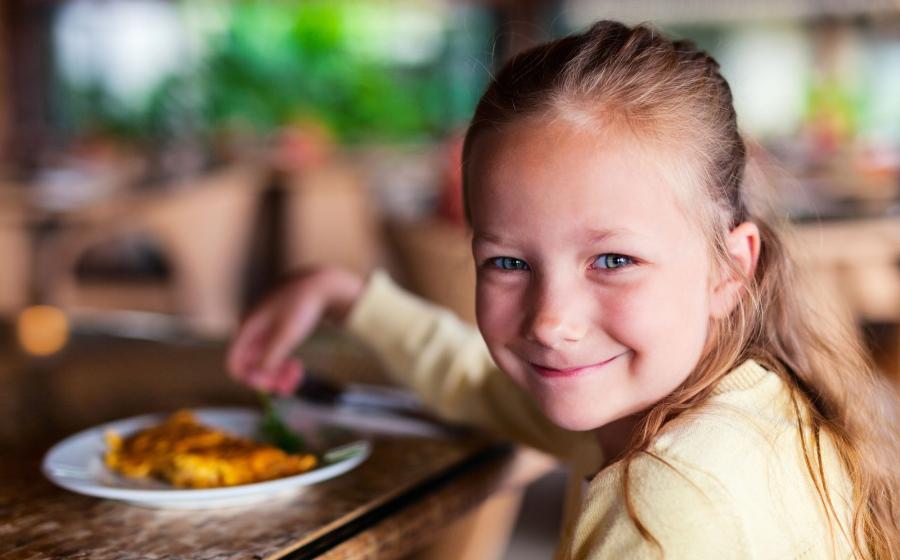

Here's a scene you might be quite familiar with (alas). You've flown across an ocean, hungrily standing in a restaurant that smells like heaven, the menu is a doorway into a whole culture (where to start? SO MANY amazing options!), and your kid wants plain noodles. No sauce. Maybe some bread. Is there ketchup?
I've been there. Traveling with picky eaters is one of the most stressful (and least-discussed) parts of family travel, and almost nobody talks about it honestly. We talk about the castles and the beaches and the museums. We do not talk about the meltdown in the trattoria because the pasta touched a vegetable.
Let's talk about it.
After almost two decades of publishing Wandering Educators, and a lot longer than that raising a kid who has eaten her way across Europe, Canada (St. John's, Newfoundland has OPTIONS!), and more, I've come to believe something hopeful: the road is the best classroom you have for growing an adventurous eater. You don't force it. You set it up so trying new food feels like part of the adventure instead of a fight you're both dreading. (A little bribery is allowed. We'll get to that.)
Come along.
Here's your delicious guide.

Why travel is the best time to grow an adventurous eater
At home, food is routine. The same meals, the same plates, the same expectations. A picky eater has years of practice being picky in that kitchen.
Travel breaks the routine wide open (which is exactly the point). Everything is already new: the beds, the language, the light through unfamiliar windows. Food is just one more new thing in a day full of them, and that changes your kid’s emotional math. A kid who would never touch a new food on a Tuesday at home might taste it on a Wednesday in a market in Quebec, because on the road, new is normal.
This is the same reason that travel helps raise kids who love to learn while traveling.
Curiosity is contagious across categories. A kid learning to be brave about a horse the size of a house (ask me about Co. Kerry sometime) is a kid who is also, slowly, learning to be brave about a plate of black currant jam and something called "meanies."
Our daughter came home from Scotland listing the FOOD as one of her favorite parts ("so much different stuff!"). That kid tried haggis. On purpose. (Oatmeal, organ meat, and garlic, if you're wondering. She was into it! Here's my vegetarian haggis recipe; yes, I can also be a picky eater). We bought ALL the old-world fruit yogurt at Tesco, had an adventurous game of identify the flavors, and settled on rhubarb and gooseberry as our top two favorites.
This is the payoff we're building toward. But you know what? It starts long before the trip.

Start before you leave: building food curiosity at home
The trip is only half of the trip. The other half is the anticipation, and you can put anticipation to work.
Cook the destination's food together before you go
Pick one or two dishes from where you're headed and make them at home, together, in your own kitchen where everything is safe and familiar. A kid who has already made (and eaten!) their own arancini is a kid who will recognize it on a menu in Sicily and feel like they're greeting an old, yummy friend.
This is one of my favorite pre-trip rituals, and there are wonderful tools for it. I'm a longtime fan of cooking international recipes with kids from a good around-the-world cookbook. Let your kid pick the recipe. Let them make a mess. Ownership is the whole game with a hesitant eater. The more their fingerprints are on the food, the less scary it becomes.
Play our delicious Eating Around the World Food Game - gamification is an excellent learning (and life) tool!
Find food festivals, at home or while traveling! There's something about the energy of a crowd, all focused on food, that makes it something fun to taste (and learn about), instead of something to avoid. Universities often have international or cultural festivals that feature a variety of cultures (and their cuisines). The ones local to us at Western Michigan University are SO much fun (and, quite tasty). We love Keweenaw's annual Pasty Fest, all focused on a historical hand pie that is not only delicious, but fun (we highly recommend their Pasty Trail, if you can't make it to Michigan in August).

Why hello, Sir Rutabaga and the Duke of Potatoes
Read, watch, and talk about the food you'll find
Watch a show about the place. Read picture books (we love Crepes by Suzette. Click through for our kid's book review AND recipe).
Talk about what people eat there and why, the same way you'd talk about what you'll see. Food is culture you can taste, and framing it that way before you go turns "ew, what's that" into "oh, THAT'S the thing from the book!"
When we perused the menu at our first B&B in Ireland, we decided before we had even left home to try the kippers at breakfast. That early morning, jetlagged, I changed course and tried the full Irish breakfast. Our daughter kept to the plan (she’d been excited about fish for breakfast for months!), loved it, and adventurously tried the black pudding on my plate.
Tip: Let your child choose one "must-try" food for the trip and put it on the itinerary like any other activity. Anticipation does half the work of adventure.
What to pack: snacks, safe foods, and gear
Now the practical part. Preparation is what makes the adventure possible without anybody falling apart at 3pm in a train station or in the middle of a walking tour.
The familiar-food safety net
Truth: a well-fed kid is a braver kid. Hunger and unfamiliarity together are a recipe for a meltdown. It’s important for you to build a safety net.
Pack enough familiar snacks to cover your entire travel day, plus a buffer for the first day at your destination before you've found a grocery store. Think shelf-stable and beloved: crackers, pretzels, granola bars, dry cereal, the specific fruit snack that will end a meltdown. This is your emergency fund. You hope you don't need all of it. You will be so glad it's there!
The safety net does something psychological, too. When a kid KNOWS that familiar food exists in your bag, they're far more willing to gamble on the unfamiliar food on the table, at the convenience store, at the boulangerie. Their safety net makes the leap feel safe.
Reusable containers, bento boxes, and travel gear
A few basic tools save you time and again. I'm a devoted fan of packing meals in reusable bento boxes. They turn a random assortment of grocery-store bits into a real meal, and the little compartments (foods not touching!) are secretly magic for a picky eater. Add a refillable water bottle, a few zip bags for leftovers from the bakery, and a thin, foldable plastic picnic mat (I first experienced these during hanami in Japan. We are never without one now). Small kit. Big returns!

Can you bring food through airport security?
This is the question nobody's article seems to answer, and it comes up on every single trip. Let's fix that. (Please note: TSA rules change, so confirm current guidance at tsa.gov before you fly. Here's where things stand now.)
Solid foods, snacks, and the TSA liquids rule
Good news for snack-packing parents: solid food is allowed through TSA security, in both carry-on and checked bags. Sandwiches, crackers, whole fruit, cut fruit, baked goods, cereal, granola bars, cheese sticks, a cold cooked chicken leg. All fine to bring through the checkpoint.
The catch is anything you can pour or spread. TSA treats those as liquids, which means they fall under the 3-1-1 rule: containers of 3.4 ounces or less, all together in one quart-sized bag. The rule of thumb TSA itself uses is simple. If you can pour it, spread it, or it would make a mess turned upside down, it's a liquid. Yogurt, applesauce pouches, hummus, peanut butter, and dips all count. Want to bring that big jar of peanut butter? It goes in your checked bag.
One kindness worth knowing: baby food, formula, breast milk, and toddler drinks are exempt from the 3-1-1 limits in reasonable quantities. Tell the officer you have them. You may get a little extra screening, and that's all.
Bringing food on international and long-haul flights
For a long flight (into that aforementioned bento box), pack more than you think you need, and lean on solid foods that survive a backpack: crackers, pretzels, sturdy sandwiches, apple slices, a special treat held in reserve for hour six when everyone's patience is thin and hangry is a real thing.
The one place to be careful is customs at your destination. Many countries do not allow you to bring in fresh fruit, vegetables, meat, or other agricultural products, and the fines for the forgotten apple in your bag are real. Eat it or toss it before you land, and when in doubt, declare it. This is a great one to explain to kids as part of how borders work. We learned this firsthand when leaving Ireland - our family had to quickly eat the sandwiches we'd bought for the layover, because the ingredients were against customs.

The safety net (foods not touching, obviously, for some)
Mealtime strategy on the road: routine, timing, and mood
Kids thrive on routine, and travel demolishes routine. You can't keep the whole structure, but you can keep the bones.
Hold roughly to your normal meal and snack times
A body that knows food is coming at the usual hour is a calmer body. Never, ever attempt a big new food when your kid is overtired, overstimulated, or hangry. That's true for adults, too, if we're honest (I do not make my best decisions at hour eleven of a travel day, either). Feed the hunger first with something safe, THEN offer the adventure when everyone's regulated and curious.
Build in downtime around meals
The picky-eating standoff is very often about something other than the food itself. It's a small person who is tired, far from home, and out of control of everything, reaching for the one lever they've got. Give them back a little control elsewhere, and the food fights tend to shrink.

A taste is a win
Restaurant tactics that actually work
Restaurants are where anxiety can peak. Here's what genuinely helps:
How to order for a hesitant eater
Choose your restaurants with picky eaters in mind, and there's no shame in it. Places with a mix of familiar and local options let everyone win. Many of my go-to family meals abroad have been at the friendliest, most unfussy spots (some of my favorite family-friendly restaurants have been the making of a trip).
At the table, a few moves are timeless. Order family-style and let everyone graze, because a bite off a shared plate carries zero pressure and lots of oohing and aahing together. Let your kid order for themselves; the ceremony of it makes them invested. Come hungry (see above). And be shameless about the "safe base plus one" strategy: the plain pasta they'll actually eat, plus one small new thing to taste. There’s no pressure to finish…just a taste.
We have published a whole guide to getting kids to try new foods at restaurants that goes deeper on this, because it's where so much of the real work happens.
Kitchen access, grocery stores, and convenience stores
One trick changes everything: book a place with a kitchen (here's how). An apartment or a cottage with a stovetop means you can always fall back on the meal your kid loves, cooked the way they like it, at zero restaurant markup.
Don't sleep on the grocery store as a destination in itself (and bonus: it’s filled with potential souvenirs). Wandering a foreign supermarket or a corner convenience store is one of the great cheap thrills of travel, and it's truly a low-stakes option for a picky eater. They can look, point, choose, carry it home, and enjoy.
Some of the most joyful food memories our family has are from markets and shops. The best pear I've ever eaten came from Marché Jean-Talon in Quebec (I still think about it); a visit to Uwajimaya, the glorious Asian market in Seattle, was a highlight all its own in a trip to Seattle filled with kid-friendly deliciousness. Let your kid load the basket. You're building an eater!
My favorite tip: visit all the Asian markets in all the cities you visit. You’re building core memories, a culinary database, and a familiarity with new cultures – which, in turn, will lead your kids to ask to visit the actual countries...and excited to eat both new and now-familiar foods.
Turn new foods into an adventure, not a battle
The single biggest change for your family is in your framing. Use adventure language, not pressure language. "Want to be a food explorer?" beats "just try it" every time. Give the new food a fun name. Make a game of guessing what's in it, or rating it with a scoring system (a "one to ten, how weird is this?" scale has salvaged many a meal in our family).
Small rewards work, and I'm not too proud to say so. A dessert, being the first to pick tomorrow's activity, a note in a food journal. Some families keep a running list of "brave bites" from the trip and count them up at the end. The kid who tried nine new foods in Rome comes home PROUD, and that pride is the thing that turns into a lifelong adventurous eater. The count becomes less important as their food adventure stories build. Retell them! It makes a difference. Haggis, octopus sushi, kippers, black pudding, durian, lutefisk…our unique food stories list continues to grow, decades later. Family lore is awesome.
Keep it warm. Keep it low-pressure. A taste is a win. A "no thank you" after a real taste is also a win. You're playing a long game, and the long game is a kid who loves to eat.
Ask them to be the family journalist
If you’ve got a foodie on your hands, you already do this (and maybe have the instagram account to prove it). But this article is also for the family that has a few more gustatory challenges.
One of the ways kids love to learn and be involved is to have a task. By giving kids a job, the learning opportunities from these tasks turn passengers into true travelers.
In our family, it involves research and photos. Our daughter loves to peruse menus and review sites before we go, deciding in advance what she wants (it’s an easy way to show her that safe foods can be anywhere!). She also takes after me, in terms of being interested in documenting her food experiences. While your kid might not be interested in taking food photos, they might be ALL IN on documenting several specific things each day (be sure one is food-related!) – paths taken, food eaten, cool windows you pass.
By actively contributing to your family’s travel journal and stories, they become more adventurous than you may expect. They might pay attention to color, textures, the sun shining through the window and illuminating their meal in a beautiful way. It all serves to make food not only nourishing for the body, but for the mind and soul, too.

A kid on a very fun mission
When your kid only eats pasta and pizza
Let's be real about the classic case: the kid who, in the middle of a wonderful food culture, wants only pasta, pizza, bread, and cheese.
First, all good. Pasta, pizza, and bread ARE the local food in a great many places you'll want to go, and there is no shame in a kid who eats their way through Italy on margherita and cacio e pepe (not to mention gelato). You can build outward from the safe base one small step at a time: the pizza with one new topping, the pasta with the sauce on the side, the same bread but from the bakery where you watched it come out of the oven.
Familiar-plus-one. Over and over. That's how palates grow: one small, safe step at a time. A hundred of them.

Easy camping and road-trip meals for picky eaters
Not every trip is a plane and a foreign city. Road trips and camping bring their own version of this, and honestly, they're a gift for picky eaters, because YOU'RE the kitchen.
Lean on build-your-own meals, where everyone assembles their own plate from a spread of parts. Taco bars, sandwich stations, snack-plate dinners of crackers, cheese, fruit, and veggies. Foil-packet dinners on the campfire let each kid choose their own fillings (choice again!). Campfire sandwiches, choose your own ingredients. Trail mix everyone customizes. Instant oatmeal with a bar of toppings. The magic ingredient is the same one that works everywhere: let them build it, and they'll eat it.
Pack a cooler with the safe favorites, keep the road-snack bag stocked and within reach, and you've removed ninety percent of the stress before it starts.
Frequently asked questions
What do picky eaters eat while traveling?
Start from their familiar base (bread, plain pasta, rice, fruit, cheese, familiar snacks) and build outward one small new food at a time. Grocery stores, markets, and places with a kitchen let you always have a fallback. A well-fed kid tries more, so keep the safe foods stocked and offer the new ones alongside, never instead.
What foods do picky eaters usually avoid?
Commonly: strong smells, sauces and mixed dishes (foods touching!), unfamiliar textures, anything green, and anything that looks too different from home. Knowing your own kid's specific "no" list helps you plan. Sauce-on-the-side, deconstructed versions, and familiar-plus-one all help bridge the gap.
How do you handle a picky eater on a long flight?
Pack more solid-food snacks than you think you'll need (all fine through TSA), hold a special treat in reserve for the hard hour, and keep a familiar "safe" meal on hand so hunger never stacks on top of exhaustion. Airline kids' meals are hit or miss, so bring your own backup and you'll never be stuck.
What are easy meals for picky eaters when camping?
Build-your-own everything: taco bars, sandwich stations, foil-packet dinners with choose-your-own fillings, snack-plate dinners, campfire sandwiches, customizable trail mix. Don't forget the s'mores! When kids assemble their own plate, they eat it. Bring a cooler of safe favorites and a well-stocked snack bag, and the focus will be on enjoyment, not worry.

Food explorers in training
Further resources here on Wandering Educators
If you're planning a family trip, these will help you turn anticipation into preparation:
• Getting Kids to Try New Foods at Restaurants
• Educational Family Trips: How to Raise Kids Who Love to Learn While Traveling
• Places to Travel with Family: Nine Trips That Teach Your Kids Something Real
• Protein Needs by Age: How to Get Enough Protein at Home and While Traveling
• What is food to you? (SUCH a great food story!)
• Why we love traveling with our daughter
• 7 Foodie Family Resolutions for the New Year
• Kid-Friendly Foods to Try in Michigan’s Upper Peninsula
• Raising Adventurous Global Eaters
The picky eater you're traveling with today is not the eater they'll be at the end. Feed them well, keep it playful, and let the road do what the road does best.
Where are you headed next, and what will your family taste when you get there?
Jessie Voigts is the founder and publisher of Wandering Educators. She has a PhD in International Education, has lived and worked in Japan and London, and traveled around the world. She is constantly looking for ways to increase intercultural understanding, and is passionate about study abroad and international education. She will try just about any food, just for the sake of collecting stories.